
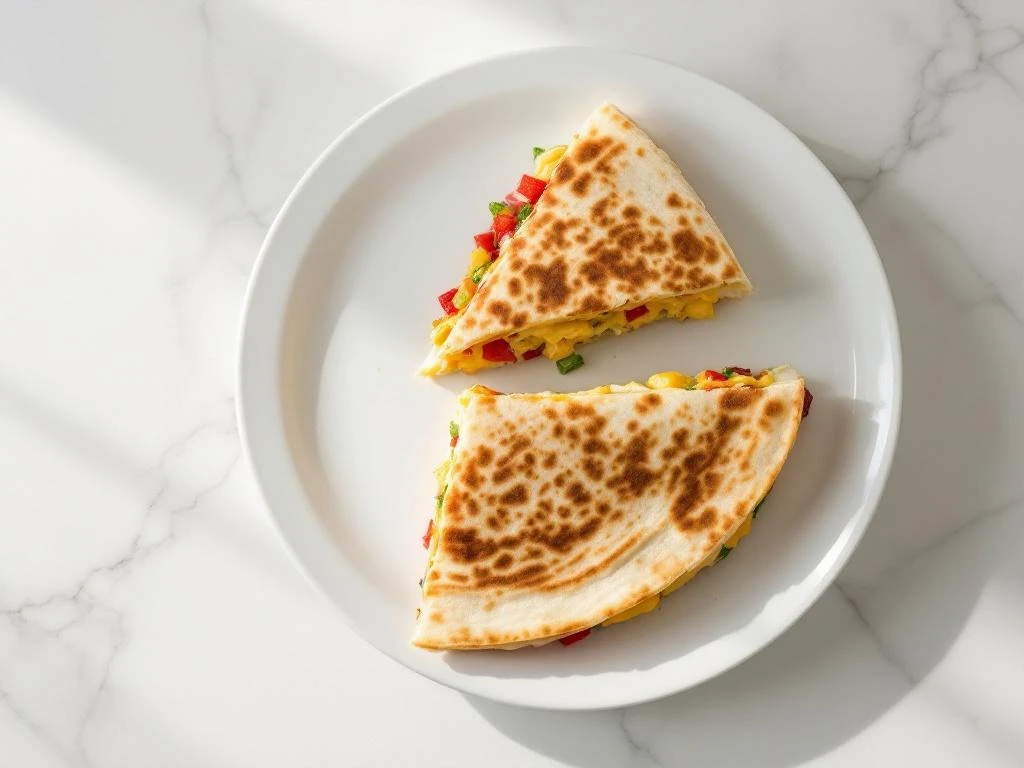
Starting your day with a low FODMAP breakfast quesadilla gives you a satisfying, gut-friendly meal that’s ready in under 15 minutes. This egg and veggie quesadilla recipe uses certified low FODMAP ingredients to help you manage IBS symptoms whilst enjoying a delicious, protein-packed breakfast. The combination of eggs and carefully selected vegetables provides balanced nutrition without triggering digestive discomfort.
This guide is suitable for beginners who are familiar with basic cooking techniques. You’ll need about 15 minutes total, including prep and cooking time. The recipe requires a non-stick frying pan, a whisk, a spatula, and basic chopping tools. All ingredients are readily available at most supermarkets, with some requiring attention to portion sizes to maintain low FODMAP compliance.
Why this breakfast quesadilla works for IBS
This IBS friendly breakfast combines ingredients that are gentle on your digestive system whilst providing essential nutrients to start your day. Eggs are naturally low FODMAP and offer high-quality protein that helps you feel full longer. The protein content stabilises blood sugar levels and provides energy without causing the mid-morning crash that high-carbohydrate breakfasts often trigger.
The vegetables in this recipe are specifically chosen for their low FODMAP status at appropriate serving sizes. Bell peppers, spinach, and spring onion greens add vitamins, minerals, and fibre without the fermentable carbohydrates that trigger IBS symptoms. These vegetables also provide antioxidants that support overall gut health and reduce inflammation.
Using a gluten-free tortilla keeps this recipe suitable for those managing both IBS and gluten sensitivity. The quick cooking method preserves nutrients whilst creating a satisfying texture. This digestive friendly breakfast delivers approximately 20 grams of protein per serving, supporting muscle maintenance and providing lasting satiety throughout your morning.
Gather your low FODMAP ingredients and tools
You’ll need the following low FODMAP vegetables and ingredients for one serving. Portion sizes matter significantly when following a low FODMAP diet, so measure carefully to maintain gut-friendly compliance.
Core ingredients
- 2 large eggs
- 1 gluten-free tortilla (check for certified low FODMAP brands)
- 30g red or yellow bell pepper, diced small
- 20g fresh spinach leaves
- 15g spring onion, green parts only, sliced thin
- 30g lactose-free cheddar cheese, grated (optional)
- 1 tablespoon lactose-free butter or olive oil
- Salt and pepper to taste
Essential equipment
- Medium non-stick frying pan (20-25cm diameter)
- Small bowl for whisking eggs
- Whisk or fork
- Sharp knife and cutting board
- Spatula for flipping
- Measuring spoons and kitchen scales
When selecting your gluten-free tortilla, look for options made from corn, rice, or certified gluten-free flour blends. Avoid tortillas containing high FODMAP ingredients like wheat, chickpea flour, or added inulin. Read labels carefully, as some brands add onion or garlic powder for flavour. The tortilla should be fresh and pliable for easy folding without cracking.
For the cheese, choose aged hard cheeses like cheddar, which are naturally lower in lactose. Lactose-free versions provide extra assurance. If you’re avoiding dairy entirely, skip the cheese or use a small amount of nutritional yeast for a savoury flavour boost.
Prepare and cook the egg and veggie filling
Start by washing all vegetables thoroughly under cold running water. Pat the spinach dry with a clean tea towel or kitchen paper. Remove any thick stems from the spinach leaves, as these can be tough when cooked quickly.
Dice the bell pepper into small, uniform pieces about 5mm in size. This ensures even cooking and makes the quesadilla easier to eat. Slice the spring onion greens thinly on a diagonal. Remember to use only the green parts, as the white bulbs contain high FODMAP fructans that can trigger symptoms.
Crack the eggs into your small bowl. Add a pinch of salt and pepper. Whisk vigorously for about 30 seconds until the eggs are completely combined and slightly frothy. This incorporates air and creates a lighter texture when cooked.
Heat half the butter or oil in your non-stick pan over medium heat. When the butter melts and starts to foam (or the oil shimmers), add the diced bell pepper. Cook for 2 minutes, stirring occasionally, until the pepper softens slightly but still has some crunch.
Add the spinach and spring onion greens to the pan. Stir for about 30 seconds until the spinach wilts. The spinach will reduce significantly in volume, which is normal. Make sure the vegetables are spread evenly across the pan.
Pour the whisked eggs over the vegetables. Let them sit undisturbed for about 10 seconds to start setting. Then gently stir with your spatula, pushing the cooked eggs from the edges towards the centre. Continue cooking for 1-2 minutes until the eggs are just set but still slightly moist. They’ll continue cooking from residual heat, so remove them from the pan when they look almost done.
Transfer the egg and veggie mixture to a plate. Wipe the pan clean with kitchen paper. You’ll use the same pan for toasting the quesadilla.
Assemble and toast the quesadilla perfectly
Place your clean pan back on medium heat. Add the remaining butter or oil and let it heat for about 20 seconds. Place the gluten-free tortilla in the pan and let it warm for 30 seconds. This makes it more pliable and prevents cracking when you fold it.
Spoon the egg and vegetable mixture onto one half of the tortilla, leaving about 1cm border around the edge. If you’re using cheese, sprinkle it evenly over the egg mixture now. The residual heat from the eggs will start melting the cheese.
Carefully fold the empty half of the tortilla over the filled half, creating a half-moon shape. Press down gently with your spatula to seal the edges and ensure good contact with the pan. Cook for 2 minutes without moving it. You’ll know it’s ready to flip when the bottom turns golden brown and releases easily from the pan.
Slide your spatula under the quesadilla, supporting it fully, and flip it in one smooth motion. Cook the second side for another 1-2 minutes until golden brown and crispy. The cheese (if using) should be fully melted, and the tortilla should feel firm when you press it gently with the spatula.
If your tortilla starts browning too quickly or burning, reduce the heat to medium-low. Gluten-free tortillas can be more delicate than wheat versions and may cook faster. Watch carefully during the last minute to prevent overcooking.
Transfer the finished quesadilla to a cutting board. Let it rest for 1 minute before cutting. This allows the filling to set slightly and prevents it from spilling out when you slice. Cut into two or three wedges using a sharp knife or pizza cutter.
Customise with low FODMAP toppings and variations
Enhance your easy breakfast quesadilla with these low FODMAP-safe toppings and variations. Each suggestion maintains digestive friendliness whilst adding flavour and variety to keep your breakfasts interesting.
Safe topping options
- Lactose-free sour cream or Greek yoghurt (1-2 tablespoons)
- Fresh coriander leaves, chopped
- Sliced cherry tomatoes (maximum 5 tomatoes per serving)
- Firm avocado slices (1/8 of a whole avocado to stay low FODMAP)
- Hot sauce without garlic or onion (check labels carefully)
- Fresh lime juice for brightness
Protein additions
Boost the protein content by adding cooked, diced chicken breast, turkey bacon, or smoked salmon to the egg mixture. Cook any raw proteins thoroughly before adding them to the eggs. Pre-cooked proteins should be warmed through during the egg cooking stage. Limit processed meats to small portions, as some contain high FODMAP additives.
Vegetable swaps
Replace or supplement the suggested vegetables with these low FODMAP alternatives. Keep portion sizes appropriate to maintain gut-friendly compliance.
- Courgette (zucchini), grated and excess moisture squeezed out
- Cherry tomatoes, halved (maximum 5 per serving)
- Rocket (arugula) instead of spinach
- Chives instead of spring onion greens
- Grated carrot (30g maximum)
Flavour enhancements
Add dried herbs like basil, oregano, or thyme to the egg mixture before cooking. Fresh herbs provide brighter flavour but dried versions work well when fresh isn’t available. Smoked paprika adds depth without heat, whilst a small pinch of cumin provides warmth. Nutritional yeast offers a cheesy, umami flavour for those avoiding dairy entirely.
For a Mediterranean twist, add 10g of sliced black olives and a sprinkle of dried oregano. Asian-inspired versions work well with a dash of tamari (gluten-free soy sauce), sesame oil, and fresh coriander. Mexican flavours come alive with cumin, fresh coriander, and a squeeze of lime juice.
Make this healthy quesadilla recipe work for your schedule by preparing the vegetables the night before. Store chopped vegetables in an airtight container in the refrigerator for up to 24 hours. You can also cook multiple quesadillas and refrigerate them for up to 2 days. Reheat in a dry pan over medium heat for 2-3 minutes per side until warmed through and crispy again.
Egg and veggie breakfast quesadilla
Cooking Time: 15 minutes | Portions: 1 serving
- Whisk 2 eggs with salt and pepper until frothy
- Dice 30g bell pepper, chop 20g spinach, slice 15g spring onion greens
- Heat 1/2 tablespoon butter in non-stick pan over medium heat
- Cook bell pepper for 2 minutes until slightly softened
- Add spinach and spring onion greens, stir for 30 seconds
- Pour eggs over vegetables, cook 1-2 minutes until just set
- Remove egg mixture, wipe pan clean, add remaining butter
- Warm gluten-free tortilla in pan for 30 seconds
- Add egg mixture to one half, sprinkle 30g lactose-free cheese if using
- Fold tortilla in half, cook 2 minutes per side until golden
- Rest 1 minute, cut into wedges, serve with low FODMAP toppings
This recipe is for informational purposes only and is not medical or dietary advice. Please consult a healthcare professional before making any changes to your diet.
Related Articles
- Gluten-Free Banana Walnut Bread
- Blueberry Coconut Smoothie Bowl
- Blueberry Walnut Overnight Oats
- Rice Porridge with Maple Syrup
- How Long Until Low FODMAP Works?