
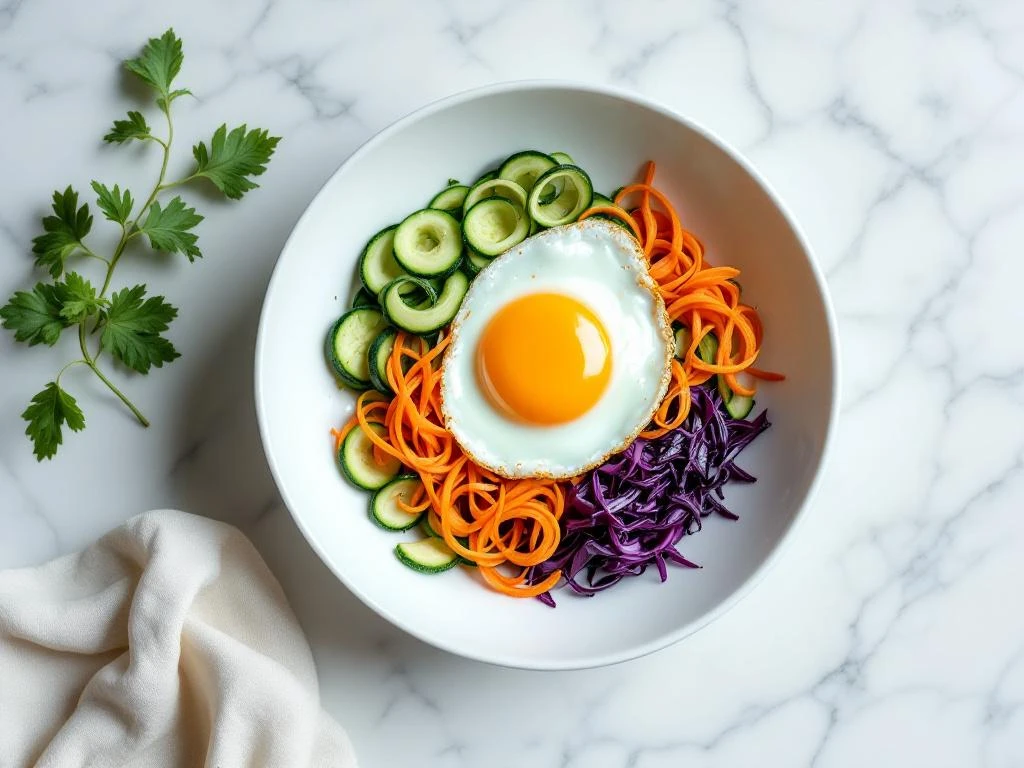
Starting your morning with an egg and veggie breakfast bowl gives you balanced nutrition that supports digestive wellness. This quick healthy breakfast combines protein-rich eggs with carefully selected low FODMAP vegetables that won’t trigger IBS symptoms. You’ll learn how to prepare a healthy breakfast bowl that tastes great whilst keeping your gut comfortable throughout the day.
This beginner-friendly recipe takes about 15 minutes from start to finish. You’ll need basic cooking equipment like a frying pan, cutting board, and mixing bowl. The ingredients are simple to find and naturally gluten free, making this an ideal IBS friendly breakfast for busy mornings.
Why this breakfast bowl supports digestive health
This egg and veggie breakfast bowl delivers complete nutrition whilst respecting your sensitive digestive system. Eggs provide high-quality protein that helps you feel satisfied without adding FODMAPs to your meal. The protein content supports stable energy levels and keeps hunger at bay until lunch.
The vegetables we use in this low FODMAP breakfast are specifically chosen to avoid common IBS triggers. Spinach, bell peppers, and zucchini contain essential vitamins and minerals without the oligosaccharides that cause bloating and discomfort. Each vegetable stays within safe portion sizes to maintain their low FODMAP status.
This digestive friendly breakfast combines soluble fibre from vegetables with easily digestible protein from eggs. The balance helps regulate digestion without overwhelming your system. The healthy fats from cooking oil support nutrient absorption whilst keeping the meal gentle on your gut. You’re getting real nutrition that works with your body rather than against it.
Gather your low FODMAP ingredients and tools
Start with two large eggs per serving as your protein base. Choose fresh eggs from the refrigerator section for best results. You’ll need one cup of fresh spinach leaves, which equals about 30 grams. Add half a red bell pepper (about 75 grams) and half a small zucchini (roughly 65 grams). One small tomato (about 90 grams) completes your vegetable selection.
For cooking and seasoning, gather one tablespoon of garlic-infused olive oil. This gives you garlic flavour without the high FODMAP content. Add salt and black pepper to taste. Fresh herbs like basil or chives work brilliantly if you have them available. Keep portions of each vegetable within these limits to maintain low FODMAP status.
Your kitchen tools are straightforward. You need a medium frying pan for cooking vegetables and eggs. Have a cutting board and sharp knife ready for chopping. Keep a mixing bowl handy if you’re making scrambled eggs. A spatula helps flip or stir your food. Finally, choose a serving bowl that’s large enough to hold all components comfortably.
Selecting fresh ingredients
Look for firm, brightly coloured bell peppers without soft spots. Zucchini should feel heavy for its size with smooth, unblemished skin. Choose spinach with vibrant green leaves and avoid any that look wilted or slimy. Tomatoes should give slightly when pressed but not feel mushy. Fresh ingredients cook better and taste significantly more flavourful than older produce.
Prepare and cook your vegetables properly
Rinse all vegetables under cool running water. Pat them dry with a clean tea towel or paper towels. Dice the bell pepper into bite-sized pieces about 1 centimetre square. Slice the zucchini into half-moons roughly 5 millimetres thick. Chop the tomato into small wedges. Roughly chop the spinach if the leaves are particularly large.
Heat your frying pan over medium heat for about one minute. Add the garlic-infused olive oil and swirl it around the pan. When the oil shimmers slightly, add the bell pepper and zucchini. Cook these firmer vegetables for 4 to 5 minutes, stirring occasionally. They should soften but still have a slight bite.
Add the tomato pieces and cook for another 2 minutes. The tomatoes will soften and release some juice. Finally, add the spinach and stir until it wilts down, which takes about 1 minute. Season with salt and pepper whilst the vegetables cook. Remove the vegetables from the pan and set them aside in your serving bowl. The vegetables should look colourful and smell aromatic.
Maintaining nutrient content
Avoid overcooking your vegetables to preserve vitamins and texture. High heat for too long destroys nutrients and makes vegetables mushy. Medium heat allows proper cooking whilst keeping beneficial compounds intact. The quick cooking time for spinach prevents nutrient loss that happens with extended heat exposure.
Cook eggs to your preferred style
For scrambled eggs, crack two eggs into your mixing bowl. Whisk them with a fork until the yolks and whites combine fully. Wipe out your frying pan if needed and return it to medium-low heat. Add a small amount of oil and pour in the eggs. Stir gently with your spatula, pushing the eggs from the edges to the centre. They’re done when still slightly glossy but no liquid remains, about 2 to 3 minutes.
For fried eggs, heat a small amount of oil in your pan over medium heat. Crack each egg carefully into the pan. Cook until the whites are completely set but the yolks remain runny, roughly 3 to 4 minutes. Cover the pan with a lid if you want the tops to cook faster without flipping.
To poach eggs, bring a small saucepan of water to a gentle simmer. Add a splash of vinegar if you like. Create a gentle whirlpool by stirring the water. Crack an egg into a small cup and slide it into the centre of the whirlpool. Cook for 3 to 4 minutes until the whites are set. Remove with a slotted spoon.
Seasoning your eggs
Add salt and pepper directly to your eggs whilst cooking. Fresh or dried herbs like chives, basil, or oregano add flavour without FODMAPs. Avoid onion or garlic powder as these contain high FODMAP compounds. A small pinch of paprika gives colour and mild flavour to scrambled or fried eggs.
Assemble and customize your breakfast bowl
Start with your cooked vegetables as the base layer in your serving bowl. Spread them evenly across the bottom to create a colourful foundation. Place your cooked eggs on top of the vegetables. If you’ve made scrambled eggs, mound them in the centre. Fried or poached eggs look beautiful placed directly on top where the yolk can run into the vegetables.
Add a sprinkle of fresh herbs over the entire bowl for visual appeal and extra flavour. A small handful of baby spinach leaves on the side adds freshness. Drizzle a tiny amount of extra garlic-infused olive oil over everything if you enjoy richer flavour. Season with an extra pinch of salt and cracked black pepper to taste.
Optional additions for a complete meal
Add 30 grams of firm tofu cubes for extra protein. A small handful of rocket leaves (about 20 grams) stays within low FODMAP limits. Include half a slice of gluten free toast on the side for additional carbohydrates. A tablespoon of lactose-free cheese adds calcium and richness. One tablespoon of pumpkin seeds provides healthy fats and satisfying crunch. Keep each addition within appropriate portion sizes to maintain digestive comfort.
Store and meal prep for busy mornings
Cook your vegetables in advance and store them in an airtight container in the refrigerator. They’ll stay fresh for up to 3 days. Let the vegetables cool completely before sealing the container to prevent condensation and sogginess. Portion them into individual servings for grab-and-go convenience.
Hard-boiled eggs work brilliantly for meal prep and last up to 7 days refrigerated in their shells. Peel them just before eating. Scrambled eggs can be cooked ahead and refrigerated for 2 days, though the texture won’t be quite as fluffy as fresh. Avoid preparing fried or poached eggs in advance as they don’t reheat well.
Reheat your vegetables in a frying pan over medium heat for 2 to 3 minutes, stirring occasionally. Add a splash of water if they seem dry. The microwave works too, heating for 45 to 60 seconds on high power. Cook fresh eggs each morning if possible, as they only take a few minutes. If reheating scrambled eggs, use low power in 20-second bursts to avoid making them rubbery.
Food safety guidelines
Always refrigerate cooked components within 2 hours of cooking. Store vegetables and eggs in separate containers to maintain best quality. Label containers with the date you cooked them. Discard any components that develop an off smell or appearance. Reheat food to steaming hot throughout before eating.
This easy breakfast recipe transforms your mornings with minimal effort and maximum digestive comfort. You’ve learned how to select low FODMAP vegetables, cook them to perfection, and prepare eggs in multiple styles. The meal prep strategies help you enjoy this healthy breakfast bowl even on your busiest days. Your gut will thank you for choosing ingredients that provide nutrition without triggering uncomfortable symptoms. We encourage you to experiment with different vegetable combinations and egg styles to find your favourite version of this versatile, digestive friendly breakfast.
Egg and veggie breakfast bowl
Cooking time: 15 minutes | Portions: 1 serving
- 1 tablespoon garlic-infused olive oil
- ½ red bell pepper (75g), diced
- ½ small zucchini (65g), sliced
- 1 small tomato (90g), chopped
- 1 cup fresh spinach (30g)
- 2 large eggs
- Salt and black pepper to taste
- Fresh herbs (optional)
Instructions:
- Wash and chop all vegetables to bite-sized pieces
- Heat garlic-infused olive oil in a frying pan over medium heat
- Cook bell pepper and zucchini for 4 to 5 minutes until softened
- Add tomato and cook for 2 minutes
- Stir in spinach until wilted (about 1 minute)
- Season vegetables with salt and pepper, then transfer to serving bowl
- Cook eggs in your preferred style (scrambled, fried, or poached)
- Place cooked eggs on top of vegetables
- Garnish with fresh herbs if desired and serve immediately
This recipe is for informational purposes only and is not medical or dietary advice. Please consult a healthcare professional before making any changes to your diet.