
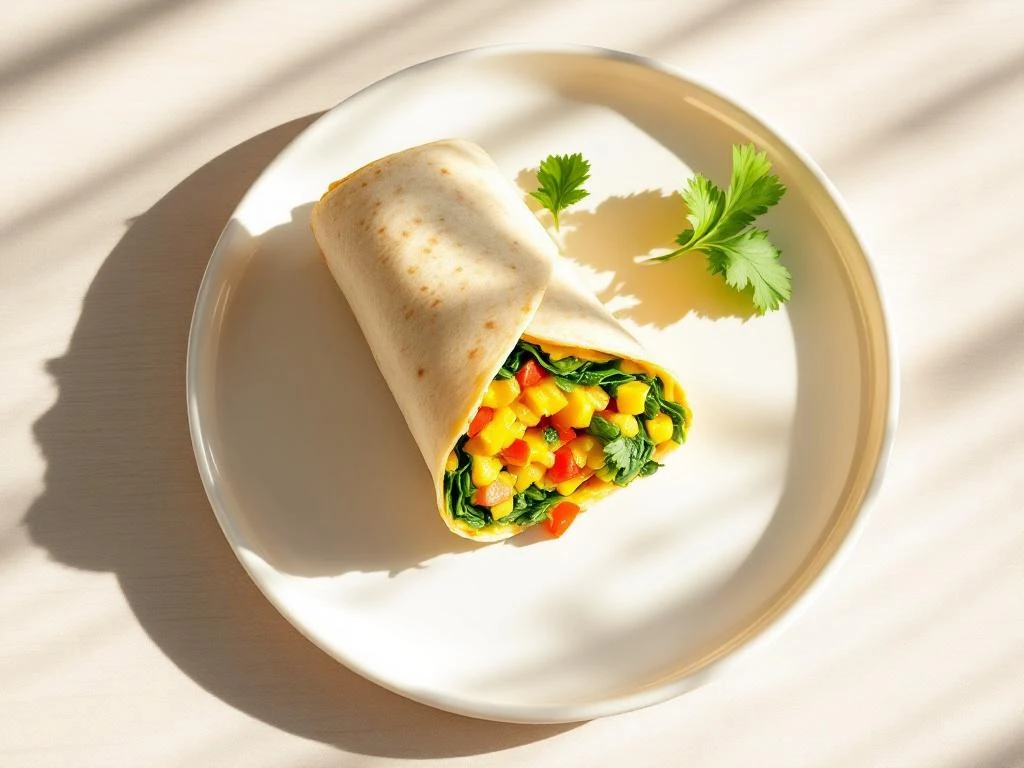
Managing IBS symptoms whilst enjoying a satisfying breakfast can feel like a challenge. This egg and vegetable breakfast burrito gives you a portable, protein-rich morning meal that respects your digestive needs. You’ll learn how to build a flavourful, gut-friendly burrito using safe low FODMAP ingredients and simple cooking techniques that anyone can master.
This recipe suits beginners with basic cooking skills. You’ll need about 20 minutes from start to finish. The ingredients are easy to find, and you probably have most of the kitchen tools already. By the end, you’ll have a warm, satisfying breakfast that travels well and keeps you full until lunch.
Why this breakfast burrito works for IBS
This breakfast burrito addresses several common digestive concerns. The recipe uses carefully selected low FODMAP vegetables that typically don’t trigger IBS symptoms. You get gentle fibre from vegetables without the high FODMAP ingredients that cause bloating or discomfort.
Eggs provide high-quality protein that digests easily for most people with IBS. Protein helps stabilise blood sugar through the morning, which prevents energy crashes and reduces stress on your digestive system. The combination of protein and low FODMAP vegetables creates a balanced meal that supports steady energy.
The portable format solves a practical problem. Many people with IBS struggle with morning time pressure, which can worsen symptoms. This IBS friendly breakfast can be prepared ahead, wrapped, and eaten on the go. You avoid skipping meals, which often leads to poor food choices later when you’re hungry and rushed.
The recipe also provides flexibility. You can adjust vegetables based on your personal tolerance and what’s in season. This matters because IBS varies from person to person. Having a reliable base recipe you can modify builds confidence in your meal planning.
Gather your low FODMAP ingredients and tools
For the low FODMAP breakfast burrito, you’ll need these ingredients for one serving. Scale up as needed for multiple burritos.
- 2 large eggs
- 1 small gluten free tortilla (check ingredients for wheat or high FODMAP additives)
- 30g red bell pepper, diced (about 2 tablespoons)
- 30g courgette, diced (about 2 tablespoons)
- 20g spinach leaves, roughly chopped
- 1 tablespoon lactose-free butter or suitable oil
- Salt and pepper to taste
- Fresh chives for garnish (optional, 1 tablespoon chopped)
Suitable substitutions include swapping courgette for aubergine (30g maximum per serving). You can replace red bell pepper with carrot if peppers don’t suit you. Use olive oil instead of butter if you prefer. The tortilla must be gluten free for this recipe to remain fully low FODMAP compliant.
Kitchen tools you’ll need are straightforward. A medium non-stick frying pan works best for both vegetables and eggs. You’ll also need a small bowl for whisking eggs, a spatula for stirring, a sharp knife for chopping, and a cutting board. Keep a plate ready for warming your tortilla.
Portion guidance for low FODMAP compliance
Vegetable portions matter on the low FODMAP diet. Bell pepper stays safe at 30g per serving. Courgette is low FODMAP up to 65g, so the 30g used here provides a comfortable margin. Spinach is low FODMAP in reasonable portions, and 20g fits well within safe limits.
These portions give you vegetable variety without exceeding thresholds. If you want more volume, add extra spinach rather than increasing bell pepper or courgette. Spinach has more flexibility in portion size whilst staying low FODMAP.
Prepare and cook the vegetable filling
Wash all vegetables thoroughly under cold running water. Pat them dry with a clean tea towel. This removes any dirt and excess moisture that would make vegetables steam rather than sauté.
Dice the bell pepper and courgette into small, uniform pieces about 0.5cm across. Consistent size ensures even cooking. Roughly chop the spinach into strips about 2cm wide. The spinach will wilt significantly, so larger pieces are fine.
Heat half the butter or oil in your non-stick pan over medium heat. Wait until the butter melts and stops foaming, or until oil shimmers slightly. This indicates the pan is ready. Add the diced bell pepper and courgette. Stir them to coat with fat.
Cook the vegetables for 4 to 5 minutes, stirring occasionally. You’re looking for them to soften but still have a slight bite. The bell pepper edges should show light browning. If vegetables start sticking, reduce heat slightly and add a splash of water.
Add the chopped spinach to the pan. Stir it through the other vegetables. The spinach will wilt in about 1 minute. Once it’s wilted and bright green, remove the pan from heat. Season with a pinch of salt and pepper. Transfer the vegetable filling to a plate whilst you prepare the eggs.
Texture indicators for perfectly cooked vegetables
Your vegetables are ready when bell pepper and courgette yield slightly to a fork but aren’t mushy. They should have some structure. The spinach should be completely wilted with no raw-looking leaves. If vegetables release a lot of water, increase heat slightly to evaporate excess liquid before removing from heat.
Scramble the eggs to perfection
Crack both eggs into your small bowl. Add a small pinch of salt and a grind of black pepper. Whisk vigorously with a fork for about 30 seconds. You want the yolks and whites fully combined with some air incorporated. The mixture should look uniformly yellow with slight froth on top.
Return your pan to medium-low heat. Add the remaining butter or oil. Let it melt completely and coat the pan bottom. Pour in the whisked eggs. Wait about 10 seconds without stirring. This lets a thin layer begin to set.
Using your spatula, gently push the eggs from the edge towards the centre. Tilt the pan so uncooked egg flows into the cleared space. Continue this pushing motion every 10 to 15 seconds. Work slowly and gently. Patience creates soft, creamy curds.
Cook until the eggs are mostly set but still look slightly wet on top. This takes about 2 to 3 minutes total. The eggs will continue cooking from residual heat after you remove the pan. Overcooked eggs become rubbery and dry, which makes them harder to digest for some people.
Remove the pan from heat when small amounts of uncooked egg remain. The scrambled eggs should form soft, pillowy curds. If you’ve overcooked them slightly, they’ll still work but won’t be quite as creamy.
Common egg scrambling mistakes
High heat is the main culprit for tough eggs. If your eggs cook in under 90 seconds, your heat is too high. Reduce temperature and work more slowly. Not whisking enough leaves streaks of white, which affects texture. Stirring constantly creates small, broken curds rather than soft folds. Let eggs set briefly between stirs.
Assemble and wrap your breakfast burrito
Warm your gluten free tortilla before assembling. Place it in a dry pan over low heat for about 20 seconds per side, or microwave it for 15 seconds wrapped in a damp paper towel. A warm tortilla is flexible and won’t crack when folded.
Lay the warmed tortilla on a clean plate. Position it like a diamond with one point facing you. Spoon the scrambled eggs in a horizontal line across the centre, leaving about 4cm clear on each side. The eggs form your base layer.
Add the cooked vegetables on top of the eggs. Spread them evenly across the egg layer. Keep the filling centred and avoid overfilling. Too much filling makes the burrito impossible to wrap properly and messy to eat.
Fold the bottom point up over the filling. Tuck it snugly under the filling, pulling back slightly to create tension. This tuck is what holds everything together. Fold in the left and right sides, bringing them towards the centre. They should overlap slightly.
Roll the burrito away from you, keeping the sides tucked in. Apply gentle pressure as you roll to create a tight package. The top point will seal the burrito. Place it seam-side down on your plate. The weight keeps it closed.
If eating immediately, slice the burrito in half on a diagonal with a sharp knife. This makes it easier to handle and looks appealing. For transport, wrap tightly in foil or baking paper. The burrito stays warm for about 30 minutes wrapped.
Troubleshooting burrito assembly
If your tortilla tears, it’s probably too cold or too dry. Warm it longer next time. If filling spills out the sides, you’ve overfilled it. Use less filling or a larger tortilla. If the burrito won’t stay closed, the tortilla may not be pliable enough, or you didn’t tuck the bottom fold tightly under the filling.
Customise with low FODMAP toppings and variations
Several safe toppings enhance your low FODMAP egg recipe without triggering symptoms. Lactose-free cheddar cheese adds richness. Use up to 40g grated per burrito. A tablespoon of lactose-free sour cream or plain lactose-free yoghurt provides tangy creaminess.
Fresh herbs like coriander or parsley add brightness. Chop them finely and sprinkle inside before rolling. A small amount of spring onion greens (green parts only, 1 tablespoon) gives mild onion flavour safely. Avoid the white bulb, which is high FODMAP.
For protein variations, add cooked bacon or ham. Check labels to ensure no high FODMAP ingredients like garlic or onion powder. Crumble 2 strips of cooked bacon over the eggs before adding vegetables. Diced cooked ham (30g) works similarly.
Spice options include smoked paprika, cumin, or a pinch of cayenne pepper mixed into the eggs before cooking. These add depth without FODMAP concerns. A squeeze of lime juice over the vegetables before assembling brightens flavours.
For a heartier version, add a tablespoon of cooked quinoa or a small amount of mashed potato (about 2 tablespoons) to the filling. Both are low FODMAP and add substance. This makes the burrito more filling for active mornings.
Make-ahead and meal prep options
This easy breakfast burrito adapts well to meal prep. Cook vegetables and eggs separately, then store them in separate containers in the fridge for up to 3 days. Assemble burritos fresh each morning, which takes about 3 minutes. This keeps the tortilla from getting soggy.
You can also assemble complete burritos and wrap them tightly in foil. Store in the fridge for up to 2 days. Reheat in a 180°C oven for 15 minutes, or microwave for 90 seconds. The texture won’t be quite as good as fresh, but it’s convenient for busy mornings.
For freezing, wrap assembled burritos individually in cling film, then foil. Freeze for up to 1 month. Thaw overnight in the fridge, then reheat. Remove cling film before reheating. Frozen burritos work best reheated in the oven to crisp the tortilla slightly.
This digestive friendly breakfast gives you a reliable template for morning meals. You’ve learned how to select safe ingredients, cook them properly, and assemble everything into a portable format. The recipe works whether you’re eating at home or need something for your commute.
Once you’re comfortable with the basic version, experiment with the variations that appeal to you. Try different low FODMAP vegetables as seasons change. Test protein additions to see what keeps you satisfied longest. The flexibility of this recipe makes it practical for regular rotation in your meal plan.
We create recipes like this to make low FODMAP cooking less complicated. When you have tested recipes that work with your digestive needs, meal planning becomes simpler. You spend less time worrying about what you can eat and more time enjoying your food.
Egg and vegetable breakfast burrito
Cooking Time: 20 minutes | Portions: 1 serving
- Whisk 2 eggs with salt and pepper until fully combined
- Dice 30g red bell pepper and 30g courgette into small, uniform pieces
- Roughly chop 20g spinach leaves
- Sauté bell pepper and courgette in butter or oil over medium heat for 4 to 5 minutes until softened
- Add spinach and cook until wilted, about 1 minute, then transfer to a plate
- Scramble eggs over medium-low heat, pushing gently from edges to centre, for 2 to 3 minutes until soft curds form
- Warm 1 gluten free tortilla in a dry pan or microwave
- Layer eggs across the centre of the tortilla, top with vegetables
- Fold bottom up over filling, tuck tightly, fold in sides, then roll away from you
- Serve immediately or wrap in foil for transport
- Optional additions: lactose-free cheese, fresh herbs, spring onion greens (green parts only), cooked bacon or ham
This recipe is for informational purposes only and is not medical or dietary advice. Please consult a healthcare professional before making any changes to your diet.