
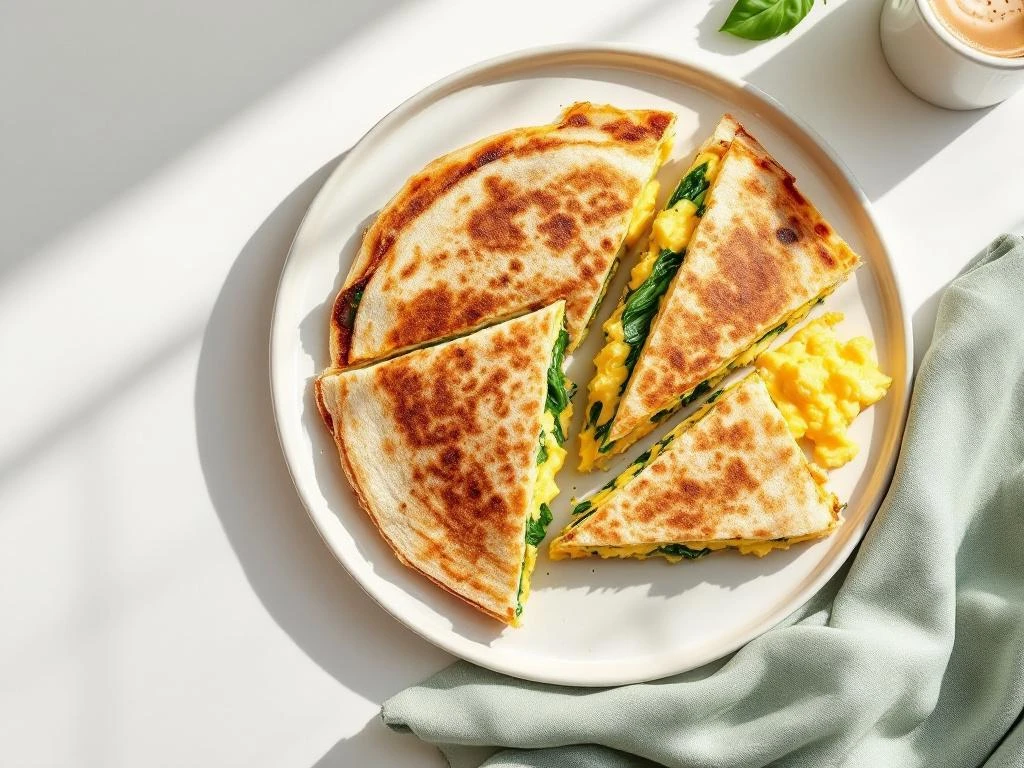
Managing IBS doesn’t mean settling for boring breakfasts. This egg and spinach breakfast quesadilla delivers protein, greens, and satisfying flavour while staying within low FODMAP guidelines. You’ll have a hot, crispy meal ready in about 15 minutes with minimal cleanup. The recipe uses simple ingredients that are easy to find and gentle on your digestive system. Whether you’re new to the low FODMAP diet or looking for quick breakfast ideas, this gluten free breakfast quesadilla fits perfectly into your morning routine.
Why this breakfast quesadilla works for IBS
This low FODMAP quesadilla relies on ingredients that are naturally easy to digest. Eggs provide high-quality protein without triggering IBS symptoms. Fresh spinach stays within safe FODMAP limits when you use a handful per serving. Lactose-free cheese options let you enjoy that melted, creamy texture without digestive upset.
The combination offers sustained energy throughout your morning. Protein from eggs keeps you full longer than carb-heavy breakfasts. Spinach adds iron and folate without the gas-producing compounds found in high FODMAP vegetables. Gluten-free tortillas complete the meal while keeping your gut comfortable.
This IBS friendly breakfast works particularly well during the elimination phase of the low FODMAP diet. All ingredients are considered safe in the portions used. You get nutritional variety without the guesswork about what might cause problems. The recipe also provides a template you can adjust as you reintroduce foods and learn your personal triggers.
Gather your ingredients and tools
You’ll need 2 large eggs per quesadilla. Choose fresh eggs for the best flavour and texture. Grab about 30 grams of fresh spinach, which equals roughly one generous handful. This amount stays well within low FODMAP serving limits.
For the tortillas, select gluten-free options that list safe ingredients. Many brands now make tortillas specifically for sensitive stomachs. Check the label to avoid onion or garlic powder. You’ll need two tortillas per quesadilla if you want the classic folded style, or one if you prefer an open-faced version.
Lactose-free cheese is optional but recommended. Aged cheddar naturally contains less lactose, or choose specifically labelled lactose-free varieties. Use about 30 grams per serving. For cooking, have either butter or a neutral oil like olive or rice bran oil ready. Season with salt and pepper, which are always safe choices on the low FODMAP diet.
Kitchen tools needed include a medium-sized skillet, a mixing bowl, a whisk or fork, and a spatula. A lid for your skillet helps melt the cheese evenly. Keep a plate nearby for assembling your quesadilla.
Ingredient selection tips
When buying gluten-free tortillas, smaller sizes work better for portion control. Look for brands without added fibres like inulin, which can trigger symptoms. Fresh spinach works better than frozen for this recipe because it has less moisture. Pat frozen spinach very dry if that’s what you have available.
Prepare the egg and spinach filling
Crack your eggs into the mixing bowl. Whisk them thoroughly until the yolks and whites combine completely. You should see no streaks of clear egg white. This takes about 30 seconds of steady whisking. Season with a pinch of salt and pepper at this stage.
Heat your skillet over medium heat. Add about half a teaspoon of butter or oil. When the butter melts and stops foaming, add your fresh spinach. Stir it constantly with your spatula. The spinach will wilt down dramatically in about 1 to 2 minutes. You’ll know it’s ready when all the leaves look dark green and soft with no crisp edges remaining.
Pour the whisked eggs directly over the wilted spinach. Let them sit undisturbed for about 10 seconds, then begin stirring gently. Use your spatula to push the eggs from the edges toward the centre. Keep the heat at medium to avoid browning. The eggs are done when they look just set but still slightly glossy. This takes roughly 2 to 3 minutes total. Remove the pan from heat immediately because the eggs will continue cooking from residual heat.
Texture tips for perfect eggs
Slightly undercook your eggs at this stage. They’ll finish cooking when you assemble and heat the quesadilla. Overcooked eggs turn rubbery and dry, especially when reheated. If you see any liquid egg pooling, cook for another 30 seconds while stirring.
Assemble and cook your quesadilla
Wipe out your skillet with a paper towel and return it to medium-low heat. Place one gluten-free tortilla in the dry pan. Let it warm for about 20 seconds. Spread your egg and spinach mixture over half of the tortilla, leaving a small border around the edge. If you’re using cheese, sprinkle it over the eggs now.
Fold the empty half of the tortilla over the filling to create a half-moon shape. Press down gently with your spatula. Cook for 2 to 3 minutes without moving it. You’ll see the bottom turn golden brown when you lift the edge slightly to check. The tortilla should feel crispy, not soft.
Slide your spatula under the quesadilla and flip it carefully in one smooth motion. Cook the second side for another 2 minutes. The cheese should melt completely, and both sides should have golden-brown spots. If you notice any burning, reduce your heat slightly. The tortilla can go from golden to burnt quickly, so watch it closely during the final minute.
Flipping without disaster
If you’re nervous about flipping, use a large spatula that supports the entire quesadilla. You can also place a plate over the pan, flip everything together, then slide the quesadilla back into the pan. This method guarantees no spills but creates an extra dish to wash.
Customize with low FODMAP variations
Add fresh tomatoes in small amounts. One medium tomato stays within safe limits when diced and mixed into your eggs. Cherry tomatoes work particularly well because their sweetness balances the savoury eggs. Remove the seeds if you find tomatoes too watery.
Fresh herbs brighten the flavour considerably. Chives, basil, or parsley are all low FODMAP friendly. Chop about a tablespoon and stir it into your eggs before cooking. Dried herbs work too, but use half the amount because their flavour is more concentrated.
For extra protein, consider adding cooked chicken or turkey. About 50 grams of diced, cooked meat per quesadilla keeps portions reasonable. Bacon works too, though watch the serving size to avoid excess fat that might upset sensitive stomachs. Cook any meat additions separately before adding them to your eggs.
Try different cheese varieties as you learn what your gut tolerates. Swiss, mozzarella, or feta all come in lactose-free versions. Firm cheeses generally contain less lactose than soft varieties. Nutritional yeast offers a cheese-like flavour for those avoiding dairy entirely.
Serving suggestions
Serve your easy breakfast quesadilla with a small side of lactose-free yoghurt or a few strawberries. A squeeze of lime juice adds brightness without FODMAP concerns. Hot sauce is fine if it doesn’t contain garlic or onion, which many commercial varieties do include.
Store and reheat for meal prep success
This spinach egg wrap makes excellent meal prep. Cook your quesadillas completely, then let them cool to room temperature on a wire rack. This prevents soggy bottoms from trapped steam. Once cool, wrap each quesadilla individually in aluminium foil or beeswax wrap.
Store wrapped quesadillas in the refrigerator for up to 3 days. Stack them in an airtight container if you’re making multiple servings. For longer storage, freeze them for up to 1 month. Place a small piece of parchment paper between each quesadilla before freezing to prevent them from sticking together.
Reheat refrigerated quesadillas in a skillet over medium heat for about 2 minutes per side. This method restores the crispy texture better than microwaving. If you’re short on time, microwave for 45 to 60 seconds, but expect a softer texture. For frozen quesadillas, thaw them in the refrigerator overnight before reheating.
Meal prep efficiency
Make a double batch of the egg mixture on Sunday. Cook four or five quesadillas at once, using two skillets if you have them. This gives you grab-and-go breakfasts for most of the week. The time investment is minimal compared to cooking fresh every morning.
You can also prep components separately. Whisk your eggs and store them in the fridge for up to 2 days. Wash and dry your spinach in advance. When morning comes, you’ll only need 5 minutes to cook everything fresh.
This healthy breakfast quesadilla adapts to your schedule and your gut. The low FODMAP breakfast options give you control over your mornings without sacrificing flavour or nutrition. As you become comfortable with the basic egg spinach quesadilla recipe, you’ll find countless ways to make it your own while keeping your IBS symptoms at bay.
Egg and spinach breakfast quesadilla
Cooking Time: 15 minutes | Portions: 1 serving
- Whisk 2 large eggs with salt and pepper in a bowl
- Heat skillet over medium heat with butter or oil
- Wilt 30g fresh spinach in the pan for 1-2 minutes
- Pour eggs over spinach and cook, stirring gently, for 2-3 minutes
- Warm gluten-free tortilla in clean skillet over medium-low heat
- Spread egg mixture over half the tortilla
- Add 30g lactose-free cheese if using
- Fold tortilla in half and cook 2-3 minutes per side until golden
- Customize with tomatoes, herbs, or cooked protein as desired
- Store wrapped in fridge for 3 days or freeze for 1 month
- Reheat in skillet for best texture
This recipe is for informational purposes only and is not medical or dietary advice. Please consult a healthcare professional before making any changes to your diet.