
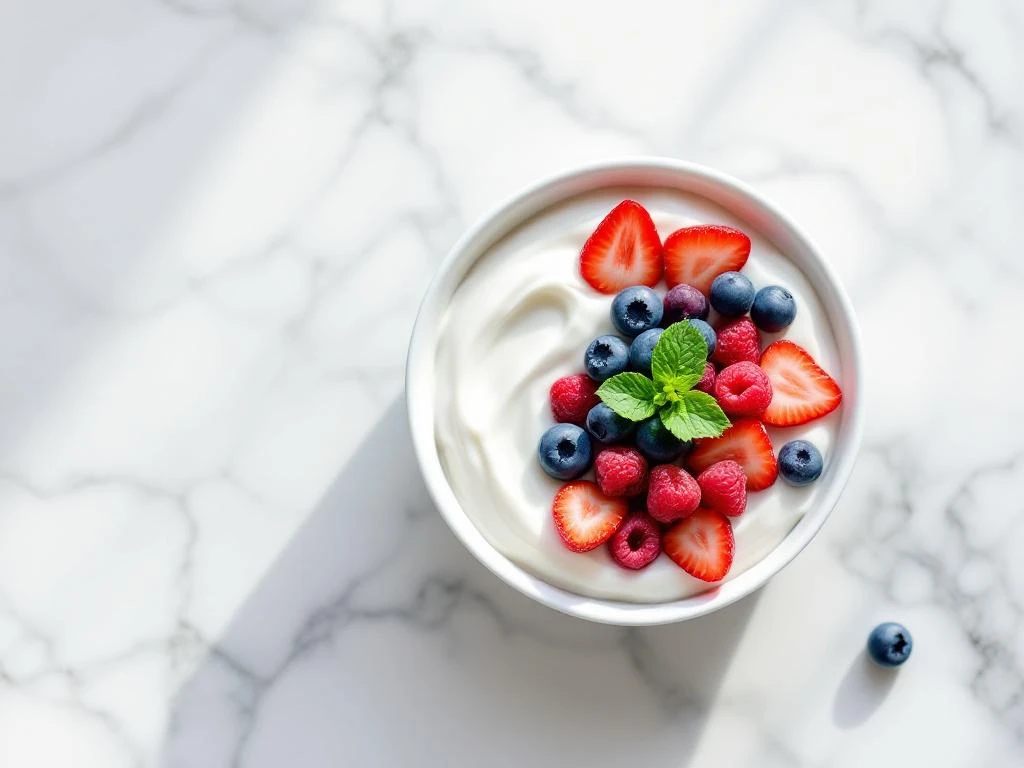
Starting your day with a coconut yogurt berry bowl means choosing a breakfast that’s gentle on your digestive system whilst delivering the nutrition and flavour you need. This beginner-friendly recipe takes just 5 minutes to prepare and requires no cooking skills. You’ll need coconut yogurt, low FODMAP berries, and a few simple toppings. By following these instructions, you’ll create a satisfying breakfast bowl that supports your gut health during any phase of the low FODMAP diet.
Why coconut yogurt berry bowls work for IBS
Coconut yogurt provides a naturally dairy-free base that’s gentle on sensitive digestive systems. Unlike traditional dairy yogurt, it contains no lactose, which many people with IBS struggle to digest. The creamy texture and mild flavour make it an ideal foundation for a FODMAP-friendly breakfast.
Berries offer essential nutrients without triggering symptoms when you stick to safe portions. Strawberries and blueberries (in controlled amounts) provide antioxidants, fibre, and vitamins whilst remaining low in FODMAPs. This combination supports gut health by delivering nutrition your body needs without the sugars and compounds that can cause digestive distress.
The simplicity of this meal matters when you’re managing IBS. You’re not combining multiple ingredients that might interact poorly or create digestive challenges. Each component serves a purpose: the coconut yogurt offers probiotics and healthy fats, the berries provide natural sweetness and nutrients, and optional toppings add texture and additional nutrition. This straightforward approach means you can eat confidently without worrying about symptom triggers.
Gather your low FODMAP bowl ingredients
Choose a plain, unsweetened coconut yogurt without added FODMAPs. Check the ingredient list carefully, avoiding products with inulin, chicory root, or high FODMAP sweeteners. Brands that work well include CoYo, Koko, and Alpro’s coconut range. You’ll need about 200g (roughly 3/4 cup) per serving.
For your berries, measure portions carefully to stay within FODMAP limits:
- Strawberries: up to 10 medium berries (approximately 140g)
- Blueberries: up to 20 berries (approximately 28g)
- Raspberries: up to 10 berries (approximately 60g) if you’re in the maintenance phase
Select safe toppings that add nutrition and texture without causing symptoms. During the elimination phase, stick to these options:
- Pumpkin seeds: 2 tablespoons maximum
- Walnuts: up to 10 walnut halves
- Chia seeds: 2 tablespoons
- Maple syrup: 1 tablespoon (pure maple syrup only)
- Shredded coconut: 2 tablespoons
- Cinnamon: a pinch for flavour
Keep a set of measuring spoons and a kitchen scale nearby. Accurate portions matter more with the low FODMAP diet than with regular cooking. What seems like a small amount can make the difference between a comfortable morning and digestive discomfort.
Assemble your coconut yogurt berry bowl
Start by spooning your coconut yogurt into a bowl. If it’s been refrigerated, the texture might be quite thick. Let it sit at room temperature for a few minutes, or give it a quick stir to make it creamier and easier to eat.
Wash your berries thoroughly and pat them dry. Cut strawberries into halves or quarters, depending on their size. Leave blueberries whole. Smaller pieces mix better with the yogurt and make each bite more balanced. Arrange the berries on top of the yogurt rather than stirring them in completely. This keeps the presentation appealing and lets you control how much fruit you get in each spoonful.
Add your chosen toppings in this order for the best texture. Sprinkle seeds first, as they’ll settle slightly into the yogurt. Add nuts next, placing them where you can see them. Finish with any liquid sweetener, drizzling it over the top so it distributes evenly. If you’re using cinnamon, dust it over everything at the end.
Success check: Your bowl should look colourful and appealing, with distinct layers you can see. The yogurt base should be creamy (not icy or separated), the berries should look fresh, and toppings should be evenly distributed. If the yogurt seems too thick, add a splash of lactose-free milk or water to reach your preferred consistency.
Eat your bowl straight away for the best texture. The berries will start releasing juice if left too long, and seeds can become soggy. If you need to prepare components ahead, keep the yogurt, berries, and toppings separate until you’re ready to eat.
Customise your bowl for different FODMAP phases
During the elimination phase, keep your ingredients simple and stick to confirmed low FODMAP options. Use only strawberries and blueberries in safe portions. Choose one or two toppings maximum, focusing on seeds rather than nuts if you’re being cautious. Skip any sweeteners until you know how your body responds to the basic bowl.
When you enter the reintroduction phase, test one new ingredient at a time. Try adding a small amount of cashews (which contain moderate FODMAPs) on one day, then wait three days before testing another ingredient. Keep notes about what you add and how you feel. This systematic approach helps you identify exactly what works for your body.
In the maintenance phase, you’ll have more flexibility based on what you’ve successfully reintroduced. You might add a tablespoon of granola if you’ve tested and tolerated oats. Perhaps you can include a few raspberries or a small amount of honey if those passed your testing. Some people find they can mix berries in larger portions, whilst others need to stick to elimination-phase amounts.
Adjust portions based on your hunger and nutritional needs. A smaller bowl (100g yogurt with minimal toppings) works as a light breakfast or snack. A larger bowl (200g yogurt with generous toppings) provides more sustenance for active mornings. Add a tablespoon of nut butter for extra protein if you’ve tested it successfully. Include hemp seeds for omega-3 fatty acids if regular seeds feel too plain.
Track your customisations in a food diary. Write down exactly what you include and how much. Note how you feel two to three hours after eating. This information becomes invaluable when you’re trying to understand your personal tolerance levels and create variety in your diet without triggering symptoms.
The beauty of this breakfast bowl lies in its adaptability. You’re building a template that works for your body, not following rigid rules that might not suit your individual needs. As you learn more about your tolerances, your coconut yogurt berry bowl can evolve whilst remaining a safe, delicious breakfast option that supports your digestive health.
Coconut yogurt berry bowl
Cooking time: 5 minutes | Portions: 1 serving
- 200g plain unsweetened coconut yogurt
- 10 medium strawberries (halved or quartered)
- 20 blueberries
- 2 tablespoons pumpkin seeds
- 1 tablespoon maple syrup (optional)
- Pinch of cinnamon (optional)
Instructions:
- Spoon coconut yogurt into a serving bowl
- Wash and prepare berries, cutting strawberries into smaller pieces
- Arrange berries on top of yogurt
- Sprinkle pumpkin seeds over berries
- Drizzle maple syrup if using
- Dust with cinnamon if desired
- Serve immediately
This recipe is for informational purposes only and is not medical or dietary advice. Please consult a healthcare professional before making any changes to your diet.