
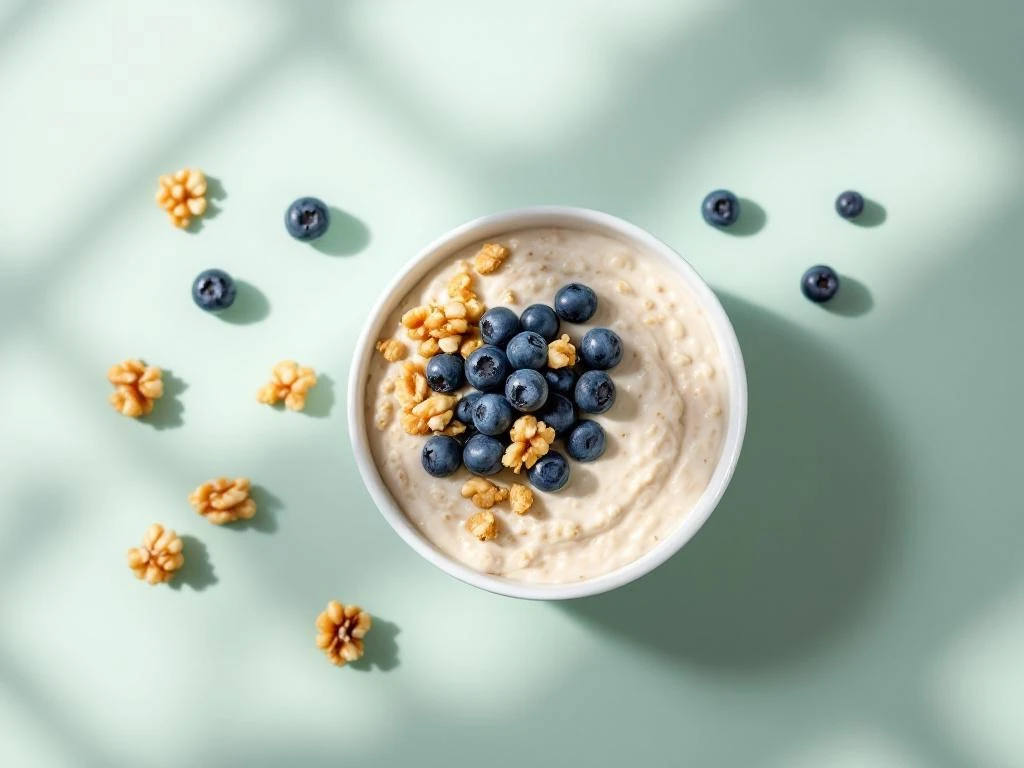
Looking for an IBS friendly breakfast that doesn’t upset your stomach? These blueberry walnut overnight oats deliver a satisfying, healthy breakfast meal prep solution that works with your digestive system rather than against it. This low FODMAP overnight oats recipe takes just five minutes to prepare the night before, giving you a ready-to-eat breakfast that’s gentle on sensitive stomachs. You’ll need a jar or container with a lid, gluten free overnight oats, lactose-free milk, fresh blueberries, and walnuts. No cooking required, no morning stress, and no digestive discomfort.
Why overnight oats work for sensitive stomachs
Soaking oats overnight breaks down some of the complex starches that can trigger IBS symptoms. The extended soaking period makes the oats easier to digest because it partially pre-digests the grain before you eat it. This overnight oats recipe uses gluten free rolled oats, which eliminate any cross-contamination concerns for those managing multiple food sensitivities.
The low FODMAP diet requires careful portion control with certain ingredients. Blueberries contain moderate FODMAPs, but at 20 grams (about 28 berries), they remain within safe limits for most people following the diet. Walnuts provide healthy fats and protein at a low FODMAP serving size of 10 nuts or roughly 30 grams. Both ingredients add texture and flavour without compromising digestive comfort.
This combination creates a balanced meal that stabilises blood sugar throughout the morning. The soluble fibre in oats helps regulate digestion, while the protein and healthy fats from walnuts keep you satisfied. Unlike hot oatmeal that can sometimes feel heavy, cold overnight oats feel lighter on the stomach whilst still providing substantial nutrition.
Gather your low FODMAP ingredients
Start with 50 grams of gluten-free rolled oats per serving. Check the label to ensure they’re certified gluten free, as regular oats can be contaminated during processing. Avoid instant oats or steel-cut oats for this recipe, as rolled oats provide the best texture for overnight soaking.
Choose 120 ml of lactose-free milk or a low FODMAP plant-based alternative. Almond milk (made from almonds only, not thickeners) works well, as does lactose-free cow’s milk. Avoid soy milk unless it’s made from soy protein only, and skip coconut milk as it can be high in FODMAPs at larger servings.
Measure 20 grams of fresh blueberries and 10 walnuts (roughly chopped). Weigh these portions rather than eyeballing them, especially during the elimination phase of the low FODMAP diet. A small kitchen scale ensures accuracy.
Optional additions include one tablespoon of maple syrup (low FODMAP up to two tablespoons), a pinch of cinnamon, or half a teaspoon of vanilla extract. These flavour enhancers add variety without introducing FODMAP triggers. Keep a small jar of chia seeds on hand if you prefer thicker oats, using just one teaspoon per serving to stay within safe limits.
Equipment you’ll need
- Glass jar or plastic container with tight-fitting lid (250-300 ml capacity)
- Kitchen scale for accurate portion measurements
- Measuring spoons
- Small bowl for mixing (optional)
Prepare your overnight oats in 5 minutes
Add the gluten free overnight oats to your container. Pour the lactose-free milk over the oats, ensuring all the oats are submerged. The standard ratio is 1 part oats to 2.5 parts liquid, which creates a creamy texture without being too runny or too thick.
Stir the mixture thoroughly with a spoon. Scrape down the sides of the container to ensure no dry oats stick to the edges. These dry bits won’t soften properly overnight and create an unpleasant texture. Add your maple syrup and any spices at this stage, mixing them into the oat mixture.
Scatter the measured blueberries and chopped walnuts on top. You can stir them through if you prefer, but layering them on top looks appealing and makes it easy to adjust portions if needed. Seal the container with its lid and place it in the refrigerator.
Refrigerate for at least 8 hours, or up to 5 days for meal prep batching. The oats need this minimum time to absorb the liquid and soften properly. For make ahead breakfast planning, prepare four or five jars on Sunday evening for the work week. Label each jar with the preparation date to track freshness.
Texture troubleshooting
If your easy overnight oats turn out too thick after soaking, add a splash of extra milk before eating. Too runny? Add another tablespoon of oats to the jar and refrigerate for another hour. The oats will continue absorbing liquid even after the initial soaking period.
Some people prefer room temperature oats rather than cold from the fridge. Remove your jar 15 minutes before eating, or add a small amount of warm lactose-free milk just before serving. Never microwave overnight oats with blueberries already mixed in, as the berries can burst and create hot spots that burn your mouth.
Customise your oats with FODMAP-friendly toppings
Swap blueberries for strawberries (limit to 65 grams), raspberries (limit to 60 grams), or kiwi fruit (one small kiwi). Each of these fruits stays within low FODMAP guidelines at the specified portions. Frozen berries work just as well as fresh, and they’ll thaw overnight in the refrigerator.
Replace walnuts with other low FODMAP nuts like pecans (10 pecan halves), macadamias (20 nuts), or pumpkin seeds (2 tablespoons). Each option provides different flavour profiles whilst maintaining the healthy fat content that makes this blueberry oatmeal satisfying.
For protein additions, stir in one tablespoon of peanut butter (check for added high FODMAP ingredients like honey or inulin). Alternatively, mix in one scoop of low FODMAP protein powder before adding the liquid. This transforms your breakfast into a more substantial meal suitable for active mornings or post-workout recovery.
Seasonal variations
During autumn, add a pinch of pumpkin spice and swap berries for small chunks of firm banana (limit to one-third of a medium banana). Winter calls for warming spices like cardamom or ginger (fresh grated ginger, not powder, for better FODMAP tolerance). Spring and summer work beautifully with the standard blueberry walnut combination.
Some people prefer warm oats even in summer. Gently heat your prepared overnight oats in a small saucepan over low heat, stirring constantly. Add extra milk as needed to maintain a creamy consistency. This method works better than microwaving for even temperature throughout.
Texture preferences
For chewier oats, reduce the soaking time to exactly 8 hours. For softer, porridge-like consistency, extend soaking to 24 hours. Add one teaspoon of chia seeds to create a pudding texture, or leave them out for traditional oat texture. Toast your walnuts in a dry pan before adding them for enhanced flavour and extra crunch.
Creating a low FODMAP overnight oats routine means you’ll never skip breakfast due to time pressure or fear of digestive upset. This blueberry walnut overnight oats recipe proves that managing IBS doesn’t require sacrificing flavour or convenience. Experiment with the variations to find your favourite combination, always measuring portions carefully during the elimination phase.
Batch preparation makes this healthy breakfast meal prep even more practical. Prepare five jars on Sunday, grab one each morning, and enjoy knowing your breakfast supports both your schedule and your digestive health. The combination of convenience, nutrition, and FODMAP compliance makes this recipe a foundation for successful long-term dietary management.
Blueberry walnut overnight oats
Prep time: 5 minutes | Chilling time: 8 hours | Portions: 1 serving
Ingredients:
- 50g gluten-free rolled oats
- 120ml lactose-free milk or low FODMAP plant milk
- 20g fresh blueberries (approximately 28 berries)
- 10 walnuts, roughly chopped (approximately 30g)
- 1 tablespoon maple syrup (optional)
- Pinch of cinnamon (optional)
- ½ teaspoon vanilla extract (optional)
Instructions:
- Add oats to a jar or container with a lid
- Pour lactose-free milk over oats and stir thoroughly
- Mix in maple syrup and any spices if using
- Top with measured blueberries and chopped walnuts
- Seal container and refrigerate for 8 hours or overnight
- Stir before eating, adding extra milk if needed for consistency
- Store prepared oats for up to 5 days in the refrigerator
This recipe is for informational purposes only and is not medical or dietary advice. Please consult a healthcare professional before making any changes to your diet.
Related Articles
- How many poos a day is normal with IBS?
- Coconut Flour Orange Muffins
- Turkey Sausage and Egg Skillet
- Rice Porridge with Maple Syrup
- Coconut Yogurt Granola Parfait