
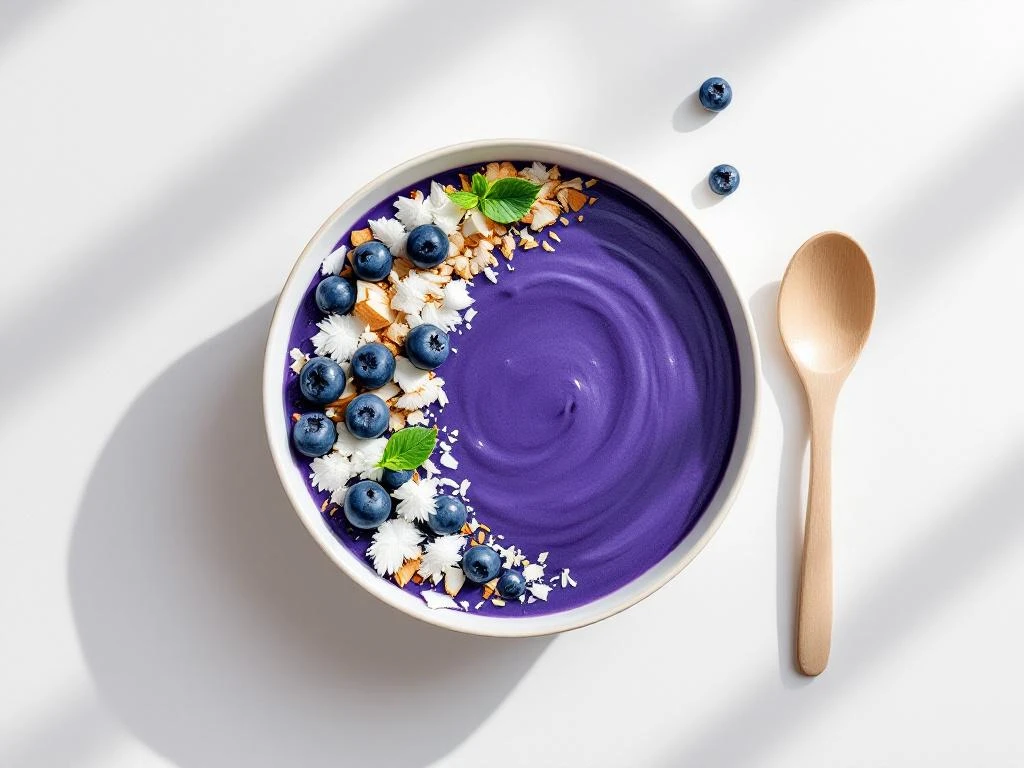
Managing IBS symptoms doesn’t mean sacrificing a delicious, satisfying breakfast. This blueberry coconut smoothie bowl combines gut-friendly ingredients into a creamy, nutrient-rich meal that’s gentle on sensitive digestive systems. You’ll create a thick, spoonable smoothie base topped with FODMAP-compliant garnishes that add texture and visual appeal.
This recipe works for beginners and takes about 10 minutes to prepare. You’ll need a high-powered blender, measuring cups, and basic knowledge of low FODMAP portion sizes. The result is a healthy breakfast bowl that supports digestive health while delivering the flavour and satisfaction you crave.
Why blueberry coconut smoothie bowls work for IBS
Blueberries are naturally low in FODMAPs when consumed in the right portions. A serving of 40 grams (about a quarter cup) provides antioxidants and fibre without triggering digestive distress. They contain polyphenols that may support gut health and reduce inflammation in the digestive tract.
Coconut products offer creamy texture and healthy fats that help you feel satisfied. Coconut milk and coconut yoghurt (in lactose-free varieties) are FODMAP-friendly options that replace dairy without compromising taste. The medium-chain triglycerides in coconut are easier to digest than other fats, making this smoothie bowl gentler on sensitive stomachs.
This recipe provides balanced nutrition that stabilises blood sugar and prevents the energy crashes that can worsen IBS symptoms. The combination of protein, healthy fats, and controlled carbohydrates creates a meal that sustains you through the morning. You’ll get essential nutrients without overloading your digestive system with high FODMAP ingredients that trigger bloating, cramping, or other uncomfortable symptoms.
Gather your low FODMAP ingredients and tools
Start by assembling these FODMAP-friendly ingredients for your smoothie bowl base. You’ll need 40 grams of frozen blueberries, 200ml of lactose-free coconut yoghurt or coconut milk, half a frozen banana (about 50 grams), and one tablespoon of chia seeds. Add a handful of spinach (about 30 grams) for extra nutrients without affecting the flavour.
For toppings, gather small portions of low FODMAP options. Consider 10 grams of pumpkin seeds, 5 grams of shredded coconut, a few fresh blueberries (staying within the 40-gram total limit), and a drizzle of maple syrup if desired. Keep portions small to maintain FODMAP compliance across your entire meal.
Your essential tools include a high-powered blender capable of processing frozen fruit, measuring cups and a kitchen scale for accurate portions, a serving bowl, and a spatula for scraping down the blender sides. A food processor can work if your blender struggles with frozen ingredients, though you may need to add slightly more liquid.
Ingredient substitutions that maintain low FODMAP status include swapping banana for 80 grams of firm tofu for protein, using almond milk instead of coconut milk (check for added FODMAPs), or replacing chia seeds with ground flaxseed. Avoid substituting regular yoghurt, honey, or large amounts of dried fruit, as these contain high FODMAP ingredients that may trigger symptoms.
Portion precision matters
Weighing ingredients ensures you stay within safe FODMAP limits. Blueberries become high FODMAP above 90 grams per serving, so your 40-gram portion provides safety margin. Bananas are low FODMAP only when unripe or in small amounts, which is why we use just half a small banana in frozen form.
Blend the perfect smoothie bowl base
Add your liquid base to the blender first. Pour in the coconut yoghurt or coconut milk, which creates the foundation for smooth blending. This prevents frozen ingredients from jamming the blender blades and ensures even processing.
Layer in your frozen blueberries and banana pieces next. The frozen fruit creates the thick, spoonable consistency that distinguishes a smoothie bowl from a drinkable smoothie. Add the spinach and chia seeds on top. The chia seeds will thicken your mixture slightly as they absorb liquid.
Blend on low speed initially, using your blender’s tamper tool to push ingredients toward the blades. Gradually increase to high speed once the mixture begins moving freely. Stop and scrape down the sides every 20 seconds to ensure even blending. The total blending time should be 60 to 90 seconds.
Check your consistency by lifting the blender lid. The mixture should be thick enough to hold a spoon upright, similar to soft-serve ice cream. If it’s too thick to blend properly, add liquid one tablespoon at a time. If it’s too thin and pourable, add a few more frozen blueberries or a small ice cube and blend again.
Texture troubleshooting
Your smoothie bowl should have a smooth, creamy texture without icy chunks. If you notice graininess, your blender may not be powerful enough for frozen ingredients. Let the fruit thaw for 5 minutes before blending, or use fresh fruit with added ice instead. The trade-off is a slightly thinner consistency, but you’ll achieve smoother results.
Choose gut-friendly toppings and garnishes
Select toppings that add crunch and visual interest without exceeding FODMAP limits. Sprinkle 10 grams of pumpkin seeds across the surface for protein and a satisfying crunch. Add 5 grams of unsweetened shredded coconut to reinforce the coconut flavour profile.
Arrange a few fresh blueberries on top, remembering that your total blueberry consumption (frozen and fresh combined) should stay under 90 grams. Three to five fresh berries typically work well for visual appeal. Consider adding a small amount of low FODMAP granola (check labels for high FODMAP ingredients like honey or dried fruit).
Drizzle pure maple syrup in a decorative pattern if you prefer additional sweetness. Use about one teaspoon to keep sugar content reasonable. You can also add a sprinkle of cinnamon for warmth or a few fresh mint leaves for colour contrast.
Create visual interest by dividing your bowl into sections. Place different toppings in separate areas rather than mixing everything together. This presentation style makes your breakfast feel more special and allows you to enjoy different flavour combinations with each bite.
Safe portion guidelines
Keep topping portions small to maintain digestive comfort. Nuts and seeds become high FODMAP in larger quantities, so limit total nut and seed toppings to about 15 grams per serving. Coconut flakes are low FODMAP up to 15 grams, giving you room to be generous with this topping.
Common smoothie bowl mistakes to avoid
Adding too much liquid creates a thin, drinkable smoothie instead of a thick bowl. Start with less liquid than you think you need. You can always add more, but you can’t remove it once blended. Aim for just enough liquid to allow the blender to process the frozen ingredients.
Exceeding FODMAP portion limits happens easily when you’re not measuring carefully. Eyeballing portions often leads to consuming two or three times the safe serving size. Always weigh blueberries and measure other ingredients, especially when you’re new to the low FODMAP diet. Small overages can accumulate and trigger symptoms.
Using high FODMAP substitutions defeats the purpose of this IBS-friendly breakfast. Regular yoghurt contains lactose, which causes problems for many people with IBS. Honey is high FODMAP due to its fructose content. Cashews and pistachios are high FODMAP even in small amounts. Check the Monash University FODMAP app before substituting any ingredients.
Blending too long creates a warm, thin smoothie as friction heats the mixture. Keep blending time under two minutes total. If your ingredients aren’t breaking down quickly, your blender may lack sufficient power for frozen ingredients. Thaw fruit slightly or invest in a higher-powered blender for better results.
Forgetting about balance leads to smoothie bowls that are too sweet, too bland, or nutritionally incomplete. Include protein (from yoghurt, seeds, or tofu), healthy fats (from coconut and seeds), and controlled carbohydrates (from fruit). This balance prevents blood sugar spikes and keeps you satisfied until lunch.
Temperature matters
Serve your smoothie bowl immediately after blending. The frozen ingredients will begin melting quickly, changing the consistency from thick and spoonable to thin and soupy. If you need to wait before eating, place the bowl in the freezer for a few minutes to maintain the proper texture.
You’ve now created a delicious, gut-friendly breakfast that manages IBS symptoms while satisfying your taste buds. This blueberry coconut smoothie bowl provides the nutrition you need in a format that’s gentle on sensitive digestion. The combination of measured FODMAP-compliant ingredients, proper blending technique, and thoughtful topping choices gives you a reliable breakfast option that supports your digestive health.
Experiment with different low FODMAP toppings to keep your breakfast interesting. Try swapping pumpkin seeds for sunflower seeds, or add a small amount of dark chocolate chips for occasional indulgence. As you become more comfortable with FODMAP portions, you can create your own variations while maintaining the gut-friendly foundation of this recipe.
Blueberry coconut smoothie bowl
Cooking time: 10 minutes | Portions: 1 serving
- 200ml lactose-free coconut yoghurt or coconut milk
- 40g frozen blueberries
- 50g frozen banana (half a small banana)
- 1 tablespoon chia seeds
- 30g fresh spinach
- 10g pumpkin seeds (topping)
- 5g shredded coconut (topping)
- 3-5 fresh blueberries (topping)
- 1 teaspoon maple syrup (optional)
Instructions:
- Pour coconut yoghurt or milk into blender
- Add frozen blueberries, banana, spinach, and chia seeds
- Blend on low speed, gradually increasing to high
- Stop and scrape sides every 20 seconds
- Blend for 60-90 seconds total until thick and creamy
- Pour into serving bowl
- Top with pumpkin seeds, shredded coconut, and fresh blueberries
- Drizzle with maple syrup if desired
- Serve immediately
This recipe is for informational purposes only and is not medical or dietary advice. Please consult a healthcare professional before making any changes to your diet.
Related Articles
- Ham and Cheese Crustless Quiche
- Orange Ginger Overnight Oats
- What does IBS poop look like?
- How many poos a day is normal with IBS?
- Gluten-Free Banana Walnut Bread