
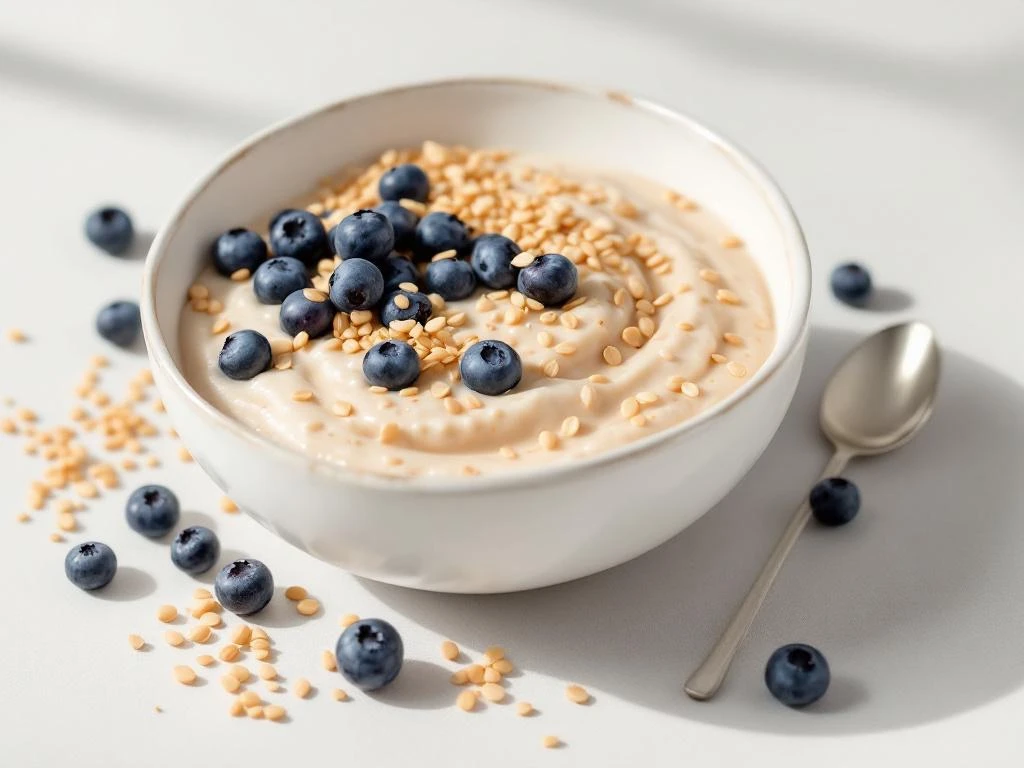
Looking for an IBS friendly breakfast that’s warm, satisfying and gentle on your stomach? This blueberry buckwheat porridge recipe gives you a delicious low FODMAP breakfast option that won’t trigger digestive symptoms. Despite its name, buckwheat is naturally gluten free and works perfectly for people following a low FODMAP diet. This guide walks you through everything you need to know to make perfect buckwheat porridge every time.
This recipe suits beginners and takes about 20 minutes from start to finish. You’ll need buckwheat groats, a low FODMAP milk alternative, fresh or frozen blueberries, a medium saucepan, and a wooden spoon. The result is a creamy, nutrient-rich porridge that supports digestive health whilst tasting great.
Why buckwheat porridge works for sensitive stomachs
Buckwheat groats are low FODMAP in portions up to 1/2 cup cooked, making them an excellent choice for your IBS friendly breakfast. Unlike wheat, buckwheat comes from a seed related to rhubarb rather than a grain. This means it’s naturally gluten free and easier for many people with food sensitivities to digest.
The nutritional profile supports digestive health in several ways. Buckwheat contains resistant starch that feeds beneficial gut bacteria without causing the fermentation problems that high FODMAP foods trigger. It’s also rich in magnesium, which helps relax the digestive tract muscles and can reduce cramping.
Blueberries fit into a low FODMAP diet when you stick to appropriate portions. Fresh or frozen blueberries are low FODMAP at 20 berries (28g) per serving. They provide powerful antioxidants called anthocyanins that may help reduce inflammation in the gut. The fibre in blueberries is also gentle and well-tolerated by most people with IBS when consumed in recommended amounts.
This combination creates a breakfast that’s filling without being heavy. The slow-release energy from buckwheat keeps you satisfied through the morning, whilst the natural sweetness from blueberries means you won’t need much added sweetener.
Gather your low FODMAP porridge ingredients
Here’s everything you need for one generous serving of blueberry buckwheat porridge:
- 1/2 cup raw buckwheat groats (not toasted kasha)
- 1 cup low FODMAP milk alternative (almond milk, lactose-free milk, or oat milk in small amounts)
- 1/2 cup water
- 20 fresh or frozen blueberries (28g)
- 1 tablespoon maple syrup or brown sugar
- Pinch of salt
Optional toppings that remain low FODMAP:
- 1 tablespoon chopped walnuts or pecans (up to 10 nuts)
- 1 teaspoon chia seeds
- Small sprinkle of cinnamon
- Extra blueberries (stay within the 20-berry limit total)
- Lactose-free yoghurt (2 tablespoons)
When choosing your milk alternative, check that almond milk doesn’t contain high FODMAP additives like inulin or chicory root. Regular oat milk can be high FODMAP, but small amounts (up to 1/4 cup) are usually tolerated. Lactose-free milk works perfectly and adds extra creaminess.
You can substitute the maple syrup with rice malt syrup if you prefer, though maple syrup is low FODMAP in 1-tablespoon serves. Avoid honey and agave, as these are high FODMAP sweeteners.
Cook perfect buckwheat porridge step by step
Start by rinsing your buckwheat groats thoroughly under cold water. Place them in a fine mesh sieve and rinse for about 30 seconds. This removes the natural coating that can make buckwheat taste slightly bitter. You’ll notice the water runs clear when they’re properly rinsed.
Pour the rinsed buckwheat into a medium saucepan. Add 1 cup of your chosen low FODMAP milk and 1/2 cup water. The liquid-to-buckwheat ratio of 1.5:1 creates a creamy texture without being too thick. Add a pinch of salt to enhance the flavour.
Place the pan over medium-high heat and bring to a gentle boil. This takes about 3 minutes. Once bubbling, reduce the heat to low and cover the pan with a lid. Set a timer for 12 minutes.
During cooking, stir every 4 minutes to prevent sticking and ensure even cooking. Use a wooden spoon to scrape the bottom of the pan gently. The porridge is ready when the buckwheat groats are tender but still have a slight bite, similar to properly cooked rice.
Check the consistency after 12 minutes. The porridge should be creamy and coat the back of your spoon. If it’s too thick, add 2 tablespoons of milk or water and stir well. If it’s too thin, cook uncovered for another 2 minutes whilst stirring frequently.
Remove from heat and let it sit covered for 2 minutes. This resting time allows the buckwheat to absorb any remaining liquid and reach the perfect creamy consistency.
Add blueberries and customise your bowl
Stir in your maple syrup or chosen sweetener whilst the porridge is still hot. This helps it distribute evenly throughout. Taste and adjust the sweetness to your preference, keeping within low FODMAP limits.
Add your 20 blueberries now if you’re using fresh ones. Stir them through gently so they warm up but don’t burst completely. If using frozen blueberries, you can either stir them in (they’ll cool the porridge slightly) or scatter them on top where they’ll thaw from the heat.
The best time to add toppings is right before serving. Sprinkle your chosen nuts, seeds, or spices over the top. This keeps crunchy elements crisp rather than soggy. If adding lactose-free yoghurt, dollop it on top rather than stirring it through for a nice visual contrast.
For flavour variations that stay FODMAP friendly, try these combinations:
- Cinnamon and walnut with a drizzle of extra maple syrup
- Vanilla extract (1/4 teaspoon) stirred in with the sweetener
- Orange zest (small amount) for a citrus note
- Unsweetened cocoa powder (1 teaspoon) for chocolate buckwheat porridge
Remember that whilst customising is encouraged, sticking to recommended portion sizes keeps your breakfast low FODMAP. It’s better to enjoy a smaller amount of several toppings than to exceed safe limits with one ingredient.
Fix common buckwheat porridge problems
Porridge turned out too thick and gloopy? This happens when the liquid-to-buckwheat ratio is off or if you cooked it too long. Fix it by stirring in warm milk or water, 2 tablespoons at a time, until you reach your preferred consistency. Reheat gently if needed.
If your porridge is too thin and watery, you either used too much liquid or didn’t cook it long enough. Return it to low heat without the lid and simmer whilst stirring constantly for 2 to 3 minutes. The extra cooking time allows more liquid to evaporate and the buckwheat to absorb what remains.
Noticing a bitter or earthy taste? You likely skipped rinsing the buckwheat groats properly. The natural coating creates this flavour. Whilst you can’t fix it after cooking, adding a bit more sweetener or a pinch of vanilla extract can mask the bitterness. Next time, rinse thoroughly for at least 30 seconds.
Mushy, overcooked texture means the cooking time was too long or the heat too high. Buckwheat should retain a slight firmness similar to al dente pasta. If this happens, there’s no way to restore the texture, but you can still eat it. Reduce your cooking time to 10 minutes next time and check for doneness.
Burnt bottom with a scorched smell occurs when the heat is too high or you didn’t stir enough. If you catch it early, transfer the unburnt porridge to a clean pan immediately. Don’t scrape the burnt bits from the bottom. The burnt flavour usually permeates the whole batch, so prevention through proper stirring is key.
Porridge sticking to the pan happens with insufficient liquid or inadequate stirring. Use a non-stick saucepan if you have one, and make sure to stir every 4 minutes during cooking. A wooden spoon works better than metal for preventing sticking.
Store and reheat your porridge safely
Leftover buckwheat porridge stores well in the fridge for up to 3 days. Let it cool to room temperature before transferring to an airtight container. The porridge will thicken considerably as it cools, which is completely normal.
To reheat refrigerated porridge, scoop your desired portion into a small saucepan. Add 2 to 3 tablespoons of low FODMAP milk or water per serving. Heat over low heat whilst stirring frequently until warmed through. This takes about 3 to 4 minutes. The added liquid restores the creamy consistency.
You can also reheat in the microwave. Place the porridge in a microwave-safe bowl, add your liquid, and cover loosely. Heat in 30-second intervals, stirring between each, until hot throughout. This usually takes 1 to 2 minutes total.
Freezing works brilliantly for batch cooking. Portion the cooled porridge into individual servings in freezer-safe containers or bags. Freeze for up to 2 months. Leave about 1cm of space at the top of containers, as the porridge expands slightly when frozen.
Thaw frozen portions overnight in the fridge, then reheat using either method above. You can also reheat from frozen by adding extra liquid and heating gently, though this takes longer (about 5 to 7 minutes on the stovetop).
For meal prep, cook a large batch on Sunday and portion it into containers with your blueberries kept separate. Add the berries and toppings fresh each morning after reheating. This keeps the blueberries from bleeding into the porridge and maintains better texture.
Don’t store porridge with fresh blueberries already mixed in, as they’ll make the porridge watery and turn everything purple. Keep components separate until serving time for the best results.
Blueberry buckwheat porridge
Cooking Time: 20 minutes | Portions: 1 serving
Ingredients:
- 1/2 cup raw buckwheat groats
- 1 cup low FODMAP milk alternative
- 1/2 cup water
- 20 fresh or frozen blueberries (28g)
- 1 tablespoon maple syrup
- Pinch of salt
- Optional toppings: nuts, seeds, cinnamon, lactose-free yoghurt
Method:
- Rinse buckwheat groats thoroughly under cold water for 30 seconds
- Combine buckwheat, milk, water, and salt in a medium saucepan
- Bring to a gentle boil over medium-high heat
- Reduce heat to low, cover, and simmer for 12 minutes
- Stir every 4 minutes to prevent sticking
- Remove from heat when groats are tender with slight bite
- Let rest covered for 2 minutes
- Stir in maple syrup and blueberries
- Add chosen toppings and serve immediately
This recipe is for informational purposes only and is not medical or dietary advice. Please consult a healthcare professional before making any changes to your diet.