
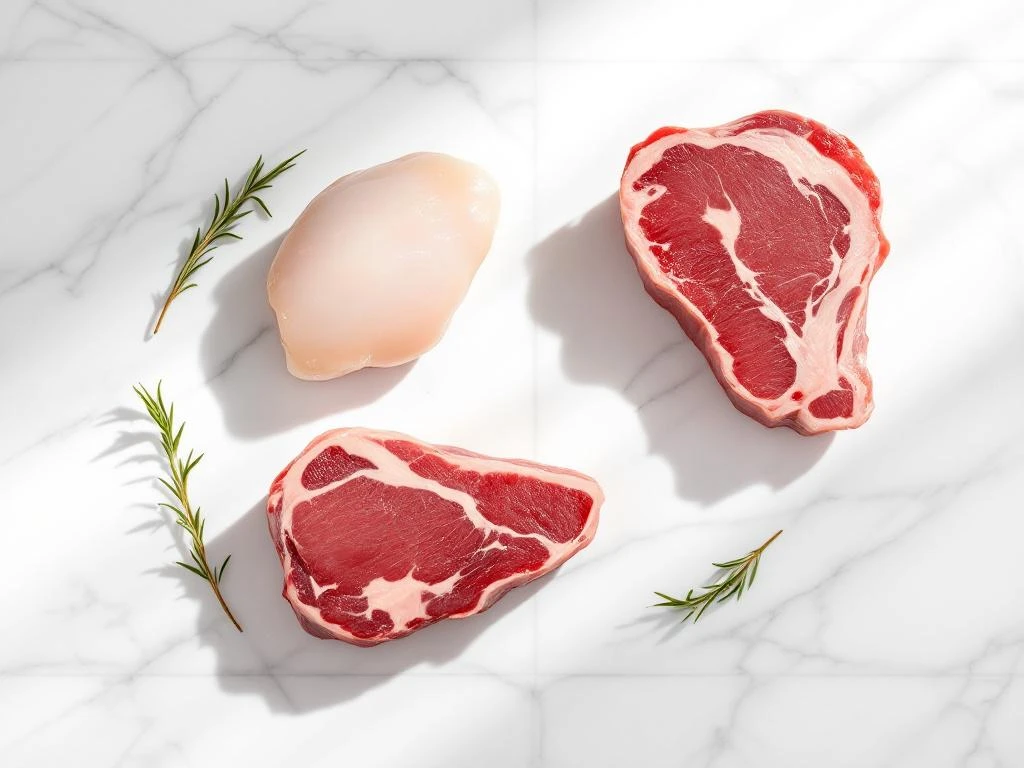
Plain, unprocessed meat is naturally low in FODMAPs because it contains no carbohydrates. The FODMAP concern with meat arises entirely from what’s added during processing or preparation, such as marinades, seasonings, breadings, or preservatives. Fresh beef, chicken, pork, lamb, fish, and seafood are all safe choices on a low FODMAP diet when prepared without high FODMAP ingredients.
What makes certain meats high in FODMAPs?
Meat itself is never high in FODMAPs because it contains no carbohydrates, and FODMAPs are specific types of carbohydrates that can trigger digestive symptoms. The problem occurs when manufacturers or cooks add high FODMAP ingredients during processing, marinating, or preparation.
Processing methods introduce FODMAPs through several routes. Marinades often contain garlic, onion, or honey. Seasonings may include onion powder or garlic powder as flavour enhancers. Breadings typically use wheat flour, which contains fructans. Many processed meat products also include additives like inulin or chicory root fibre, both high FODMAP ingredients used as binders or fillers.
When you buy plain, fresh meat from the butcher counter or fishmonger, you’re getting a naturally FODMAP-free product. The challenge comes with convenience items like pre-marinated chicken breasts, seasoned mince, or ready-to-cook meat products where manufacturers have added problematic ingredients.
Which processed meats should you avoid on a low FODMAP diet?
Sausages are the most common high FODMAP processed meat because they typically contain onion or garlic for flavour. Many varieties also include wheat-based breadcrumbs as fillers. Unless the label specifically states they’re made without these ingredients, most sausages aren’t suitable for a low FODMAP diet.
Pre-marinated meats pose another challenge. Shop-bought marinated chicken, beef, or pork often contains garlic, onion, honey, or high fructose corn syrup. These ingredients help create appealing flavours but make the products unsuitable for anyone managing FODMAP intake.
Breaded or crumbed meat products contain wheat flour in the coating, making them high in fructans. This includes items like chicken schnitzels, fish fingers, and breadcrumbed cutlets. Deli meats require careful checking too, as many contain garlic powder, onion powder, or other high FODMAP seasonings and preservatives.
Watch for meat products with added sweeteners. Honey-glazed ham, teriyaki-marinated beef, or barbecue-flavoured products often contain honey or high fructose corn syrup. Wheat-based fillers appear in many processed meat items, from meatballs to burger patties, making them problematic choices.
Common high FODMAP additives in processed meats
- Onion powder and garlic powder used for seasoning
- Inulin and chicory root added as fibre or bulking agents
- Wheat-based binders in sausages and reformed products
- Honey and high fructose corn syrup in glazes and marinades
Are there any naturally occurring meats that contain FODMAPs?
No naturally occurring meat contains FODMAPs. Fresh beef, chicken, pork, lamb, fish, and seafood are all completely FODMAP-free in their plain, unprocessed state. This applies whether the meat is fresh, frozen, or cooked without added ingredients.
Organ meats like liver, kidney, and heart are also safe on a low FODMAP diet. Despite their different nutritional profiles compared to muscle meat, they still contain no carbohydrates and therefore no FODMAPs. You can include these nutrient-dense options in your meal planning without concern.
The key point to remember is that FODMAP concerns with meat arise exclusively from what’s added during processing or preparation, never from the meat itself. This means you have complete freedom with meat choices as long as you control what goes on or in them. Whether you prefer expensive cuts or budget-friendly options, expensive fish or simple chicken, the FODMAP content remains zero.
This makes meal planning easier because you can focus your attention on other ingredients in your recipes, such as sauces, seasonings, and side dishes. The protein component of your meals is naturally safe, giving you a reliable foundation for satisfying, symptom-free eating.
How can you identify high FODMAP ingredients in meat products?
Reading labels carefully is essential when buying processed meat products. Look for ingredient lists rather than relying on front-of-package claims. The ingredients appear in descending order by weight, so items listed early have a more significant presence in the product.
Check specifically for these problematic ingredients: garlic (fresh, powder, or extract), onion (fresh, powder, or extract), wheat flour or breadcrumbs, high fructose corn syrup, honey, inulin, chicory root, and certain artificial sweeteners like sorbitol or mannitol. Even small amounts of garlic or onion powder can trigger symptoms in sensitive individuals.
When shopping, choose plain, minimally processed meat options whenever possible. Fresh cuts from the butcher counter, plain frozen meat, or products with very short ingredient lists (ideally just meat and salt) are your safest choices. We recommend building your own flavour profiles at home using low FODMAP herbs and spices.
Don’t hesitate to ask your butcher about ingredients in their prepared products. Many butchers make their own sausages or marinated meats and can tell you exactly what goes into them. Some may even be willing to prepare special batches without garlic or onion if you explain your dietary needs.
Shopping tips for low FODMAP meat choices
- Buy plain, fresh meat and season it yourself at home
- Check frozen meat packages for added marinades or seasonings
- Ask questions at the deli counter about ingredients in processed meats
- Look for specialty low FODMAP products in health food sections
- Keep a list of safe brands you’ve verified for convenient shopping
Managing meat choices on a low FODMAP diet becomes straightforward once you understand that plain meat is always safe. The challenge lies in avoiding added ingredients during processing, but with careful label reading and smart shopping habits, you can enjoy a wide variety of delicious, protein-rich meals without triggering digestive symptoms. Focus on fresh, unprocessed options and take control of seasoning and preparation in your own kitchen for the best results.