
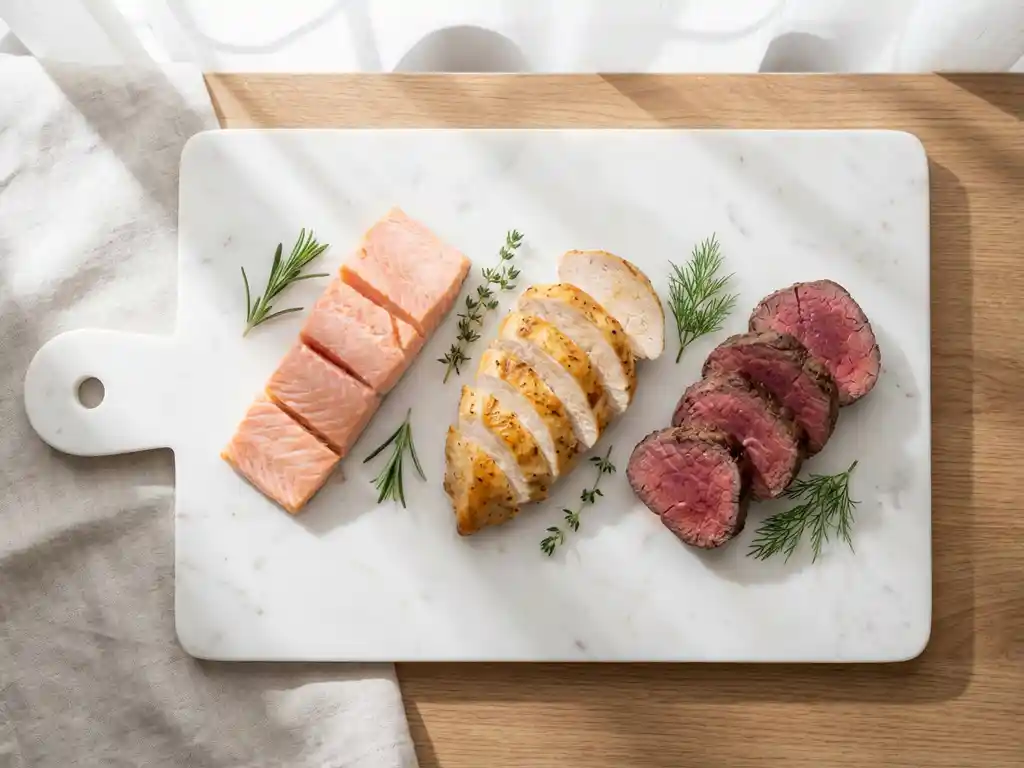
Following a low FODMAP diet doesn’t mean you have to give up meat entirely. In fact, most fresh, unprocessed meats are naturally low in FODMAPs and can be enjoyed freely on the diet. However, the key lies in understanding which meats to choose and how they’re prepared.
Confusion often arises with processed meats, seasonings, and marinades that may contain high FODMAP ingredients. By learning to distinguish between naturally low FODMAP options and potentially problematic choices, you can continue enjoying protein-rich meals while managing your digestive symptoms effectively.
What meats are naturally low FODMAP?
All fresh, unprocessed meats are naturally low in FODMAPs, including beef, pork, lamb, chicken, turkey, duck, and fish. These proteins contain no FODMAPs in their natural state, making them safe choices for anyone following a low FODMAP diet.
This includes various cuts and preparations of fresh meat, such as steaks, chops, roasts, ground meat, and whole poultry. Fresh seafood like salmon, tuna, cod, shrimp, and shellfish is also completely FODMAP-free. The absence of carbohydrates in pure animal proteins means they won’t trigger FODMAP-related digestive symptoms.
Game meats like venison, rabbit, and wild boar are equally safe options. Even organ meats such as liver, kidney, and heart contain no FODMAPs when fresh and unprocessed. The key factor is ensuring the meat hasn’t been treated with marinades, seasonings, or preservatives that might introduce FODMAP ingredients.
Which processed meats should I avoid on a low FODMAP diet?
Many processed meats contain high FODMAP ingredients like garlic, onion, wheat, or high-fructose corn syrup, making them unsuitable for a low FODMAP diet. Common problematic options include flavored sausages, seasoned ground meats, marinated products, and deli meats with added seasonings.
Sausages often contain garlic and onion powder for flavor, while some deli meats are seasoned with FODMAP-containing spice blends. Breaded meats typically use wheat flour, and many marinades include garlic, onion, or high FODMAP sweeteners. Pre-seasoned ground turkey or chicken frequently contains onion or garlic powder.
Meat products with fillers or extenders may contain wheat, soy, or other high FODMAP ingredients. Some bacon varieties include honey or other problematic sweeteners. Always check labels carefully, as even products that seem simple may contain hidden FODMAP ingredients used for flavoring or preservation.
How do I read meat labels for FODMAP ingredients?
When reading meat labels, look for high FODMAP ingredients, including garlic, onion, wheat, honey, high-fructose corn syrup, and inulin. These often appear as “natural flavors,” garlic powder, onion powder, wheat flour, or various sweeteners that should be avoided on a low FODMAP diet.
Scan ingredient lists for terms like “spices” or “natural flavoring,” which may contain garlic or onion. Wheat-based ingredients appear as wheat flour, wheat starch, or wheat protein. Sweeteners to avoid include honey, agave, high-fructose corn syrup, and sorbitol.
Some ingredients have FODMAP-friendly alternatives to watch for. For example, sugar and maple syrup are low FODMAP in small amounts, while garlic-infused oil is acceptable since FODMAPs are water-soluble, not oil-soluble. When in doubt, choose products with the shortest, simplest ingredient lists, or opt for fresh, unprocessed alternatives.
What’s the difference between fresh and processed meat on a low FODMAP diet?
Fresh meat contains no FODMAPs and is completely safe for a low FODMAP diet, while processed meat may contain added FODMAP ingredients through seasonings, marinades, fillers, or preservatives. Processing introduces the potential for FODMAP contamination.
Fresh meat refers to cuts that haven’t been altered beyond basic butchering—think plain chicken breasts, ground beef without seasonings, or fresh fish fillets. These retain their natural FODMAP-free status and can be seasoned at home with low FODMAP herbs and spices.
Processed meats undergo various treatments that may introduce FODMAPs. This includes curing, smoking, seasoning, marinating, or adding preservatives. Even seemingly minor processing, like adding a spice rub, can make an otherwise safe meat problematic for those following a low FODMAP diet.
How should I season and cook low FODMAP meat?
Season low FODMAP meat with herbs and spices that are naturally low in FODMAPs, such as basil, oregano, thyme, rosemary, paprika, cumin, and black pepper. Avoid garlic- and onion-based seasonings; instead, use garlic-infused oil or the green parts of scallions for flavor.
Safe cooking methods include grilling, roasting, pan-searing, and braising with low FODMAP ingredients. Create marinades using olive oil, lemon juice, fresh herbs, and low FODMAP spices. Garlic-infused oil provides garlic flavor without the FODMAPs, since the problematic compounds don’t dissolve in oil.
Salt, pepper, fresh herbs, citrus juices, and most single-ingredient spices are generally safe options. Avoid spice blends that may contain garlic or onion powder. When making sauces or gravies, use low FODMAP thickeners like cornstarch instead of wheat flour, and build flavor with herbs rather than high FODMAP aromatics.
Can I eat bacon and cured meats on a low FODMAP diet?
Plain bacon without added sugars or flavorings is typically low FODMAP, but many commercial bacon products contain honey, brown sugar, or other high FODMAP sweeteners. Cured meats like prosciutto, salami, and ham vary widely in their FODMAP content depending on added ingredients.
Traditional bacon cured with just salt and smoke is generally acceptable, but flavored varieties often contain problematic ingredients. Maple bacon may be acceptable if real maple syrup is used, as it’s low FODMAP in small amounts, but honey-cured bacon should be avoided.
For cured meats, look for simple preparations without added garlic, onion, or high FODMAP sweeteners. Plain prosciutto and some traditional salamis may be suitable, but always check ingredient labels. When uncertain, choose fresh meat and cure or season it yourself using low FODMAP ingredients to ensure safety while following your dietary restrictions.
This recipe is for informational purposes only and is not medical or dietary advice. Please consult a healthcare professional before making any changes to your diet.
Related Articles
- Lactose-Free Yogurt Parfait with Blueberries
- What three foods make IBS worse?
- Quinoa Breakfast Porridge with Berries
- Turkey Sausage and Egg Skillet
- What is Type 5 IBS poop?