
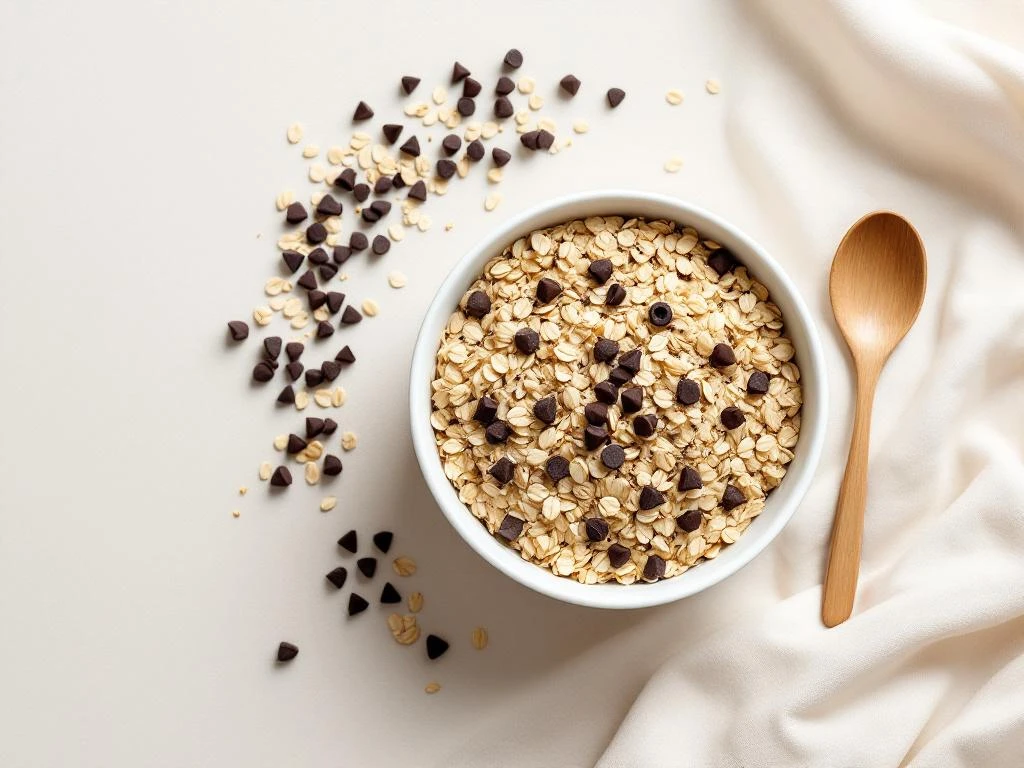
Starting your day with a warm bowl of lactose-free chocolate chip oatmeal gives you comfort without digestive distress. This IBS-friendly breakfast combines creamy oats with sweet chocolate chips while keeping your stomach happy. Perfect for busy mornings when you need something filling that won’t trigger symptoms.
This recipe takes about 10 minutes to prepare and works for anyone following a low FODMAP diet or avoiding lactose. You’ll need basic kitchen equipment and simple ingredients that are easy to find. The result is a delicious breakfast that tastes indulgent but supports your digestive health.
Why lactose-free chocolate chip oatmeal works for IBS
Oats are naturally low FODMAP when you stick to a half-cup serving of rolled oats. They contain soluble fibre that’s gentle on your digestive system and helps regulate bowel movements without causing the bloating or cramping that high FODMAP foods trigger.
Traditional oatmeal recipes often include regular milk, which contains lactose that many people with IBS can’t digest properly. Using lactose-free milk or suitable plant-based alternatives removes this trigger while keeping the creamy texture you want. The lactose in regular dairy can cause gas, cramping and other uncomfortable symptoms that make mornings miserable.
Dark chocolate chips with high cocoa content (70% or above) are low FODMAP in small amounts. They add sweetness and satisfaction without the high sugar content that can upset sensitive stomachs. This lactose-free breakfast option gives you energy that lasts through the morning without the digestive issues that come from high FODMAP ingredients.
The combination creates an IBS-friendly oatmeal that doesn’t compromise on taste. You get the comfort food experience while following your dietary needs. Many people find that starting the day with a low FODMAP breakfast helps them maintain better symptom control throughout the day.
Ingredients and tools you need
This low FODMAP oatmeal recipe requires simple ingredients that you can find at most supermarkets. Here’s what you’ll need for one generous serving:
- 50g rolled oats (certified gluten-free if needed)
- 200ml lactose-free milk or suitable plant-based alternative (almond milk in small amounts, coconut milk from carton)
- 100ml water
- 15g dark chocolate chips (70% cocoa or higher)
- 1 tablespoon maple syrup (optional)
- Pinch of salt
The gluten-free oatmeal option matters if you’re also managing coeliac disease or gluten sensitivity alongside IBS. Regular oats are often contaminated with gluten during processing, so look for certified gluten-free labels.
For kitchen equipment, you’ll need basic tools:
- Medium saucepan
- Measuring cups and spoons
- Wooden spoon or silicone spatula
- Serving bowl
Choose your milk alternative carefully. Almond milk works in small amounts (up to 60ml is considered low FODMAP). Coconut milk from a carton is another good option. Avoid soy milk made from whole soybeans, as it’s high FODMAP. Soy milk made from soy protein is acceptable.
Selecting the right chocolate chips
Not all chocolate chips work for this dairy-free oatmeal recipe. Check labels carefully to ensure they don’t contain milk powder or other dairy ingredients. Dark chocolate with high cocoa content naturally contains less sugar and no lactose. Keep your portion to about 15g to stay within low FODMAP limits.
Prepare your lactose-free chocolate chip oatmeal
Start by measuring your oats accurately. Using more than the recommended 50g per serving can push you over the low FODMAP threshold and trigger symptoms. Pour the oats into your saucepan.
Add the water and lactose-free milk to the saucepan with the oats. The combination of water and milk creates the perfect consistency. Using only milk can make the oatmeal too rich, while only water makes it bland. Add your pinch of salt at this stage.
Place the saucepan over medium heat. Stir the mixture gently as it begins to warm. This prevents the oats from sticking to the bottom of the pan and ensures even cooking. The mixture will start to bubble after about 3 minutes.
Once bubbling, reduce the heat to low. Continue stirring regularly for about 5 minutes. You’ll notice the oats absorbing the liquid and the mixture thickening. The oats are done when they’re soft and creamy but still have a slight bite to them.
Adding the chocolate chips
Remove the saucepan from heat once your oats reach the right consistency. Wait about 30 seconds for the temperature to drop slightly. Add your chocolate chips now and stir them through the hot oatmeal.
The residual heat will melt the chocolate chips partially, creating pockets of melted chocolate throughout your chocolate chip oatmeal. Some chips will stay intact, giving you bursts of chocolate flavour with each spoonful. If you prefer fully melted chocolate, add the chips while the oatmeal is still on the heat and stir until completely melted.
Drizzle maple syrup over the top if you want extra sweetness. Stir it through or leave it on top for a decorative finish. Transfer your oatmeal to a serving bowl immediately while it’s hot.
Checking consistency
Your oatmeal should be creamy but not runny. It should fall from your spoon in thick ribbons. If it’s too thick, add a splash more lactose-free milk and stir. If it’s too thin, let it sit for a minute as it will continue thickening off the heat.
Customise your oatmeal with low FODMAP toppings
Plain lactose-free chocolate chip oatmeal is delicious, but adding toppings increases variety and nutrition. Choose toppings carefully to keep your breakfast low FODMAP and avoid triggering symptoms.
Safe fruit options include:
- Blueberries (20g or about 15 berries)
- Strawberries (65g or about 5 medium berries)
- Banana (one small unripe banana)
- Kiwi fruit (two small kiwis)
Stick to these portion sizes. Eating more can push you into high FODMAP territory. Unripe bananas are lower in FODMAPs than ripe ones, so choose bananas that are still slightly green.
Nuts and seeds for texture
Add crunch with these low FODMAP options:
- Walnuts (10 halves or 30g)
- Pecans (10 halves)
- Pumpkin seeds (2 tablespoons)
- Chia seeds (2 tablespoons)
These add healthy fats and protein that help you stay full longer. They also provide texture contrast to the creamy oatmeal. Toast nuts lightly in a dry pan before adding them for extra flavour.
Additional sweeteners and flavours
Beyond maple syrup, you can use:
- Brown sugar (1 tablespoon)
- Cinnamon (1 teaspoon)
- Vanilla extract (1 teaspoon)
- Cocoa powder (2 teaspoons for extra chocolate flavour)
Cinnamon adds warmth without any FODMAPs. It also helps regulate blood sugar levels. Vanilla extract gives depth of flavour that makes your breakfast feel more special.
Store and reheat your oatmeal properly
Leftover oatmeal keeps well in the refrigerator for up to 3 days. Transfer cooled oatmeal to an airtight container before storing. This prevents it from absorbing other food odours and keeps it fresh.
The oatmeal will thicken considerably in the fridge. This is normal. The oats continue absorbing liquid even when cold. Don’t worry about the thick, solid texture. It will return to creamy consistency when you reheat it.
Reheating methods that work
The microwave is the quickest reheating method. Place your portion in a microwave-safe bowl and add 2 to 3 tablespoons of lactose-free milk or water. Stir to combine. Microwave on high for 1 minute, then stir. Continue heating in 30-second intervals until hot throughout.
For stovetop reheating, place the oatmeal in a small saucepan with added liquid. Heat over medium-low heat, stirring constantly. This method takes about 5 minutes but gives you more control over the final consistency.
Add more chocolate chips after reheating if you want that fresh melted chocolate experience. The original chips will have fully incorporated into the oatmeal during storage.
Meal prep for busy mornings
Make a larger batch by multiplying the recipe. Cook up to 4 servings at once using a larger saucepan. Divide the cooked oatmeal into individual containers before refrigerating. This gives you grab-and-go breakfasts for several days.
Add toppings fresh each morning rather than storing them with the oatmeal. This keeps nuts crunchy and fruit fresh. Store your toppings in separate small containers so you can assemble quickly.
You can also prepare overnight oats using the same ingredients. Combine oats, milk and chocolate chips in a jar. Refrigerate overnight. Eat cold or heat briefly in the morning. This works well if you prefer a chewier texture.
Label your containers with the date you made the oatmeal. This helps you track freshness and ensures you eat it within the safe 3-day window. Oatmeal that smells sour or shows any signs of mould should be thrown away immediately.
This low FODMAP breakfast option makes managing IBS easier without sacrificing the foods you love. You get a comforting, satisfying meal that supports your digestive health and tastes delicious. The simple preparation and storage options mean you can enjoy this lactose-free chocolate chip oatmeal any day of the week, even when time is tight.
Lactose-free chocolate chip oatmeal
Cooking time: 10 minutes | Portions: 1 serving
- 50g rolled oats (certified gluten-free if needed)
- 200ml lactose-free milk or low FODMAP plant-based alternative
- 100ml water
- 15g dark chocolate chips (70% cocoa or higher)
- 1 tablespoon maple syrup (optional)
- Pinch of salt
Method:
- Combine oats, water, lactose-free milk and salt in a medium saucepan
- Heat over medium heat, stirring regularly until bubbling (about 3 minutes)
- Reduce heat to low and continue stirring for 5 minutes until oats are soft and creamy
- Remove from heat and let cool for 30 seconds
- Stir in chocolate chips until partially or fully melted
- Add maple syrup if desired
- Transfer to serving bowl and add low FODMAP toppings of choice
Storage: Refrigerate in an airtight container for up to 3 days. Reheat with added liquid until hot throughout.
This recipe is for informational purposes only and is not medical or dietary advice. Please consult a healthcare professional before making any changes to your diet.