
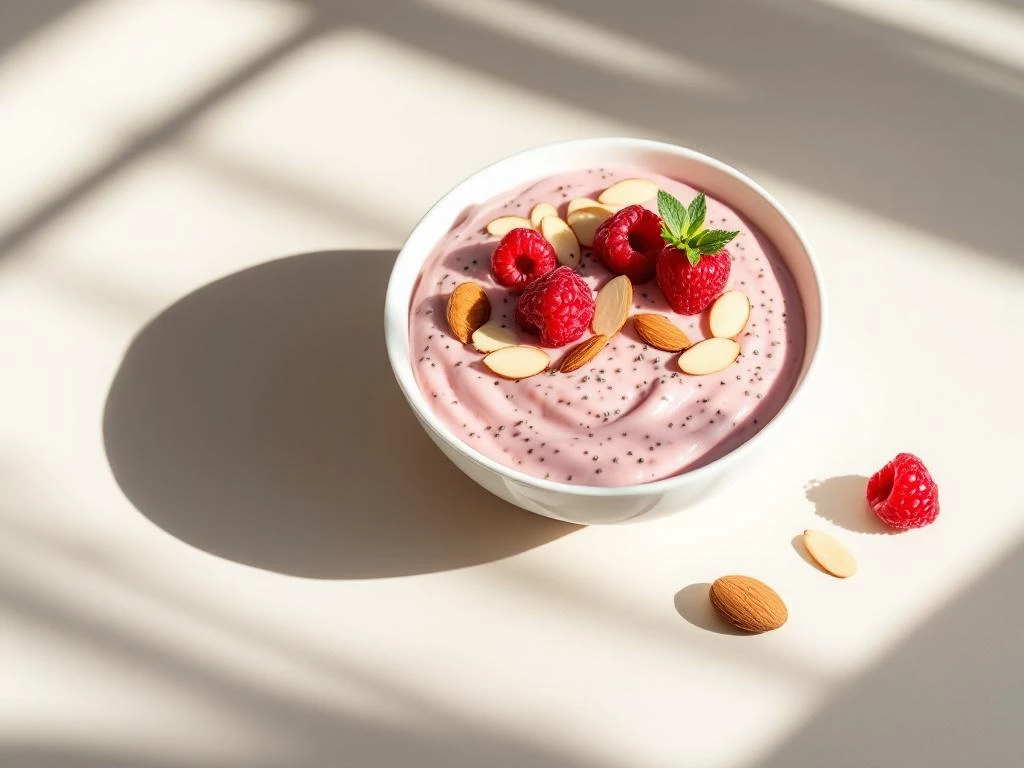
Starting your day with a healthy chia pudding recipe that won’t upset your stomach can feel like a small victory when you’re managing IBS. This raspberry almond chia pudding combines gentle, nutritious ingredients that work within low FODMAP guidelines. You’ll create a creamy, satisfying breakfast that provides sustained energy without triggering digestive discomfort.
This recipe is beginner friendly and takes about 5 minutes of active preparation time. The pudding needs to refrigerate overnight, so plan to make it the evening before you want to eat it. You’ll need basic kitchen tools like measuring cups, a bowl, and an airtight container. The ingredients are simple and available at most supermarkets.
By the end of this guide, you’ll have a delicious IBS friendly breakfast ready to grab from your fridge. You’ll also understand how to adjust the recipe to suit your taste preferences while keeping it gentle on your digestive system.
Why raspberry almond chia pudding works for IBS
Chia seeds are naturally low FODMAP in servings up to 2 tablespoons. They absorb liquid and create a gel-like texture that’s easy on your digestive system. The soluble fibre in chia seeds helps regulate digestion without causing the bloating that high FODMAP foods trigger.
Raspberries remain low FODMAP when you stick to a serving of about 60 grams (roughly 10 berries). They provide antioxidants and natural sweetness without excess fructose that could upset your stomach. The gentle acidity of raspberries adds flavour without being harsh on sensitive digestion.
Almond milk works well for this low FODMAP breakfast when you choose varieties made from almonds only. A 250ml serving of almond milk stays within safe limits. Almonds provide healthy fats and protein that help you feel satisfied through the morning. This combination delivers sustained energy without the blood sugar spikes that can affect both your energy levels and digestive comfort.
The overnight preparation method allows the chia seeds to fully hydrate. This makes them easier to digest compared to eating them dry or partially soaked. The pudding’s creamy texture is gentle on your stomach while providing about 8 grams of fibre per serving.
Gather your low FODMAP ingredients
You’ll need these measured ingredients for two servings of raspberry almond chia pudding:
- 4 tablespoons chia seeds (about 40 grams total, staying within the 2 tablespoon per serving limit)
- 500ml unsweetened almond milk (check the label to ensure it contains only almonds and water, avoiding varieties with high FODMAP additives like inulin or chicory root)
- 120 grams fresh or frozen raspberries (about 20 berries total, giving you 10 per serving)
- 1 to 2 teaspoons maple syrup (optional, for added sweetness)
- 1/4 teaspoon vanilla extract (optional)
Choose almond milk that lists almonds as the primary ingredient. Avoid products with added fibres or sweeteners that might contain FODMAPs. Homemade almond milk works perfectly if you prefer making your own.
For optional IBS friendly toppings, consider these low FODMAP additions:
- 10 to 12 almonds per serving (about 15 grams)
- A small sprinkle of unsweetened coconut flakes
- A few blueberries (20 berries or 40 grams per serving)
- A drizzle of extra maple syrup
- Fresh mint leaves for garnish
Keep your portions accurate to maintain the low FODMAP status of this gluten free chia pudding. Using a kitchen scale helps ensure you’re staying within safe serving sizes.
Prepare your raspberry almond chia pudding
Pour the almond milk into a medium mixing bowl. Add the chia seeds and whisk thoroughly for about 30 seconds. The whisking prevents clumping and ensures even distribution of the seeds.
Add the maple syrup and vanilla extract if you’re using them. Whisk again for another 15 seconds to combine everything evenly. The mixture will look quite liquid at this stage, which is normal.
Let the mixture sit for 5 minutes, then whisk again. This second whisking breaks up any clumps that formed during the initial soaking. You should see the mixture starting to thicken slightly as the chia seeds begin absorbing the liquid.
Divide the mixture between two airtight containers or jars. Glass jars with lids work particularly well for this easy chia pudding. Cover the containers and place them in the refrigerator.
Refrigerate for at least 6 hours, but overnight works best. The chia seeds need this time to fully absorb the liquid and create the characteristic pudding texture. After 6 hours, check the consistency. The pudding should be thick and creamy, similar to tapioca pudding. If it seems too thick, stir in a tablespoon or two of additional almond milk.
When you’re ready to serve, give the pudding a good stir. The chia seeds may have settled during refrigeration. Add half the raspberries to each serving. You can layer them throughout the pudding or place them on top.
Success check: Your overnight chia pudding should hold its shape on a spoon but still be creamy and smooth. The chia seeds should be fully hydrated with no crunchy centres. If you bite into a seed and it’s still hard, the pudding needs more time to set.
The pudding keeps well in the refrigerator for up to 5 days. Make a batch at the start of your week for quick breakfast options. Just add fresh toppings each morning before eating.
Getting the ratio right
The standard ratio for chia pudding is 1 part chia seeds to 4 parts liquid. This recipe uses 4 tablespoons of chia seeds to 500ml of almond milk, which follows this guideline. If you prefer a thicker pudding, increase the chia seeds slightly to 5 tablespoons. For a thinner consistency, add an extra 50ml of almond milk.
Too thick? Stir in more almond milk one tablespoon at a time until you reach your preferred texture. Too thin? Add half a tablespoon of chia seeds and refrigerate for another 2 hours.
Customise your chia pudding variations
This raspberry almond chia pudding base adapts easily to different flavours while staying IBS friendly. Try these low FODMAP variations to keep your breakfasts interesting.
Swap raspberries for other low FODMAP fruits in appropriate portions. Blueberries work well at 40 grams per serving. Strawberries are safe at 65 grams (about 3 medium berries). A small firm banana (about 50 grams) adds natural sweetness and creaminess. Kiwi fruit is low FODMAP at 2 small fruits per serving.
Change your milk base for different flavours. Lactose free milk creates a creamier pudding. Coconut milk from a carton (not canned) adds tropical flavour. Rice milk works but creates a thinner consistency, so you might need an extra tablespoon of chia seeds.
Add spices to create new flavour profiles. A pinch of cinnamon brings warmth without FODMAPs. Ground ginger (fresh or dried) adds a subtle kick. Cocoa powder (1 tablespoon per serving) transforms this into a chocolate version. Matcha powder (1 teaspoon per serving) creates an energising green tea variation.
Adjust sweetness with low FODMAP options. Maple syrup remains the easiest choice. White sugar works in small amounts (up to 1 tablespoon per serving). Brown sugar adds a deeper flavour. Stevia provides sweetness without any sugar if you prefer.
Layer your pudding for visual appeal. Alternate spoonfuls of plain pudding with fruit layers in a clear glass. Create a parfait effect by adding a layer of lactose free yoghurt between pudding layers. Sprinkle toppings between layers instead of just on top.
For seasonal variations, try these combinations. Spring brings fresh strawberries with a hint of lemon zest. Summer pairs well with blueberries and coconut flakes. Autumn calls for cinnamon and small pieces of firm banana. Winter works beautifully with cocoa powder and a few crushed walnuts (10 walnut halves per serving stay low FODMAP).
Make a protein boost version by stirring in a scoop of low FODMAP protein powder after the pudding sets. Choose unflavoured or vanilla varieties without high FODMAP additives. This turns your healthy chia pudding recipe into a more substantial meal.
Create a savoury version for variety. Skip the sweeteners and fruit. Instead, add a pinch of salt, some chopped cucumber, and fresh herbs like basil or coriander. This works as an interesting lunch option or side dish.
Remember to keep portion sizes in check when adding extra ingredients. Multiple low FODMAP foods can stack up to create a high FODMAP meal if you’re not careful with quantities.
Your go-to IBS friendly breakfast
You now have a reliable recipe for a nutritious breakfast that respects your digestive needs. This raspberry almond chia pudding takes minimal effort but delivers maximum satisfaction. The make ahead nature means you’ll have breakfast ready even on your busiest mornings.
Start with the basic recipe until you’re comfortable with the technique. Then experiment with the variations to find your favourite combinations. Keep track of which additions work best for your individual tolerance levels.
We encourage you to explore more low FODMAP breakfast options on our blog. Finding variety in your diet makes the low FODMAP lifestyle more sustainable and enjoyable. This gluten free chia pudding can become part of your regular rotation alongside other gentle breakfast choices.
Raspberry almond chia pudding
Preparation Time: 5 minutes (plus 6 hours or overnight refrigeration) | Portions: 2 servings
Ingredients:
- 4 tablespoons chia seeds (40g total)
- 500ml unsweetened almond milk
- 120g fresh or frozen raspberries
- 1 to 2 teaspoons maple syrup (optional)
- 1/4 teaspoon vanilla extract (optional)
Instructions:
- Whisk chia seeds into almond milk for 30 seconds to prevent clumping
- Add maple syrup and vanilla if using, whisk for 15 seconds
- Wait 5 minutes, then whisk again to break up any clumps
- Divide mixture between two airtight containers
- Refrigerate for at least 6 hours or overnight
- Stir well before serving and top with raspberries
- Store in refrigerator for up to 5 days
Tips:
- Use a 1:4 ratio of chia seeds to liquid for perfect consistency
- Adjust thickness by adding more almond milk or chia seeds
- Keep raspberry portions to 60g per serving to stay low FODMAP
- Check almond milk labels for FODMAP additives like inulin
This recipe is for informational purposes only and is not medical or dietary advice. Please consult a healthcare professional before making any changes to your diet.