
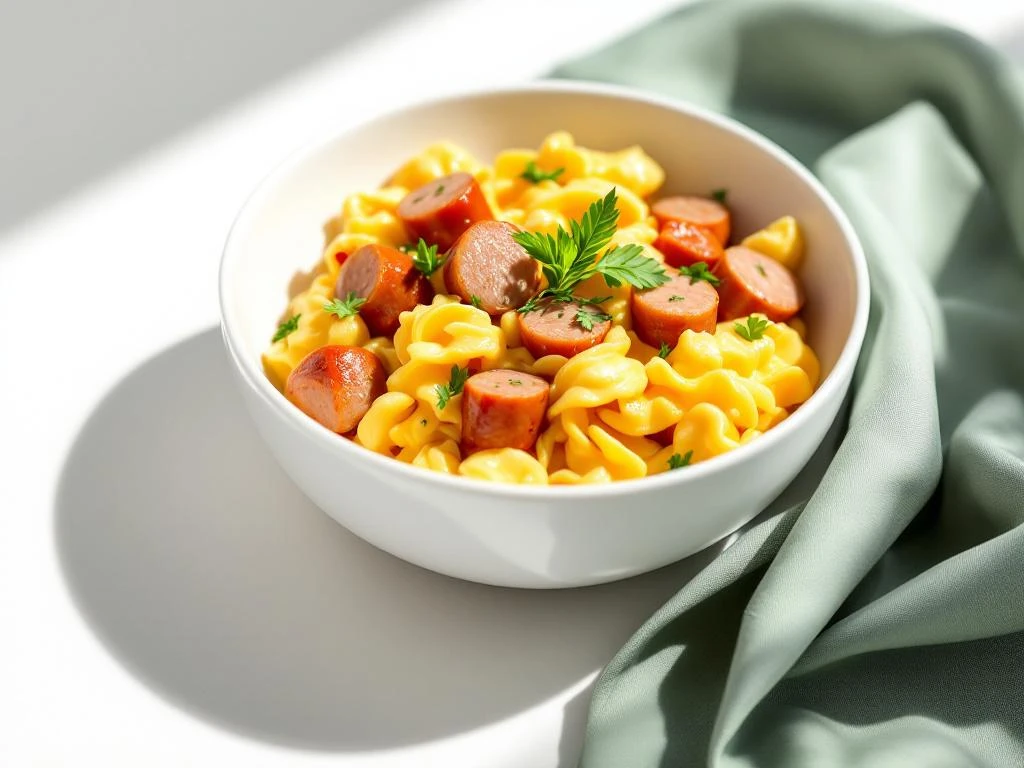
Starting your day with a turkey sausage breakfast bowl gives you protein-rich nutrition that supports digestive health without triggering IBS symptoms. This easy breakfast recipe combines lean turkey sausage with low FODMAP vegetables and safe starches to create a satisfying, gut friendly breakfast that keeps you energised through the morning. The bowl format makes it simple to prepare multiple servings at once, perfect for busy weekdays when you need a healthy breakfast bowl ready to go.
This guide works for anyone following a low FODMAP diet, whether you’re new to IBS management or experienced with digestive health breakfast planning. You’ll need about 30 minutes for your initial preparation, plus time for optional meal prep. The recipe requires basic cooking equipment: a frying pan, cutting board, knife, and storage containers if you’re batch cooking.
Why turkey sausage breakfast bowls work for IBS
Turkey sausage provides lean protein without the higher fat content found in pork sausage, which makes it easier on your digestive system. Protein helps stabilise blood sugar levels and provides sustained energy without causing the spikes and crashes that can worsen IBS symptoms. When you eat a protein-rich breakfast, you’re less likely to experience mid-morning digestive discomfort or energy dips.
The breakfast bowl format allows you to control exactly what goes into your meal. You can measure portions carefully to stay within safe FODMAP limits while still creating a filling, balanced meal. Unlike grab-and-go options that might contain hidden triggers, building your own IBS friendly breakfast bowl means you know every ingredient is safe for your system.
This approach to breakfast provides complete nutrition in one dish. You get protein from the turkey sausage, complex carbohydrates from safe starches, and vitamins from low FODMAP vegetables. The combination supports digestive health whilst giving your body the fuel it needs for the day ahead.
Gather your low FODMAP ingredients
Start with certified low FODMAP turkey sausage or plain turkey mince that you season yourself. Check labels carefully for onion powder, garlic powder, or high FODMAP fillers. You’ll need about 100-150g per serving, which stays within safe protein portions for most people following the diet.
Choose vegetables from the safe list. Bell peppers (up to 75g), courgette (65g), spinach (1 cup), and cherry tomatoes (5 tomatoes) all work well. Spring onion tops only (green parts) add flavour without FODMAPs. Keep a kitchen scale handy to measure portions accurately, especially when you’re still learning safe amounts.
For your starch base, select from these low FODMAP breakfast options:
- Cooked potatoes (white or red, not sweet potato in large amounts)
- Quinoa (up to 155g cooked)
- Firm polenta
- Gluten free oats (60g maximum)
Use olive oil or garlic-infused oil for cooking. Regular garlic isn’t safe, but the infused oil provides flavour without FODMAPs since they don’t transfer into oil. Salt, black pepper, paprika, and fresh herbs like basil or parsley add taste without triggering symptoms.
Prepare and cook the turkey sausage
Heat one tablespoon of olive oil in a large frying pan over medium heat. If using sausages, remove them from their casings. Break the meat into bite-sized pieces as it hits the pan. This creates more surface area for browning and makes the finished bowl easier to eat.
Cook the turkey for 6-8 minutes, stirring occasionally to brown all sides. The meat should reach an internal temperature of 75°C for food safety. You’ll know it’s done when no pink remains and the pieces have golden-brown edges. Turkey cooks faster than pork, so watch it carefully to avoid drying it out.
Season the meat whilst it cooks. Add a pinch of salt, black pepper, and paprika. Fresh herbs go in during the last minute of cooking to preserve their flavour. Taste and adjust seasoning before removing from heat.
For meal prep, cook a larger batch and divide it into portions. Cooked turkey sausage keeps in the fridge for 3-4 days in an airtight container. Let it cool completely before storing to prevent condensation that can make the meat soggy. You can also freeze cooked turkey for up to 2 months.
Assemble your breakfast bowl components
Cook your chosen starch base according to package directions. Potatoes need about 15 minutes of boiling, quinoa takes 12-15 minutes, and polenta requires 5-7 minutes. Time this so everything finishes around the same time, or prepare starches in advance and reheat them.
Whilst your protein cooks, prepare the vegetables. Dice bell peppers and courgette into small pieces that cook quickly. Heat a separate pan with a teaspoon of oil over medium-high heat. Add the firmer vegetables (peppers and courgette) and cook for 4-5 minutes until they soften slightly but still have texture. Toss in spinach during the final minute just to wilt it.
Start building your bowl with the starch as your base layer. This creates a foundation that absorbs flavours from the other components. Add your cooked vegetables next, spreading them evenly across the bowl. Top with the seasoned turkey sausage, distributing it so each bite includes all elements.
Temperature matters for enjoyment. Serve the bowl whilst all components are still warm, ideally within 5 minutes of finishing cooking. If you’ve prepped ingredients separately, reheat each component before assembling to ensure an evenly warm turkey sausage breakfast bowl.
Customise your bowl for variety and taste
Rotate your vegetable choices based on what’s in season and what you fancy. Rocket (2 cups), bok choy (1 cup chopped), or green beans (15 beans) all provide different textures and nutrients whilst staying FODMAP safe. This variety prevents breakfast boredom and gives you a wider range of vitamins.
Try different seasoning combinations to change the flavour profile. Italian herbs (basil, oregano, thyme) create a Mediterranean feel. Cumin and coriander give it a warming, slightly spicy note. Ginger (fresh or dried) adds brightness and may help with nausea if that’s one of your symptoms.
Add safe toppings for extra interest:
- A poached or fried egg for additional protein
- Grated parmesan (up to 40g, which is lactose-free)
- Sliced olives (limit to 15g)
- Pumpkin seeds for crunch
- A drizzle of balsamic vinegar
You can also swap turkey for other proteins. Chicken breast, firm tofu (160g), or tempeh (100g) work equally well. Just maintain similar portion sizes to keep the nutritional balance right. Each protein takes on seasonings differently, so adjust spices to taste.
Store and reheat for meal prep success
Store components separately for the best texture and flavour retention. Glass containers with tight lids work better than plastic for preventing odours and maintaining freshness. Keep cooked turkey sausage in one container, vegetables in another, and starches in a third. This prevents soggy vegetables and keeps everything at optimal quality.
Label containers with cooking dates. Cooked turkey stays fresh for 3-4 days refrigerated, vegetables for 3 days, and most starches for 4-5 days. Potatoes can develop an off texture after 2 days, so prepare those fresh if possible or switch to quinoa for longer storage.
Reheat in the microwave using medium power rather than high. This prevents the turkey from drying out and keeps vegetables from becoming mushy. Heat each component for 60-90 seconds, stirring halfway through. Check that the turkey reaches 75°C before eating. Add fresh herbs or a small drizzle of oil after reheating to refresh the flavours.
For freezing, turkey sausage freezes best on its own. Portion it into single servings and freeze in airtight containers or freezer bags with air pressed out. Thaw overnight in the fridge, never at room temperature. Most vegetables don’t freeze well after cooking, so prepare those fresh. Quinoa and polenta freeze acceptably for up to 1 month.
You’ve now got a reliable easy breakfast recipe that supports your digestive health whilst providing proper nutrition. The turkey sausage breakfast bowl adapts to your preferences, works with meal prep schedules, and gives you confidence that you’re starting each day with food that won’t trigger symptoms. Keep experimenting with the vegetable and seasoning combinations we’ve covered to find your favourite versions.
Turkey sausage breakfast bowl
Cooking time: 30 minutes | Portions: 1 serving
- 100-150g low FODMAP turkey sausage or turkey mince
- 1 portion of safe starch (potatoes, quinoa, or polenta)
- 75g bell peppers, diced
- 65g courgette, diced
- 1 cup fresh spinach
- 1 tablespoon olive oil or garlic-infused oil
- Salt, black pepper, and paprika to taste
- Fresh herbs (basil or parsley)
Method:
- Cook your chosen starch according to package directions
- Heat oil in a frying pan over medium heat
- Remove sausage from casings and break into pieces
- Cook turkey for 6-8 minutes until browned and cooked through (75°C internal temperature)
- Season meat with salt, pepper, and paprika whilst cooking
- In a separate pan, sauté peppers and courgette for 4-5 minutes
- Add spinach in the final minute to wilt
- Layer starch in bowl as base
- Add vegetables, then top with turkey sausage
- Garnish with fresh herbs and serve warm
This recipe is for informational purposes only and is not medical or dietary advice. Please consult a healthcare professional before making any changes to your diet.