
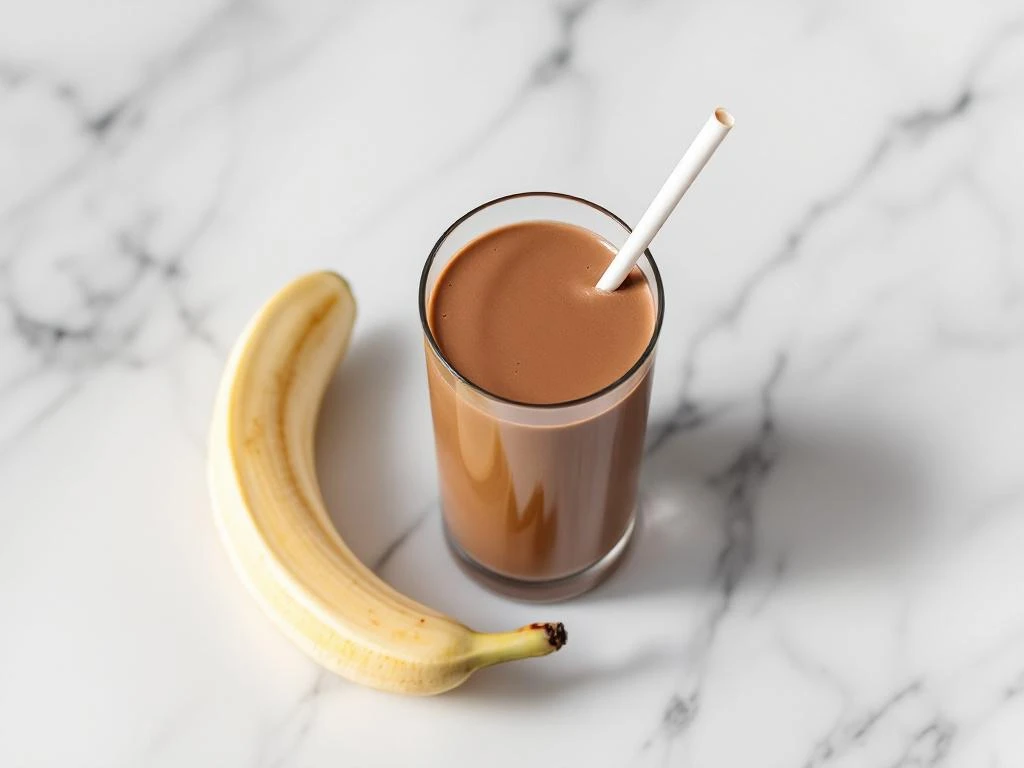
Managing IBS symptoms while enjoying delicious food can feel challenging. This lactose-free chocolate banana smoothie gives you a quick, satisfying breakfast or snack that won’t trigger digestive discomfort. The recipe takes just 5 minutes to make and combines creamy texture with rich chocolate flavour.
This guide is perfect for beginners. You’ll need a blender, measuring cups, and basic ingredients from most supermarkets. The entire process takes about 5 minutes from start to finish, and you’ll learn how to adjust the recipe for your specific dietary needs while keeping it low FODMAP compliant.
Why lactose-free chocolate banana smoothies work for IBS
This smoothie combines ingredients that support digestive health without sacrificing taste. Traditional smoothies often contain dairy milk and high FODMAP fruits that can trigger IBS symptoms. This recipe uses lactose-free alternatives and controlled portions of banana to keep FODMAP levels low.
Bananas contain natural sugars that can be problematic in large amounts. A firm, unripe banana (about 100g or one medium banana) stays within low FODMAP limits. The resistant starch in less ripe bananas is gentler on your digestive system. Cocoa powder adds chocolate flavour without the lactose found in milk chocolate, making this an IBS-friendly smoothie that doesn’t compromise on taste.
The nutritional benefits extend beyond digestive comfort. Bananas provide potassium and vitamin B6, whilst cocoa powder contains antioxidants and magnesium. Using lactose-free milk or plant-based alternatives gives you calcium and vitamins without the lactose that causes problems for many people with IBS. This dairy-free chocolate smoothie delivers satisfying nutrition in a format that’s easy to digest.
Gather your lactose-free smoothie ingredients
You’ll need these basic ingredients for one serving:
- 1 medium firm banana (about 100g, not overripe)
- 250ml lactose-free milk or almond milk
- 1 tablespoon unsweetened cocoa powder
- 1 teaspoon maple syrup or low FODMAP sweetener (optional)
- 3-4 ice cubes
Choose your milk alternative carefully. Lactose-free cow’s milk works well if you’re only avoiding lactose. For a fully dairy-free option, use almond milk (check it’s made from almonds only, without high FODMAP additives). Avoid soy milk made from whole soybeans, as it contains high FODMAPs. Soy milk made from soy protein is low FODMAP in small serves.
Ingredient substitutions let you adapt this recipe. Replace the banana with half a cup of frozen strawberries (about 65g) if you prefer berry flavour. Use rice malt syrup instead of maple syrup if you need a different sweetener. Check that your cocoa powder is pure and unsweetened, as some brands add milk powder or high FODMAP sweeteners.
Keep portions accurate for FODMAP compliance. One medium banana is the upper limit for a low FODMAP serve. Using more will increase fructose levels and might trigger symptoms. The same applies to sweeteners. One teaspoon keeps sugar content reasonable whilst adding just enough sweetness to balance the cocoa’s natural bitterness.
Blend your chocolate banana smoothie in 5 minutes
Start by breaking your banana into chunks. This helps your blender process it more easily. Add the banana pieces to your blender first, followed by the cocoa powder. This order prevents the cocoa from sticking to the sides of the container.
Pour in your lactose-free milk next. Add your sweetener if you’re using it, then drop in the ice cubes. The ice creates a cold, thick texture similar to a milkshake. If you prefer a thinner consistency, use fewer ice cubes or skip them entirely.
Blend on high speed for 30 to 45 seconds. Stop when the mixture looks smooth and no banana chunks remain. Your smoothie should have a creamy, uniform texture. If it’s too thick, add 2 tablespoons of milk and blend for another 10 seconds. If it’s too thin, add one more ice cube and blend briefly.
Check the sweetness level by tasting a small amount. The banana provides natural sweetness, but some people prefer a sweeter taste. Add another half teaspoon of maple syrup if needed, then blend for 5 seconds to mix it through.
Pour your smoothie into a glass immediately. The texture is best when fresh. If you notice separation after a few minutes, give it a quick stir before drinking. This easy lactose-free recipe delivers a satisfying chocolate banana flavour without complicated steps or special equipment.
Customise your smoothie for different dietary needs
Adding protein turns this smoothie into a more substantial meal. Use lactose-free protein powder or a low FODMAP plant-based option. Add one scoop (about 30g) before blending. Rice protein powder and pea protein isolate are both low FODMAP choices. Avoid whey protein concentrate if you’re sensitive to lactose, even in small amounts.
Adjust sweetness based on your preferences and FODMAP tolerance. Maple syrup works well in small amounts. Stevia provides sweetness without FODMAPs if you prefer a zero-calorie option. Avoid honey and agave syrup, as both contain high levels of fructose that can trigger IBS symptoms.
Superfood additions can boost nutrition whilst staying low FODMAP. Try these options:
- 1 tablespoon chia seeds (adds omega-3 fatty acids and fibre)
- 1 teaspoon ground cinnamon (adds flavour and helps regulate blood sugar)
- 1 tablespoon peanut butter (provides healthy fats and protein, but check portion size)
- A handful of spinach (about 30g, adds nutrients without affecting taste)
Keep FODMAP compliance in mind when adding extras. Peanut butter is low FODMAP in 2 tablespoon serves, so one tablespoon leaves room for other ingredients. Chia seeds are low FODMAP up to 2 tablespoons. Always introduce one new ingredient at a time so you can identify any triggers.
This gluten-free smoothie naturally accommodates multiple dietary restrictions. It’s already dairy-free if you use plant milk, making it suitable for vegans. The banana chocolate recipe provides energy for breakfast or a post-workout snack. Adjust portion sizes based on your hunger levels, but remember that larger serves increase FODMAP content.
Store and meal prep your lactose-free smoothies
Fresh smoothies taste best, but you can prepare ingredients ahead. Portion your banana chunks into small containers or freezer bags. Store them in the freezer for up to three months. Measure your cocoa powder into small containers. Keep these in your pantry with your sweetener. When you’re ready to blend, grab your pre-portioned ingredients and add your milk.
Prepared smoothies stay fresh in the refrigerator for up to 24 hours. Pour your smoothie into an airtight container, filling it to the top to minimise air exposure. The mixture will separate as it sits. Shake or stir it well before drinking. The texture won’t be quite as smooth as fresh, but the taste remains good.
Freezing complete smoothies works for longer storage. Pour your blended smoothie into freezer-safe containers, leaving 2cm of space at the top for expansion. Freeze for up to one month. Thaw in the refrigerator overnight, then shake well before drinking. You can also blend frozen smoothie cubes with a splash of fresh milk for a thicker, colder texture.
Create a weekly meal prep routine for this lactose-free breakfast option. Prepare five portions of banana chunks on Sunday. Store each portion separately so you can grab one each morning. Keep your other ingredients ready to go. This system lets you make a fresh smoothie in under 3 minutes on busy mornings.
Quality decreases over time, even with proper storage. Bananas may brown slightly when frozen, but this doesn’t affect safety or nutrition. The cocoa might settle at the bottom of stored smoothies. A good shake fixes this easily. Plan to use refrigerated smoothies within one day and frozen portions within two weeks for the best flavour and texture.
This approach helps you maintain your IBS management routine even during hectic periods. Having ingredients ready removes barriers to making healthy choices. You’ll always have a quick, safe breakfast option that supports your digestive health without requiring much time or effort.
Lactose-free chocolate banana smoothie
Cooking Time: 5 minutes | Portions: 1 serving
Ingredients:
- 1 medium firm banana (about 100g)
- 250ml lactose-free milk or almond milk
- 1 tablespoon unsweetened cocoa powder
- 1 teaspoon maple syrup (optional)
- 3-4 ice cubes
Instructions:
- Break banana into chunks and add to blender
- Add cocoa powder, milk, sweetener, and ice cubes
- Blend on high speed for 30-45 seconds until smooth
- Check consistency and adjust with more milk or ice if needed
- Taste and add more sweetener if desired
- Pour into glass and serve immediately
Tips:
- Use firm bananas to keep FODMAP levels low
- Add protein powder for a more filling meal
- Prepare banana chunks ahead and freeze for quick blending
- Store prepared smoothies in the fridge for up to 24 hours
This recipe is for informational purposes only and is not medical or dietary advice. Please consult a healthcare professional before making any changes to your diet.