
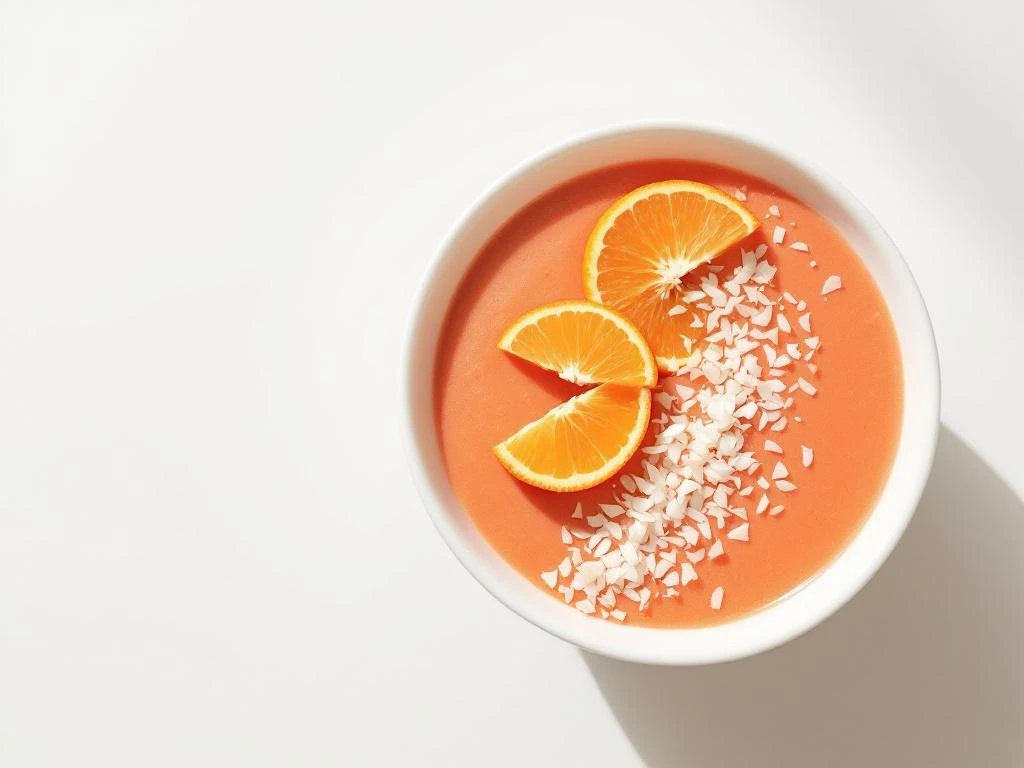
Living with IBS doesn’t mean sacrificing flavour or satisfaction at breakfast. This orange coconut smoothie bowl delivers bright, tropical taste while keeping your digestion comfortable. The thick, spoonable texture makes it more filling than a regular smoothie, and every ingredient stays within low FODMAP guidelines when portioned correctly.
This recipe suits beginners and takes about 10 minutes from start to finish. You’ll need a blender, measuring cups, and a few simple ingredients. The result is a healthy breakfast bowl that provides sustained energy without triggering IBS symptoms.
Why this orange coconut smoothie bowl works for IBS
Oranges contain natural sugars in balanced proportions that most people with IBS tolerate well. A single medium orange stays within low FODMAP serving sizes and provides vitamin C, which supports overall gut health. The soluble fibre in oranges moves slowly through your digestive system, helping to regulate bowel movements without causing discomfort.
Coconut milk brings healthy fats that slow digestion in a good way. This prevents blood sugar spikes and keeps you satisfied longer. Canned coconut milk (the full-fat kind) is low FODMAP in servings up to 125ml. The medium-chain triglycerides in coconut are easier for your body to process than other fats, making this tropical smoothie bowl particularly gentle on sensitive stomachs.
The combination of these two main ingredients creates a naturally sweet, creamy base that doesn’t require added sugars or artificial sweeteners. You get genuine nutrition with every spoonful, and your digestive system stays calm throughout the morning.
Gather your low FODMAP ingredients and tools
For the smoothie bowl base, you’ll need one medium orange (peeled and segmented), 125ml of canned coconut milk, half a frozen banana (about 50g to stay low FODMAP), and three ice cubes. The frozen banana adds thickness and natural sweetness without pushing you over FODMAP limits.
Your kitchen tools list is short. A high-speed blender works best for achieving that perfect thick consistency. You’ll also need measuring cups or a kitchen scale for accurate portions, a sharp knife for preparing fruit, and a wide, shallow bowl for serving. The bowl shape matters because it gives you room to arrange toppings attractively.
Prepare your orange by removing all peel and pith. The white pith can add bitterness and doesn’t blend as smoothly. Cut your banana half into chunks before freezing for easier blending. Having ingredients at the right temperature makes a difference, so keep that coconut milk chilled in the fridge.
Blend the perfect smoothie bowl base
Add your coconut milk to the blender jar before anything else. Liquid at the bottom helps the blades move freely and prevents the motor from straining. Drop in your orange segments next, followed by the frozen banana chunks. The ice cubes go in last, sitting on top of everything.
Start blending on low speed for about 10 seconds, then increase to high. Blend for 30 to 45 seconds total. Stop and check the consistency. You want it thick enough that a spoon stands upright when you stick it in the middle. If it’s too thin and pourable, add one or two more ice cubes and blend again briefly.
Resist the urge to add extra liquid if the blender struggles. Instead, stop the machine and use a spatula to push ingredients toward the blades. Then blend again. This keeps your smoothie bowl thick rather than turning it into a drinkable smoothie. The texture should resemble soft-serve ice cream, not a milkshake.
Choose low FODMAP toppings that add texture
Macadamia nuts provide crunch and healthy fats in low FODMAP portions of up to 10 nuts. Pumpkin seeds (pepitas) work well too, with a safe serving size of two tablespoons. Both add protein that makes this breakfast more satisfying. Toast them lightly in a dry pan for extra flavour.
Fresh strawberries (up to five medium berries) or blueberries (up to 20 berries) add colour and natural sweetness. Slice strawberries thinly so they’re easier to eat with each spoonful. A sprinkle of unsweetened shredded coconut reinforces the tropical theme while staying IBS-friendly. One tablespoon is plenty.
Arrange your toppings in sections rather than scattering them randomly. This creates visual appeal and lets you control how much of each ingredient you get in every bite. Place nuts on one side, berries on another, and coconut in the centre. The presentation makes your healthy breakfast bowl feel special, even on rushed mornings.
What can I substitute in this recipe?
If coconut milk doesn’t suit you, lactose-free yoghurt works in the same quantity. Choose a plain variety without added high FODMAP ingredients like honey or inulin. Almond milk is another option, though you’ll need to add half an avocado for creaminess since almond milk is quite thin.
Can’t find good oranges? Use one small mandarin or 100g of canned mandarin segments (drained). Both stay within low FODMAP limits and provide similar vitamin content. For a different flavour profile, try half a ripe kiwi fruit instead. The tanginess works beautifully with coconut.
To adjust thickness, change your ice cube quantity rather than adding more liquid. More ice makes it thicker, less ice makes it thinner. If you prefer sweeter smoothie bowls, add a teaspoon of maple syrup. This stays low FODMAP and dissolves easily into the cold mixture. Skip honey, as it contains high FODMAP sugars even in small amounts.
Store and prep your smoothie bowl for busy mornings
Prepare smoothie packs the night before by combining your orange segments, banana chunks, and ice cubes in a small freezer bag. Store these in your freezer for up to two weeks. In the morning, dump the contents into your blender with coconut milk and blend. This cuts your prep time to under five minutes.
The blended base doesn’t store well once mixed, as it separates and loses that perfect thick texture. If you must make it ahead, blend everything except ice, pour into a container, and freeze. In the morning, let it thaw for 10 minutes, then blend briefly with ice cubes to restore the right consistency.
Pre-portion your toppings in small containers at the start of the week. Measure out servings of nuts, seeds, and coconut into individual portions. This prevents accidentally adding too much in your morning rush and ensures you stay within low FODMAP limits. Keep berries whole until you’re ready to eat, as pre-cut fruit browns quickly and loses freshness.
This gluten free smoothie bowl gives you control over your morning nutrition while respecting your digestive needs. The bright orange colour and tropical coconut flavour make breakfast feel like a treat rather than a restriction. You’re building a sustainable way to start your day with energy and comfort.
Orange coconut smoothie bowl
Cooking time: 10 minutes | Portions: 1
- 1 medium orange (peeled and segmented)
- 125ml canned coconut milk (full-fat)
- 50g frozen banana (about half a banana)
- 3 ice cubes
- Toppings: 10 macadamia nuts, 2 tablespoons pumpkin seeds, 5 strawberries (sliced), 1 tablespoon shredded coconut
- Add coconut milk to blender, followed by orange segments, frozen banana chunks, and ice cubes
- Blend on low for 10 seconds, then high for 30 to 45 seconds until thick and creamy
- Check consistency (should be spoonable, not pourable)
- Pour into a wide, shallow bowl
- Arrange toppings in sections across the surface
- Serve immediately for best texture and flavour
This recipe is for informational purposes only and is not medical or dietary advice. Please consult a healthcare professional before making any changes to your diet.
Related Articles
- How many poos a day is normal with IBS?
- What is a good bedtime snack for IBS?
- What meat is good for IBS?
- Is scrambled egg on toast good for IBS?
- Lactose-Free Yogurt Parfait with Blueberries