
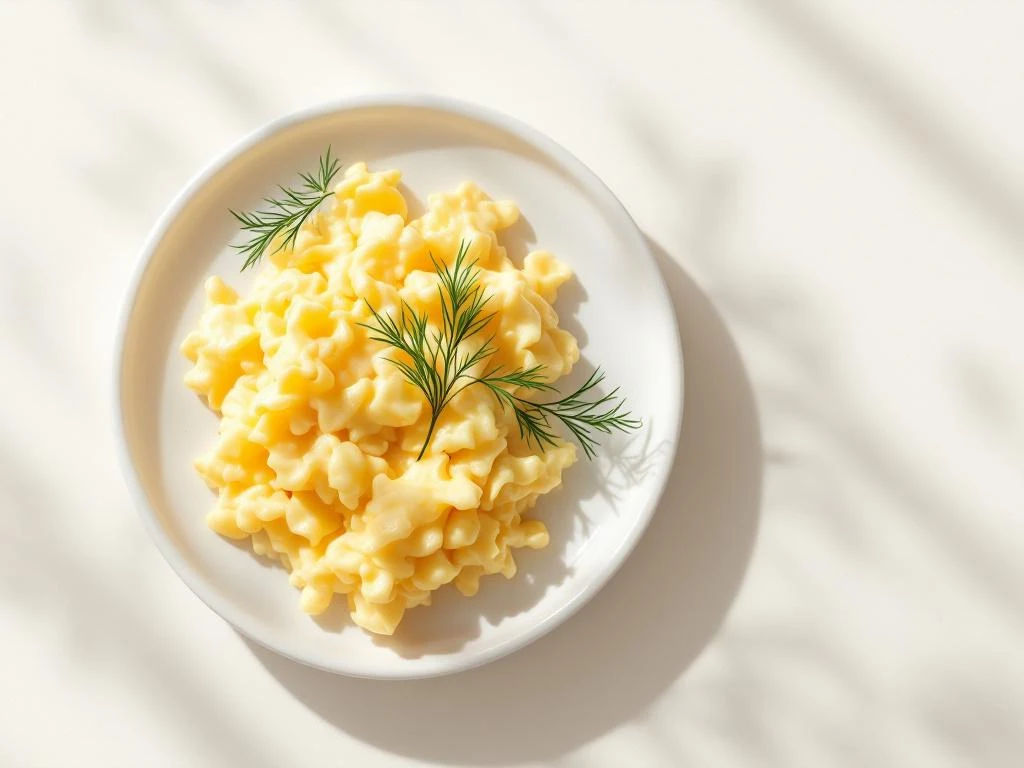
Making a quick, satisfying breakfast when you have IBS doesn’t mean settling for bland food. Scrambled eggs with fresh dill is an easy, naturally low FODMAP breakfast that takes about 10 minutes from start to finish. This recipe is perfect for beginners and requires just a few basic ingredients you probably already have in your kitchen.
You’ll need eggs, fresh dill, butter or a lactose-free alternative, salt, and pepper. The only tools required are a non-stick pan, a whisk or fork, and a spatula. This guide will walk you through each step to create perfectly creamy scrambled eggs with just the right amount of fresh herb flavour.
Why scrambled eggs with dill work for sensitive stomachs
Eggs are naturally low FODMAP and gentle on the digestive system. They contain no carbohydrates that trigger IBS symptoms, making them an excellent protein choice for people following a low FODMAP diet. A standard serving of two to three eggs fits comfortably within FODMAP guidelines.
Fresh dill adds bright, aromatic flavour without any of the gut-irritating compounds found in onions or garlic. Unlike many herbs and seasonings that can cause problems for sensitive stomachs, dill is considered safe in typical cooking amounts. It brings a distinctive taste that makes simple scrambled eggs feel special.
This combination provides high-quality protein, healthy fats, and essential nutrients like vitamin D and choline. The eggs are easy to digest, whilst the dill offers antioxidants and adds variety to your FODMAP-friendly breakfast rotation. You get a satisfying meal that supports your nutritional needs without compromising digestive comfort.
Gather your ingredients and tools
For a basic serving of scrambled eggs with dill, you’ll need these low FODMAP ingredients:
- 3 large eggs
- 1 tablespoon fresh dill, chopped
- 1 tablespoon butter or lactose-free butter alternative
- Salt to taste
- Black pepper to taste
The essential kitchen tools are simple. Grab a non-stick pan (20-25cm works well), a whisk or fork for beating the eggs, and a silicone or wooden spatula for stirring. A small cutting board and sharp knife will help you prep the dill.
Optional FODMAP-friendly additions include a tablespoon of lactose-free milk for extra creaminess, a sprinkle of chives for additional herb flavour, or a small amount of grated hard cheese like aged cheddar. Keep portions modest to maintain FODMAP compliance. Avoid adding cream cheese, soft cheeses, or regular milk if you’re sensitive to lactose.
Prepare the eggs and dill properly
Crack the eggs into a clean bowl, checking for any shell fragments. Use a whisk or fork to beat them until the yolks and whites are fully combined. You’ll know they’re ready when the mixture is uniform in colour with no streaks of clear egg white visible. This usually takes about 30 seconds of steady whisking.
Rinse the fresh dill under cool water and pat it dry with a clean tea towel. Remove any thick stems, as these can be tough and bitter. Gather the fronds together and chop them finely with a sharp knife. You want pieces small enough to distribute evenly throughout the eggs without overwhelming any single bite.
For three eggs, one tablespoon of chopped dill creates balanced flavour. This ratio lets you taste the herb without it dominating the dish. If you’re new to cooking with dill, start with a bit less. You can always add more to future batches once you know your preference. Add the chopped dill directly to the beaten eggs along with a pinch of salt and pepper, then give everything a quick stir to combine.
Cook perfect creamy scrambled eggs
Place your non-stick pan on the hob over medium-low heat. This temperature is crucial for creamy scrambled eggs. Too high and they’ll cook too quickly, becoming rubbery. Wait about one minute for the pan to warm up properly.
Add the butter and let it melt completely, swirling the pan to coat the bottom evenly. The butter should foam slightly but not brown. Once it’s melted and stopped sizzling, pour in your egg and dill mixture.
Let the eggs sit undisturbed for about 20 seconds until you see the edges just beginning to set. Then use your spatula to gently push the eggs from the edge towards the centre, tilting the pan so uncooked egg flows into the empty spaces. Keep doing this in a slow, gentle motion.
For soft, creamy eggs, remove the pan from heat when the eggs still look slightly wet and glossy. They’ll continue cooking from residual heat. This takes about 3-4 minutes total. For firmer eggs, cook for an additional minute or two, but keep stirring gently to prevent them from drying out. The eggs should form soft curds rather than small, dry pieces.
Take the pan off the heat about 30 seconds before the eggs reach your desired consistency. This prevents overcooking and keeps the texture smooth. Serve immediately for the best results.
What if my scrambled eggs turn out watery or rubbery?
Watery scrambled eggs usually mean the heat was too high or you didn’t cook them quite long enough. The eggs release moisture as they cook, and if the temperature is too intense, the proteins seize up quickly whilst leaving liquid behind. Next time, lower the heat and cook more slowly. If you notice excess liquid in the pan, keep cooking gently until it evaporates, stirring continuously.
Rubbery texture happens from overcooking. Once eggs cook past a certain point, the proteins become tough and dry. Always remove your pan from heat whilst the eggs still look slightly underdone. They’ll finish cooking from the residual heat in the pan. If you consistently end up with rubbery eggs, try reducing your cooking time by a full minute.
Eggs sticking to the pan means either the pan wasn’t hot enough when you added the butter, you didn’t use enough fat, or your non-stick coating is worn. Make sure the butter fully melts and coats the pan before adding the eggs. If sticking persists, add a touch more butter or consider replacing your pan.
Dill losing flavour or tasting bitter typically happens when it’s cooked too long at too high a temperature. Fresh herbs are delicate. The gentle, low heat method described above protects the dill’s flavour. If you accidentally burn some dill stuck to the pan, scrape it out before it affects the whole dish. You can also try adding half the dill to the raw eggs and stirring in the remaining half just before serving to preserve maximum freshness.
Serve and customize your dill scrambled eggs
Serve your fresh dill scrambled eggs immediately on a warm plate. They pair beautifully with gluten-free toast spread with a thin layer of butter or lactose-free cream cheese. A small handful of baby spinach wilted in the pan after removing the eggs adds colour and nutrients without triggering symptoms.
Other FODMAP friendly breakfast sides include cherry tomatoes (up to 10 in one sitting), sliced cucumber, or a small portion of smoked salmon. If you tolerate small amounts of lactose-free cheese, a sprinkle of grated hard cheese on top adds richness. Avoid serving with regular bread, milk-based yoghurt, or high FODMAP vegetables like mushrooms or asparagus.
Store any leftovers in an airtight container in the fridge for up to two days, though scrambled eggs are always best fresh. Reheat gently in a pan over low heat or in the microwave at reduced power, adding a small knob of butter to restore moisture. The texture won’t be quite as creamy as when first cooked, but they’ll still be perfectly edible.
For variations whilst maintaining FODMAP compliance, try swapping dill for fresh chives, basil, or parsley. Add a pinch of smoked paprika for a subtle smoky flavour. You can also fold in some cooked, chopped bacon or a tablespoon of lactose-free sour cream just before serving. Each variation keeps the base technique the same whilst offering different flavour profiles to prevent breakfast boredom.
Scrambled eggs with fresh dill
Cooking time: 10 minutes | Portions: 1 serving
- Crack 3 eggs into a bowl and whisk until fully combined
- Chop 1 tablespoon fresh dill finely
- Add dill, salt, and pepper to eggs and stir
- Heat non-stick pan over medium-low heat
- Melt 1 tablespoon butter in the pan
- Pour in egg mixture and let sit for 20 seconds
- Gently push eggs from edges to centre, tilting pan to fill spaces
- Continue stirring gently for 3-4 minutes until eggs are mostly set but still glossy
- Remove from heat 30 seconds before desired doneness
- Serve immediately with gluten-free toast or other low FODMAP sides
This recipe is for informational purposes only and is not medical or dietary advice. Please consult a healthcare professional before making any changes to your diet.
Related Articles
- Scrambled Eggs with Roasted Peppers
- Quinoa Breakfast Porridge with Berries
- Are potatoes good for IBS diarrhea?
- Bacon and Egg Breakfast Muffins
- Turkey Sausage and Egg Scramble