
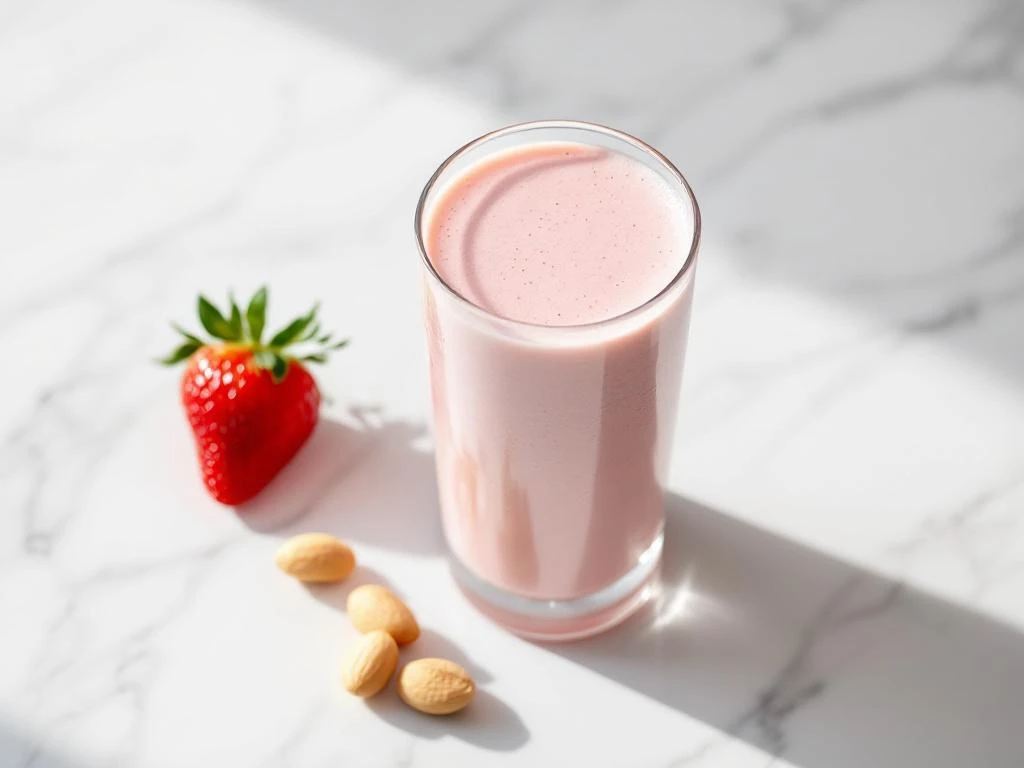
Making a nutritious breakfast doesn’t have to trigger digestive discomfort. This strawberry peanut butter smoothie combines simple ingredients that are gentle on sensitive stomachs whilst delivering protein, healthy fats and natural sweetness. The recipe follows low FODMAP guidelines, making it suitable for people managing IBS or food intolerances.
You’ll need about 5 minutes to prepare this smoothie. The recipe requires basic kitchen equipment and ingredients you can find at most supermarkets. No special cooking skills are needed, just a blender and a few FODMAP-friendly ingredients.
Why this smoothie works for sensitive stomachs
Strawberries and peanut butter create a balanced combination that stays within low FODMAP limits when portioned correctly. Fresh or frozen strawberries contain low levels of FODMAPs in servings up to 140 grams, making them one of the safer berry choices for an IBS friendly smoothie. Peanut butter provides protein and healthy fats without triggering digestive symptoms, provided you stick to natural varieties without added high FODMAP ingredients.
The protein content from peanut butter helps stabilise blood sugar levels and keeps you satisfied longer. This makes the smoothie work well as a healthy breakfast smoothie or post-workout snack. The natural sweetness from strawberries means you don’t need to add high FODMAP sweeteners like honey or agave syrup.
This gluten free smoothie naturally supports gut health through its balanced macronutrient profile. The combination of protein, healthy fats and moderate fibre content creates a gentle meal option that won’t overwhelm your digestive system. Using lactose free milk alternatives ensures the smoothie remains suitable for those avoiding dairy whilst still providing calcium and additional protein.
Gather your low FODMAP smoothie ingredients
For one serving of this protein smoothie low FODMAP, you’ll need the following ingredients:
- 140 grams fresh or frozen strawberries (about 7 medium berries)
- 2 tablespoons natural peanut butter (check labels for added high FODMAP ingredients)
- 200ml lactose free milk or suitable plant milk (almond milk in small amounts or oat milk made from certified low FODMAP oats)
- 1 teaspoon maple syrup (optional, for extra sweetness)
- 4-5 ice cubes (if using fresh strawberries)
When selecting peanut butter, choose varieties with just peanuts and salt listed in the ingredients. Avoid products containing honey, inulin or chicory root extract, as these contain high FODMAP compounds. For the milk alternative, lactose free dairy milk provides the creamiest texture. Rice milk works well too, though it’s thinner in consistency.
Optional add-ins that maintain FODMAP compliance include a handful of spinach (adds nutrients without affecting flavour), half a small banana if tolerated (stick to firm, unripe bananas in small amounts), or a tablespoon of chia seeds for extra fibre and omega-3 fatty acids. Keep total serving sizes in mind when adding extras.
Blend your strawberry peanut butter smoothie
Start by adding the liquid to your blender first. Pour in the lactose free milk, which creates a base that helps the blades move smoothly. This prevents the peanut butter from sticking to the bottom and ensures even blending.
Add the peanut butter next, dropping it into the liquid. Then add your strawberries, whether fresh or frozen. If using fresh strawberries, add the ice cubes now. Frozen strawberries create a thicker, colder smoothie without additional ice.
Blend on high speed for 30 to 45 seconds. Stop and check the consistency. The smoothie should be creamy with no visible chunks of strawberry or streaks of peanut butter. If it’s too thick, add a splash more milk and blend for another 10 seconds. If it’s too thin, add one or two more ice cubes or a few extra frozen strawberries and blend again.
The peanut butter strawberry smoothie recipe should result in a smooth, pourable consistency that’s thick enough to be satisfying but not so thick you need a spoon. Taste and adjust sweetness if needed by adding the optional maple syrup, then blend briefly to combine.
Customise your smoothie for different needs
To increase protein content for a more filling meal replacement, add a scoop of low FODMAP protein powder. Look for varieties sweetened with stevia or rice malt syrup rather than high FODMAP sweeteners. Alternatively, add an extra tablespoon of peanut butter, keeping in mind this increases calories and fat content.
For a lighter version suitable as a snack, reduce the peanut butter to 1 tablespoon and increase the milk slightly to maintain a smooth texture. This cuts calories whilst keeping the characteristic peanut butter flavour. You can also thin the smoothie by adding more liquid, making it easier to drink quickly.
Texture modifications work well with this easy strawberry smoothie base. For a thicker, bowl-like consistency, reduce the milk to 150ml and add extra frozen strawberries. This creates a spoonable smoothie you can top with FODMAP-friendly granola or a few more fresh strawberries. For a thinner, more juice-like drink, increase milk to 250ml.
Natural FODMAP-friendly sweeteners include pure maple syrup in small amounts or a pinch of stevia powder. Avoid honey, agave nectar and coconut sugar, which contain higher FODMAP levels. Most people find the natural sweetness of strawberries sufficient, especially when using ripe berries.
Store and prepare smoothies in advance
Fresh smoothies taste best immediately after blending, but you can prepare this lactose free smoothie up to 24 hours ahead. Pour the blended smoothie into an airtight container, filling it nearly to the top to minimise air exposure. Store in the refrigerator and shake well before drinking, as natural separation occurs.
For longer storage, freeze the smoothie in individual portions using freezer-safe jars or containers. Leave about 2cm space at the top, as liquids expand when frozen. Frozen smoothies keep for up to 3 months. Thaw overnight in the refrigerator or let sit at room temperature for 30 minutes before drinking. Shake or stir well after thawing.
Smoothie prep packs make morning assembly quick and simple. Portion the strawberries and measure the peanut butter into small containers or ice cube trays. Freeze these components separately. In the morning, add the frozen fruit and peanut butter portions directly to your blender with fresh milk and blend. This method preserves freshness better than pre-blending.
Glass containers work better than plastic for storage, as they don’t absorb flavours or colours from the strawberries. Mason jars with tight-fitting lids are ideal for both refrigerator and freezer storage. Always label containers with the date to track freshness.
Separation is normal when smoothies sit. The heavier particles settle to the bottom whilst liquid rises to the top. Simply shake or stir before drinking to recombine. Adding a small amount of chia seeds before blending can reduce separation, as they absorb liquid and create a more stable texture.
Strawberry peanut butter smoothie
Cooking Time: 5 minutes | Portions: 1 serving
Ingredients:
- 140g fresh or frozen strawberries
- 2 tablespoons natural peanut butter
- 200ml lactose free milk or low FODMAP plant milk
- 1 teaspoon maple syrup (optional)
- 4-5 ice cubes if using fresh strawberries
Instructions:
- Pour lactose free milk into blender
- Add peanut butter and strawberries
- Add ice cubes if using fresh berries
- Blend on high for 30-45 seconds until smooth
- Check consistency and adjust with more milk or ice as needed
- Add optional maple syrup and blend briefly if desired
- Pour into glass and serve immediately
This recipe is for informational purposes only and is not medical or dietary advice. Please consult a healthcare professional before making any changes to your diet.