
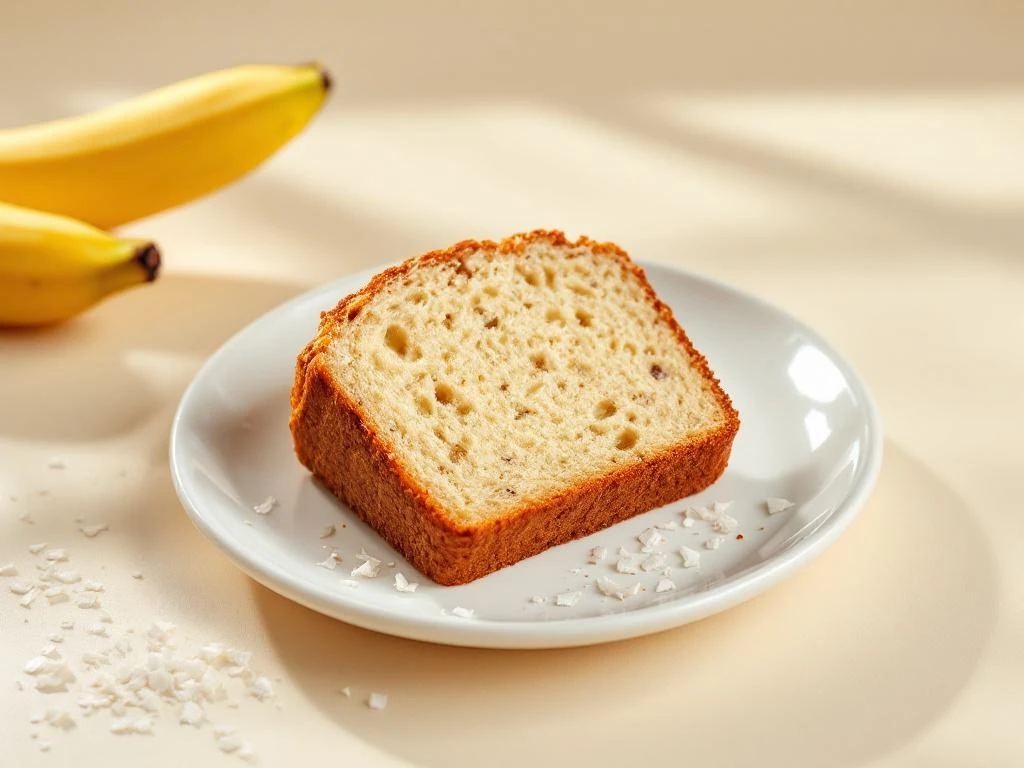
Baking gluten-free banana bread doesn’t have to be complicated or disappointing. This coconut banana bread recipe delivers moist, flavourful results whilst being gentle on sensitive stomachs. You’ll create a delicious loaf that’s both low FODMAP and gluten-free, making it suitable for anyone managing IBS or digestive sensitivities. The combination of ripe bananas and coconut creates natural sweetness and moisture, so you won’t miss traditional wheat-based recipes.
This recipe suits beginners to gluten-free baking. You’ll need about 15 minutes for preparation and 50 minutes for baking. The techniques are straightforward, and the ingredients are readily available at most supermarkets. You’ll need basic baking equipment like mixing bowls, measuring cups, and a loaf tin. Room temperature ingredients and proper measuring techniques make the biggest difference in achieving perfect texture.
Why this banana coconut bread works for sensitive stomachs
Gluten-free banana bread made with low FODMAP ingredients addresses several common digestive triggers. Traditional banana bread contains wheat flour and often includes high FODMAP sweeteners or dairy products that can cause bloating, gas, and discomfort for people with IBS. This recipe eliminates those problematic ingredients whilst maintaining the comforting taste and texture you expect from banana bread.
Bananas become low FODMAP when they’re ripe but not overripe. A medium-sized firm ripe banana contains safe levels of fructose and is well tolerated during the elimination phase. Coconut products like coconut flour and shredded coconut are naturally low FODMAP in appropriate portions. They add healthy fats that help create moisture without dairy butter or milk.
The gluten-free flour blend replaces wheat without the high FODMAP ingredients found in some alternatives. Rice flour forms the base of most successful gluten-free baking for sensitive stomachs. This IBS-friendly banana bread fits perfectly into the elimination phase of the low FODMAP diet. During reintroduction, you can test small portions to confirm your personal tolerance. The recipe provides a safe baseline that you can adapt as you learn which foods work for your body.
Gather your gluten-free baking essentials
You’ll need three medium firm-ripe bananas for this healthy banana bread. Look for bananas with yellow skin and just a few brown spots. Completely brown bananas contain higher fructose levels and may trigger symptoms. Measure 200g of gluten-free flour blend that contains rice flour, potato starch, and tapioca starch. Avoid blends with chickpea flour or soy flour, as these are high FODMAP.
For the coconut components, gather 50g of desiccated coconut and 60ml of coconut oil. Use refined coconut oil if you prefer a milder flavour. You’ll need 100g of caster sugar or a low FODMAP sweetener alternative. Add two large eggs at room temperature, one teaspoon of vanilla extract, one teaspoon of baking powder, and half a teaspoon of bicarbonate of soda. Include a pinch of salt to enhance the flavours.
Essential equipment includes two mixing bowls (one large, one medium), measuring cups and spoons, a fork or potato masher, a whisk, a spatula, and a 900g loaf tin. Line your loaf tin with baking parchment or grease it thoroughly with additional coconut oil. Having everything measured and ready before you start mixing makes the process smoother and prevents mistakes.
Pantry staples that ensure success
Keep your gluten-free flour blend in an airtight container to prevent moisture absorption. Gluten-free flours clump easily when exposed to humidity. Store coconut oil at room temperature so it’s easy to measure and mix. Keep baking powder and bicarbonate of soda fresh by replacing them every six months. Old leavening agents won’t provide proper rise, resulting in dense, heavy bread.
Prepare your ingredients for optimal texture
Start by bringing your eggs and coconut oil to room temperature. Cold ingredients don’t combine smoothly and can create a lumpy batter. If you forgot to take them out earlier, place eggs in warm water for five minutes. Melt solid coconut oil gently in the microwave for 20 seconds, then let it cool slightly. You want it liquid but not hot, as hot oil can cook the eggs when mixed.
Peel your bananas and place them in your large mixing bowl. Mash them thoroughly with a fork until mostly smooth with just a few small lumps remaining. Properly mashed bananas distribute moisture evenly throughout your dairy-free banana bread. Overly chunky banana pieces create wet spots, whilst completely smooth puree can make the texture gummy.
Measure your gluten-free flour correctly to avoid dense results. Spoon the flour into your measuring cup rather than scooping directly from the bag. Scooping compacts the flour and you’ll end up with too much. Level off the top with a knife for an accurate measurement. In a separate medium bowl, whisk together the flour, baking powder, bicarbonate of soda, and salt. This distributes the leavening agents evenly so your bread rises uniformly.
Temperature matters for mixing
Preheat your oven to 180°C (160°C fan). An oven thermometer helps verify the actual temperature, as many ovens run hot or cold. Prepare your loaf tin whilst the oven heats. Cut baking parchment to fit the bottom and sides with some overhang. This makes removing the finished loaf much easier and prevents sticking.
Mix and combine for perfect banana bread consistency
Add the sugar to your mashed bananas and stir until combined. The sugar will start dissolving into the banana moisture. Crack in your eggs one at a time, whisking well after each addition. Pour in the melted coconut oil and vanilla extract, then whisk everything together until you have a smooth, pale mixture. This wet mixture should look slightly fluffy from the air incorporated during whisking.
Pour the dry flour mixture into the wet ingredients all at once. Use a spatula to fold gently, scraping from the bottom and turning the batter over. Stop mixing as soon as you no longer see dry flour. Gluten-free flour doesn’t develop gluten, but overmixing still creates a gummy texture by breaking down the starches. The batter should look slightly lumpy and thick, similar to a dense cake batter.
Sprinkle the desiccated coconut over the batter. Fold it in with just a few strokes, distributing it throughout without excessive mixing. Some coconut pieces will remain visible on the surface, which creates a lovely texture in the finished loaf. The batter will be thicker than traditional wheat-based banana bread batter. This is normal for gluten-free baking and will produce a moist, tender crumb.
Check your batter consistency
Your easy banana bread recipe batter should slowly drop from a spoon rather than pour. If it seems too thick to spread, your bananas might have been undersized. Add a tablespoon of water or dairy-free milk and fold gently. If it’s too thin, you measured too little flour. You can’t fix this easily, so proceed with baking but expect a slightly denser result.
Bake to golden perfection
Scrape the batter into your prepared loaf tin. Use your spatula to spread it evenly into the corners and smooth the top. The batter won’t spread much during baking, so shape it now how you want the finished loaf to look. Tap the tin gently on the counter twice to release any large air bubbles trapped in the thick batter.
Place the tin in the centre of your preheated oven. Bake for 50 to 55 minutes without opening the oven door during the first 45 minutes. Opening the door early causes temperature drops that affect rising. At 50 minutes, check for doneness using multiple tests. The top should be golden brown with slight cracks, and the edges should pull away slightly from the tin sides.
Insert a wooden skewer or toothpick into the centre of the loaf. It should come out clean or with just a few moist crumbs attached. Wet batter on the skewer means it needs more time. Return it to the oven and check every three minutes. Press the centre top gently with your finger. The bread should spring back rather than leave an indentation. If it sinks, it needs additional baking time.
Cooling prevents sogginess
Remove the tin from the oven when fully baked. Let it cool in the tin for 10 minutes. This cooling period allows the structure to set so the loaf doesn’t fall apart when removed. After 10 minutes, use the parchment overhang to lift the loaf out of the tin. Place it on a wire cooling rack. Cool completely before slicing, about one hour. Cutting warm gluten-free bread creates gummy slices that fall apart.
Store and serve your coconut banana bread
Store your gluten-free coconut bread wrapped tightly in cling film or in an airtight container. At room temperature, it stays fresh for two days. The high moisture content from bananas and coconut oil means it can develop mould quickly in warm conditions. Refrigeration extends freshness to five days. Wrap individual slices separately so you can grab one serving at a time.
For longer storage, freeze sliced portions wrapped individually in cling film, then placed together in a freezer bag. Frozen slices keep for three months. Thaw overnight in the refrigerator or toast directly from frozen. Toasting refreshes the texture and brings back the just-baked flavour. The edges get slightly crispy whilst the centre stays moist.
Serve this low FODMAP banana bread plain for breakfast or as a snack. Spread slices with a thin layer of lactose-free butter or a low FODMAP nut butter like peanut or almond butter (check serving sizes). A drizzle of maple syrup adds sweetness whilst remaining low FODMAP in small amounts. Pair it with a cup of tea or coffee for a satisfying morning treat.
Keep portions gut-friendly
One slice (about one-tenth of the loaf) provides a safe low FODMAP serving. Eating multiple slices in one sitting increases your FODMAP load and may trigger symptoms. Space out your servings throughout the day if you want more. This approach helps you enjoy the bread whilst respecting your digestive needs. We recommend noting how you feel after eating to track your personal tolerance.
This gluten-free banana bread recipe proves that managing digestive sensitivities doesn’t mean sacrificing delicious baked goods. The simple technique and readily available ingredients make it easy to prepare regularly. You now have a reliable recipe that works for your dietary needs whilst tasting just as good as traditional versions. Bake a loaf this weekend and enjoy having IBS-friendly treats ready whenever you need them.
Gluten-free banana coconut bread
Cooking Time: 50-55 minutes | Portions: 10 slices
Ingredients:
- 3 medium firm-ripe bananas
- 200g gluten-free flour blend (rice flour based)
- 50g desiccated coconut
- 60ml coconut oil, melted
- 100g caster sugar
- 2 large eggs, room temperature
- 1 teaspoon vanilla extract
- 1 teaspoon baking powder
- ½ teaspoon bicarbonate of soda
- Pinch of salt
Method:
- Preheat oven to 180°C (160°C fan) and line a 900g loaf tin with baking parchment
- Mash bananas in a large bowl until mostly smooth with few lumps
- Add sugar to bananas and stir, then whisk in eggs one at a time
- Mix in melted coconut oil and vanilla extract until smooth
- Whisk together flour, baking powder, bicarbonate of soda, and salt in a separate bowl
- Pour dry ingredients into wet mixture and fold gently until just combined
- Fold in desiccated coconut with minimal stirring
- Pour batter into prepared tin and smooth the top
- Bake for 50-55 minutes until golden and a skewer comes out clean
- Cool in tin for 10 minutes, then transfer to a wire rack to cool completely
- Slice and serve, storing leftovers wrapped tightly for up to 2 days at room temperature or 5 days refrigerated
This recipe is for informational purposes only and is not medical or dietary advice. Please consult a healthcare professional before making any changes to your diet.
Related Articles
- Egg and Tomato Breakfast Wrap
- Can I eat pizza with IBS?
- What foods are surprisingly low in FODMAP?
- Quinoa and Raspberry Breakfast Bowl
- Can I eat sourdough on a low FODMAP diet?