
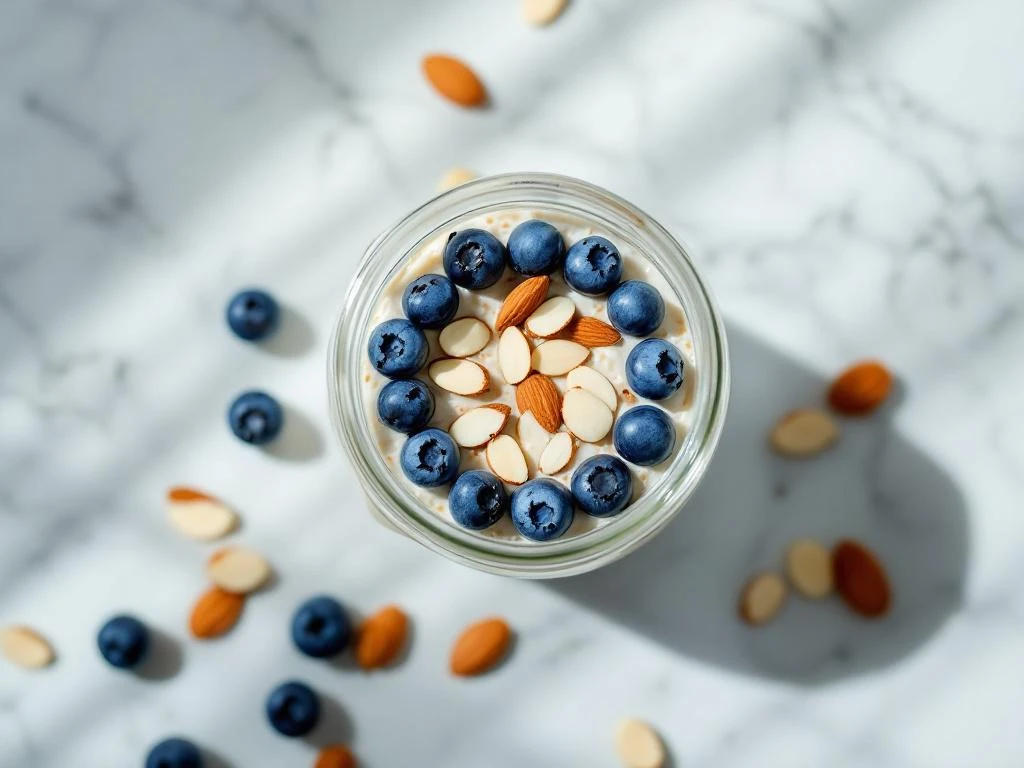
Making a healthy breakfast shouldn’t add stress to your morning routine, especially when you’re managing IBS symptoms. Blueberry almond overnight oats offer a make ahead breakfast solution that’s gentle on sensitive stomachs whilst delivering satisfying flavour and nutrition. This gluten free overnight oats recipe takes just 5 minutes to prepare the night before, giving you a ready-to-eat IBS friendly breakfast when you wake up.
This guide is perfect for beginners who want an easy breakfast meal prep option. You’ll need basic kitchen tools you already own and simple low FODMAP ingredients. The entire preparation takes 5 minutes, plus overnight refrigeration time of 8 to 12 hours.
You’ll need a mason jar or airtight container, measuring cups and spoons, and a mixing spoon. The recipe uses certified gluten-free oats, lactose free milk, fresh blueberries, and sliced almonds in FODMAP-safe portions. By following these steps, you’ll create a digestive-friendly breakfast that stays fresh for up to 5 days in your fridge.
Why overnight oats work for IBS-friendly meal prep
Overnight oats provide a convenient solution for people following a low FODMAP diet who need reliable breakfast options. The no-cook preparation method eliminates morning stress whilst giving your digestive system a gentle start to the day. This approach works particularly well for busy lifestyles because you prepare everything when you have time, then grab your breakfast on the way out.
The soaking process changes how your body handles the oats. When oats sit overnight in liquid, the starches break down slightly, making them easier to digest. This overnight softening means less work for your digestive system compared to eating dry or quickly cooked oats. For people with sensitive stomachs, this gentler texture often causes fewer issues.
Portion control becomes automatic with overnight oats. You measure everything into individual containers, which helps you stick to FODMAP-safe serving sizes without thinking about it each morning. A single serving keeps the oat portion at 50g, which stays within low FODMAP limits. This built-in portion control removes guesswork and helps prevent accidentally eating too much of any trigger ingredient.
The cold preparation preserves nutrients that heat sometimes destroys. Your body gets the full benefit of the fibre, vitamins, and minerals in the oats and toppings. The recipe also lets you control exactly what goes into your breakfast, avoiding hidden FODMAPs or additives that might upset your stomach. You know every ingredient is safe because you chose it yourself.
Gather your low FODMAP ingredients and tools
Start with 50g certified gluten-free rolled oats per serving. Check the package label specifically for gluten-free certification, as regular oats often contain traces of wheat from processing. Rolled oats work better than steel-cut or instant varieties for this recipe because they soften to the right texture overnight.
Choose 150ml lactose free milk or a suitable plant-based alternative. Almond milk (made from almonds only, not almond meal) works well, as does rice milk or oat milk labelled low FODMAP. Avoid regular dairy milk, soy milk made from whole soybeans, and coconut milk in large amounts. Read ingredient lists carefully to spot any added high FODMAP sweeteners or thickeners.
Measure out 40g fresh or frozen blueberries. This portion size keeps you within the low FODMAP limit whilst adding natural sweetness and colour. Frozen blueberries work just as well as fresh ones and often cost less. Let frozen berries thaw in the mixture overnight, or add them still frozen if you prefer.
Add 10g sliced almonds for crunch and healthy fats. This amount stays comfortably within FODMAP guidelines. Buy pre-sliced almonds or chop whole ones yourself. Avoid almond meal or almond butter in this recipe, as they concentrate FODMAPs differently than whole nuts.
Use 1 tablespoon maple syrup for sweetness. Pure maple syrup is low FODMAP in this quantity. You can substitute with rice malt syrup or a small amount of table sugar. Avoid honey, agave nectar, and high fructose sweeteners.
Optional additions include a pinch of salt, half a teaspoon of vanilla extract, or a sprinkle of cinnamon. These enhance flavour without adding FODMAPs.
For tools, you need a mason jar or airtight container that holds at least 300ml. Glass jars work well because you can see the layers, but plastic containers with tight lids work equally well. You’ll also need measuring cups, measuring spoons, and a spoon for mixing.
Ingredient substitutions that stay low FODMAP
Replace blueberries with 40g strawberries or 75g raspberries if you prefer different berries. A small banana (about 50g or roughly one third of a medium banana) also works. Avoid larger portions of fruit, as FODMAP content increases with serving size.
Swap almonds for 10g walnuts, pecans, or macadamia nuts. Each of these stays within safe limits at this portion size. Pumpkin seeds or sunflower seeds work for nut-free versions.
Change the milk based on what you tolerate best. Just make sure any plant milk you choose is low FODMAP and doesn’t contain high FODMAP additives. Check labels every time, as brands sometimes change their formulations.
Prepare your blueberry almond overnight oats
Place 50g rolled oats into your container. Pour 150ml lactose free milk over the oats, making sure all the oats get wet. Stir the mixture thoroughly so no dry patches remain at the bottom. The oats should be completely submerged in liquid.
Add 1 tablespoon maple syrup and stir again until the sweetness distributes evenly. This is when you add any optional flavourings like vanilla extract or cinnamon. Mix everything together so the flavours blend throughout the oats rather than sitting in one spot.
Gently fold in 40g blueberries. You can stir them through the mixture or layer them on top, depending on whether you want them distributed throughout or concentrated in one area. Both methods work fine. The blueberries will release some colour into the oats overnight, which is normal and adds visual appeal.
Sprinkle 10g sliced almonds over the top. Keeping them on the surface helps them stay slightly crunchy rather than becoming completely soft. If you prefer softer nuts, stir them into the mixture instead.
Seal your container with an airtight lid. This prevents the oats from absorbing fridge odours and keeps them fresh. Place the container in the refrigerator for at least 8 hours. The oats need this full time to soften properly and absorb the liquid. Overnight works perfectly, which is why this method suits evening preparation for morning eating.
Check the consistency after 8 hours. The oats should be soft and creamy, not crunchy or swimming in excess liquid. If they seem too thick, stir in a splash more milk. If they seem too thin, they likely need a bit more time to absorb the liquid, or you can add a few more oats next time you make them.
Getting the texture right
The ratio of liquid to oats matters for achieving that perfect creamy texture. Too much liquid makes soupy oats, whilst too little leaves them dry and chewy. The 150ml milk to 50g oats ratio in this recipe creates a thick but spoonable consistency. Adjust by small amounts (add 1 tablespoon of milk at a time) if needed for your preference.
Glass or ceramic containers work better than metal ones, which can sometimes affect the taste. Wide-mouth jars make eating directly from the container easier if you’re taking your breakfast on the go. Choose a container size that leaves about 2cm of space at the top, giving you room to stir without spilling.
Customise and store your overnight oats
Batch preparation saves even more time during busy weeks. Make three to five servings at once, each in its own container. Prepare them all on Sunday evening, and you have breakfast sorted until Friday. The recipe scales easily by multiplying each ingredient by the number of servings you want.
Store prepared overnight oats in the refrigerator for up to 5 days. Keep them in sealed containers to maintain freshness and prevent them from absorbing other food odours. The texture stays good throughout this time, though the almonds will soften more each day. Add fresh nuts on the morning you eat each serving if you want maximum crunch.
Adjust sweetness to match your taste preferences. Start with the suggested tablespoon of maple syrup, then add more or less in future batches. Some people prefer unsweetened overnight oats with all the sweetness coming from the fruit. Others like a sweeter breakfast and use up to 2 tablespoons of syrup whilst staying low FODMAP.
Change the texture by adjusting the oat-to-liquid ratio. For thicker overnight oats, reduce the milk to 120ml. For a smoother, more porridge-like consistency, increase it to 180ml. You can also blend half the mixture after it soaks, then stir the smooth portion back into the chunky portion for an interesting texture contrast.
Flavour variations that stay gut-friendly
Create a strawberry version by swapping blueberries for 40g sliced strawberries and adding a pinch of lemon zest. The citrus brightness complements strawberries beautifully.
Make chocolate overnight oats by stirring in 1 tablespoon of cocoa powder with the oats. Add an extra splash of milk because cocoa absorbs liquid. This variation tastes like dessert but remains IBS friendly.
Try a banana walnut version using 50g sliced banana (about one third of a medium banana) and 10g chopped walnuts instead of the blueberries and almonds. A tiny pinch of nutmeg enhances this combination.
Experiment with spice additions such as cinnamon, ginger, or cardamom. Use small amounts (a quarter teaspoon or less) to add warmth without overwhelming the other flavours. These spices are low FODMAP and add no extra preparation time.
Serving suggestions for variety
Eat your overnight oats cold straight from the fridge, which most people prefer during warmer months. For a warm breakfast, microwave the oats for 60 to 90 seconds, stirring halfway through. Add a splash of milk after heating if they seem too thick.
Top your oats with extra fresh fruit just before eating. This adds textural variety and makes the breakfast feel more substantial. A few extra berries or a sprinkle of coconut (in small amounts) work well.
Layer your overnight oats with lactose free yoghurt for a parfait-style breakfast. Use 100g low FODMAP yoghurt between two layers of overnight oats in a tall glass or jar. This creates an appealing presentation if you’re serving guests or want something special.
Pack your overnight oats for portable breakfast or snacks. The sealed container travels well in a lunch bag with an ice pack. Take a spoon with you, and you have a complete meal that requires zero morning preparation time.
These healthy overnight oats give you complete control over your breakfast whilst respecting your digestive needs. The make ahead nature removes morning stress, and the low FODMAP ingredients protect your stomach from triggers. You now have a reliable breakfast option that tastes good and makes your life easier.
Blueberry almond overnight oats
Prep time: 5 minutes | Refrigeration: 8-12 hours | Servings: 1
Ingredients:
- 50g certified gluten-free rolled oats
- 150ml lactose free milk (or low FODMAP plant milk)
- 40g fresh or frozen blueberries
- 10g sliced almonds
- 1 tablespoon pure maple syrup
- Optional: pinch of salt, 1/2 teaspoon vanilla extract, pinch of cinnamon
Instructions:
- Combine oats and milk in an airtight container, stirring until all oats are submerged
- Add maple syrup and any optional flavourings, mixing thoroughly
- Fold in blueberries gently
- Sprinkle sliced almonds on top
- Seal container and refrigerate for 8 to 12 hours
- Stir before eating, adding more milk if needed for desired consistency
- Eat cold or microwave for 60 to 90 seconds for warm oats
Storage: Keep refrigerated in sealed container for up to 5 days
Customisation tips: Adjust sweetness by adding more or less maple syrup. Substitute strawberries, raspberries, or small banana portions for blueberries. Replace almonds with walnuts, pecans, or seeds for variety.
This recipe is for informational purposes only and is not medical or dietary advice. Please consult a healthcare professional before making any changes to your diet.
Related Articles
- What chips or crackers are low in FODMAP?
- Coconut Yogurt Granola Parfait
- Rice Porridge with Cinnamon and Strawberries
- What is the gentlest food on the stomach?
- What sandwiches can I eat with IBS?