
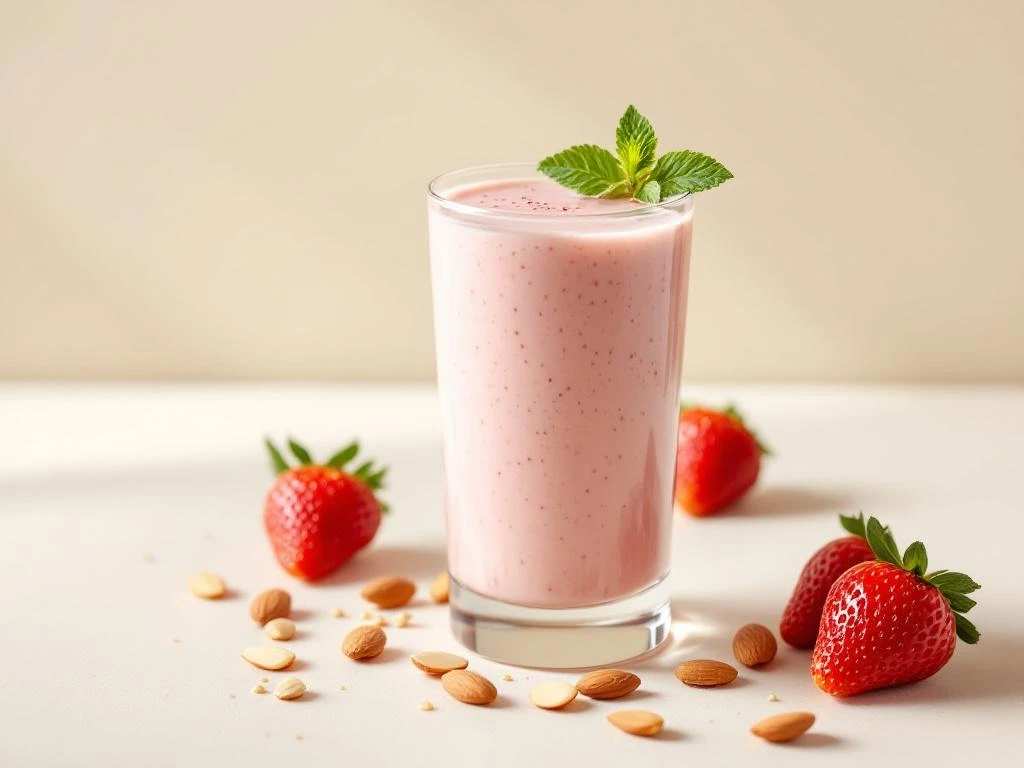
Managing IBS symptoms doesn’t mean sacrificing delicious breakfasts or quick snacks. This strawberry almond smoothie combines gentle, low FODMAP ingredients into a creamy drink that’s ready in just 5 minutes. Whether you’re new to the low FODMAP diet or looking for reliable breakfast options, this recipe keeps things simple with ingredients you can find at any supermarket.
This guide is perfect for beginners. You’ll need a blender, fresh or frozen strawberries, almond milk, and a few optional additions. The whole process takes about 5 minutes from start to finish, including cleanup. You’ll learn which ingredients work for IBS, how to blend for the best texture, and ways to customise your smoothie while staying FODMAP-friendly.
Why this strawberry almond smoothie works for IBS
Every ingredient in this smoothie has been chosen with digestive comfort in mind. Strawberries are low FODMAP in servings up to 10 medium berries (approximately 140g), making them one of the safest fruit choices for people managing IBS symptoms. They’re naturally sweet, so you won’t need much added sugar to create a satisfying flavour.
Almond milk serves as the lactose-free base that keeps this smoothie gentle on your gut. Regular dairy milk contains lactose, which triggers symptoms for many people with IBS. Unsweetened almond milk provides a creamy texture without the FODMAPs found in cow’s milk. Just check the label to ensure your brand doesn’t include high FODMAP additives like inulin or chicory root.
This healthy breakfast smoothie delivers more than just digestive comfort. Strawberries provide vitamin C and antioxidants that support overall health. The natural sugars give you quick energy without the blood sugar spike you’d get from processed breakfast foods. If you add a scoop of low FODMAP protein powder, you’ll get sustained energy that carries you through your morning.
The nutritional profile makes this an ideal option when you need something quick but nourishing. You’re getting vitamins, minerals, and hydration in one glass. The smooth texture is easy to digest, which matters when your gut feels sensitive. This isn’t just an IBS friendly smoothie; it’s a genuinely nutritious choice that happens to be gentle on digestion.
Gather your low FODMAP smoothie ingredients
Here’s what you’ll need for one serving of this strawberry smoothie recipe:
- 140g fresh or frozen strawberries (about 10 medium berries)
- 250ml unsweetened almond milk (lactose-free and low FODMAP certified when possible)
- 1 tablespoon maple syrup (optional, for added sweetness)
- 1/2 teaspoon vanilla extract (optional, for depth of flavour)
- 3-4 ice cubes (if using fresh strawberries; skip if using frozen)
When selecting strawberries, ripe fruit gives you the best flavour and natural sweetness. Fresh strawberries work beautifully, but frozen ones are just as good and often more convenient. Frozen berries also create a thicker, colder smoothie without needing as much ice. Just make sure your frozen strawberries don’t include added sugars or other ingredients.
Your almond milk choice matters more than you might think. Look for unsweetened varieties without added thickeners like carrageenan, which some people find irritating. Brands that specifically mention being low FODMAP certified give you extra confidence. Avoid almond milk with added inulin, chicory root, or high FODMAP sweeteners like honey or agave.
The optional ingredients let you adjust sweetness and flavour. Maple syrup is low FODMAP in servings up to one tablespoon, making it a safe choice for this gluten free smoothie. Pure vanilla extract adds warmth without FODMAPs. Both are optional; if your strawberries are very ripe, you might not need any additional sweetener at all.
Blend your strawberry almond smoothie in 5 minutes
Start by adding your liquid to the blender first. Pour in the 250ml of almond milk before anything else. This prevents ingredients from sticking to the bottom and helps your blender work more efficiently. The liquid creates the vortex that pulls other ingredients down into the blades.
Add your strawberries next, followed by ice cubes if you’re using fresh berries. If you’re including maple syrup or vanilla extract, add them now. This layering order puts the heaviest items (berries and ice) closest to the blades, which helps create a smooth consistency without leaving chunks behind.
Blend on medium speed for 30 seconds, then check the consistency. You’re looking for a smooth, creamy texture without visible berry pieces. If you see chunks, blend for another 15 to 20 seconds. Most blenders handle this mixture easily; you shouldn’t need the highest speed setting unless your blender is particularly weak.
Stop blending as soon as the mixture looks smooth. Over-blending can warm up your smoothie and create a thinner, less appealing texture. The goal is creamy and cold, not frothy or watery. If your smoothie seems too thick, add a splash more almond milk and pulse a few times. If it’s too thin, add another ice cube or a few more frozen strawberries and blend briefly.
Pour your smoothie into a glass immediately. This lactose free smoothie tastes best when it’s fresh and cold. The texture stays optimal for about 10 minutes; after that, separation can occur and you might need to stir before drinking.
Blender tips for the best texture
A high-powered blender creates the smoothest results, but any standard blender works fine for this recipe. If your blender struggles with frozen fruit, let the strawberries sit at room temperature for 5 minutes before blending. This slight thaw makes them easier to process without affecting the final temperature much.
Some blenders have a smoothie setting that automatically adjusts speed and duration. Feel free to use it, but watch the texture. Stop the cycle early if your smoothie looks ready. You know your smoothie is properly blended when you can’t see any berry seeds or ice chunks and the colour is uniform throughout.
Customise your smoothie while staying low FODMAP
This base recipe welcomes plenty of variations that keep your digestive friendly smoothie safe and interesting. Adding a scoop of low FODMAP protein powder turns this into a more substantial meal. Look for protein powders made from rice protein, pea protein isolate, or whey protein isolate. Check serving sizes carefully, as some protein sources have FODMAP limits.
A handful of fresh spinach adds nutrients without changing the flavour much. Spinach is low FODMAP in servings up to one cup of raw leaves, and the strawberries mask any vegetal taste. Your smoothie will turn a darker pink colour, but the creamy texture and sweet taste remain the same. This addition boosts your vitamin and mineral intake without adding digestive stress.
Try different berry combinations while respecting portion limits. Blueberries work in servings up to 40g (about a quarter cup). Raspberries are safe up to 60g (roughly a third of a cup). You can replace half the strawberries with one of these alternatives to create new flavour profiles. Just keep your total berry amount within safe limits.
Flavour variations that stay FODMAP-friendly
A tablespoon of natural peanut butter or almond butter adds richness and protein. Both nut butters are low FODMAP in servings up to two tablespoons, so one tablespoon keeps you well within safe limits. This creates a creamier smoothie with more staying power. The combination of strawberries and nut butter tastes surprisingly good together.
A pinch of cinnamon or a small piece of fresh ginger adds warmth without FODMAPs. Cinnamon complements the sweetness of strawberries beautifully. Fresh ginger (about a half-centimetre piece) gives a subtle spicy note that some people find soothing for digestion. Grate or finely chop the ginger before adding it to ensure smooth blending.
Coconut cream (the thick part from a can of coconut milk) creates an ultra-creamy texture. Use just one to two tablespoons to stay within low FODMAP limits. This addition makes your smoothie feel more indulgent while remaining completely safe for sensitive digestion. The subtle coconut flavour pairs well with strawberries and almond milk.
Protein and nutrition boosters
Chia seeds add fibre and omega-3 fatty acids in servings up to one tablespoon. They create tiny gel pockets that make your smoothie more filling. Let your smoothie sit for 5 minutes after blending if you add chia seeds; this gives them time to absorb liquid and develop their characteristic texture.
A tablespoon of oats (certified gluten-free if needed) adds substance and makes this more of a meal replacement. Oats are low FODMAP in servings up to half a cup, so one tablespoon is perfectly safe. They blend smoothly and add a subtle, pleasant thickness. This works especially well if you’re drinking your smoothie as breakfast rather than a snack.
Remember that customisation should always respect FODMAP serving sizes. One ingredient might be safe, but combining multiple additions could push you over safe limits. When trying new variations, add one ingredient at a time so you can monitor how your body responds. This approach helps you build a collection of smoothie variations you know work for your specific needs.
Making this low FODMAP smoothie part of your routine
This strawberry almond smoothie fits easily into busy mornings or serves as a satisfying afternoon snack. The 5-minute preparation time makes it realistic even on rushed days. You can prep ingredients the night before by measuring out your strawberries and storing them in the fridge, cutting your morning work to under 3 minutes.
Batch preparation works well if you drink smoothies regularly. Portion out strawberries into individual bags or containers, each with the right amount for one smoothie. Store these in the freezer, and you’ll always have perfectly measured ingredients ready. Just grab a bag, add your almond milk and any extras, and blend.
This recipe demonstrates that following a low FODMAP diet doesn’t mean boring or complicated meals. You can enjoy delicious, nutritious food while managing your IBS symptoms. The key is understanding which ingredients work for your body and keeping portions within safe limits. This smoothie gives you both satisfaction and digestive comfort, proving that the low FODMAP lifestyle can be genuinely enjoyable.
Strawberry almond smoothie
Preparation time: 5 minutes | Serves: 1
Ingredients:
- 140g fresh or frozen strawberries (about 10 medium berries)
- 250ml unsweetened almond milk
- 1 tablespoon maple syrup (optional)
- 1/2 teaspoon vanilla extract (optional)
- 3-4 ice cubes (if using fresh strawberries)
Instructions:
- Pour almond milk into your blender
- Add strawberries, ice cubes (if using fresh berries), and optional maple syrup and vanilla
- Blend on medium speed for 30 seconds
- Check consistency and blend another 15-20 seconds if needed
- Pour into a glass and enjoy immediately
Tips:
- Use frozen strawberries for a thicker, colder smoothie
- Add protein powder or nut butter for a more filling meal
- Adjust sweetness based on the ripeness of your strawberries
- Stop blending as soon as the mixture is smooth to maintain the best texture
This recipe is for informational purposes only and is not medical or dietary advice. Please consult a healthcare professional before making any changes to your diet.
Related Articles
- Peanut Butter Chocolate Smoothie Bowl
- Egg and Bacon Breakfast Burrito
- What is the biggest IBS trigger?
- Quinoa Breakfast Porridge with Berries
- Turkey Bacon and Egg Scramble