
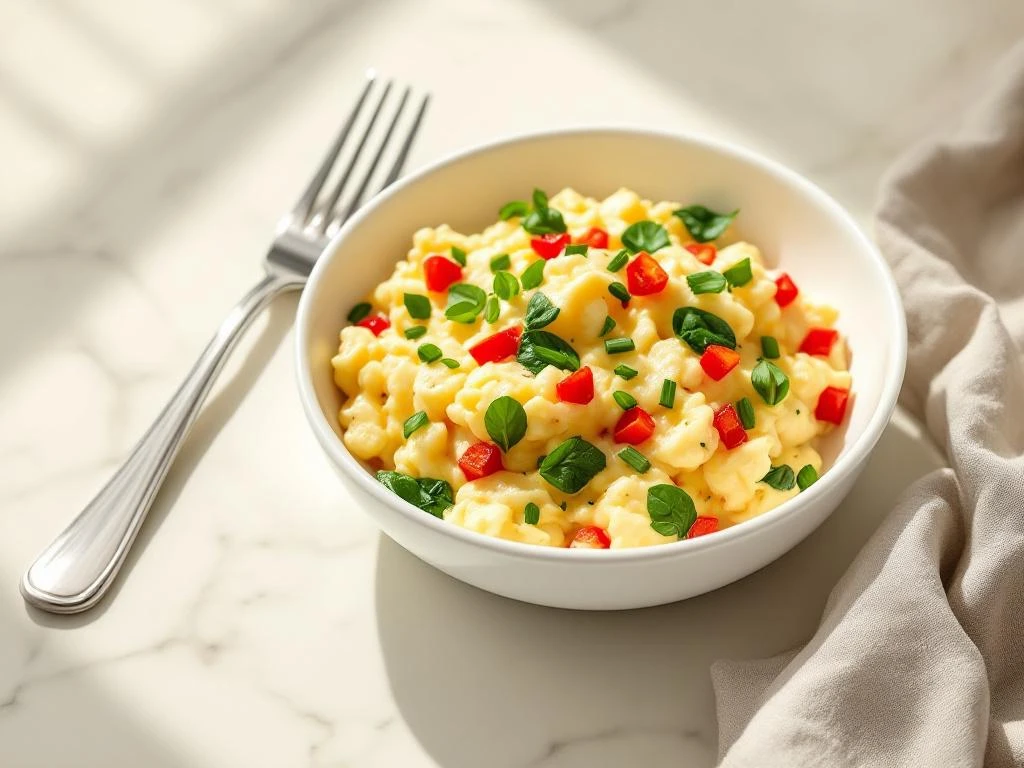
Managing IBS symptoms while enjoying a satisfying breakfast can feel challenging. This egg white veggie scramble offers a safe, delicious option that won’t trigger digestive discomfort. Egg whites provide clean protein without the high FODMAP content found in whole eggs, while carefully selected vegetables add nutrients and flavour.
This recipe works for beginners and takes about 15 minutes from start to finish. You’ll need basic cooking skills like chopping vegetables and using a stovetop. The ingredients are simple to find, and the cooking process is straightforward enough for busy mornings.
You’ll need a non-stick frying pan, a spatula, a mixing bowl, and a sharp knife. All vegetables and seasonings follow strict low FODMAP guidelines, making this breakfast safe during elimination phases. The result is a fluffy, flavourful scramble that keeps you full without causing bloating or other IBS symptoms.
Why egg white veggie scramble works for IBS
Egg whites are naturally low FODMAP and easy to digest. Unlike whole eggs, which contain fats that can slow digestion, egg whites are pure protein. This makes them gentle on sensitive stomachs while providing the nutrients your body needs to start the day.
The protein content in egg whites helps stabilise blood sugar and keeps you satisfied for hours. Four egg whites contain roughly 14 grams of protein with minimal fat. This combination supports steady energy without the digestive heaviness that can trigger IBS symptoms.
Choosing the right vegetables matters enormously for this FODMAP friendly breakfast. Spinach, bell peppers, and courgettes are all safe options that add vitamins, minerals, and fibre. These vegetables cook quickly and blend well with the mild flavour of egg whites. Avoid onions, garlic, and mushrooms, as these contain high FODMAP compounds that cause problems for people with IBS.
This healthy egg white recipe adapts easily to your specific tolerances. You can swap vegetables based on what you’ve successfully reintroduced or stick with the safest options during strict elimination. The versatility makes it practical for long-term use, not just a temporary diet solution.
Gather your low FODMAP ingredients and tools
Start with your protein base. You’ll need four to five egg whites per serving. Buy cartons of liquid egg whites or separate them from whole eggs yourself. Fresh egg whites work just as well as carton versions, though cartons save time on busy mornings.
Select your vegetables carefully. Safe choices include spinach (one cup), red bell pepper (half a pepper), and courgette (half a small courgette). These portions follow Monash University low FODMAP serving guidelines. Chop everything before you start cooking, as timing matters once the pan heats up.
For cooking fat, use garlic-infused olive oil (one tablespoon). The infusion process transfers flavour without the FODMAPs found in actual garlic. Plain olive oil or a small amount of butter (if you tolerate lactose) also work well. Avoid regular vegetable oils, as they can affect the texture of your scramble.
Season with salt, black pepper, and fresh herbs like chives or basil. Dried herbs work too, but check labels for hidden ingredients like onion powder. Keep portions moderate, as some herbs become high FODMAP in large amounts.
Your essential tools include a non-stick frying pan (20-25 cm diameter), a silicone or wooden spatula, a mixing bowl, a sharp knife, and a cutting board. Having everything ready before you start cooking prevents rushed mistakes that affect texture and taste.
Substitution options for different phases
During strict elimination, stick with spinach and bell peppers only. These vegetables have the lowest FODMAP content and the smallest chance of causing symptoms. Once you’ve successfully reintroduced other foods, try adding cherry tomatoes (five tomatoes maximum) or spring onion tops (green parts only).
If you’re reintroducing dairy, add a tablespoon of lactose-free cheese at the end of cooking. Mature cheddar contains minimal lactose naturally, making it safer than soft cheeses. Nutritional yeast provides a cheesy flavour without any dairy if you prefer to avoid it entirely.
Prep your vegetables for optimal texture
Wash all vegetables under cool running water. Pat them completely dry with a clean tea towel or paper towels. Excess moisture creates steam during cooking, which makes your scramble watery instead of fluffy. This step takes an extra minute but makes a noticeable difference in the final texture.
Dice the bell pepper into small, even pieces about half a centimetre across. Remove all seeds and white membrane, as these parts taste bitter and don’t soften well. Uniform pieces cook at the same rate, preventing some bits from burning while others stay raw.
Slice the courgette into thin half-moons, no thicker than three millimetres. Courgettes contain lots of water, so thin slices cook quickly and release less moisture. If you cut them too thick, they’ll stay crunchy in the middle and release water that pools in your pan.
Roughly chop the spinach if using fresh leaves. Baby spinach can go in whole, but larger leaves benefit from cutting. Spinach wilts down dramatically when cooked, so what looks like too much raw will reduce to a reasonable amount in the pan.
Place all prepped vegetables on a plate near your cooker. Having everything within reach lets you add ingredients at the right moment without scrambling (no pun intended). This organisation prevents overcooking and helps you maintain control over the process.
Removing excess moisture from vegetables
If your courgette seems particularly wet after slicing, lay the pieces on paper towels for five minutes. Sprinkle them lightly with salt to draw out moisture, then pat dry before cooking. This extra step isn’t always necessary, but it helps with very fresh or large courgettes.
Spinach rarely needs pre-drying unless you’ve just washed it. Shake off excess water and let it sit in a colander while you prep other ingredients. Any remaining moisture will evaporate quickly once it hits the hot pan.
Cook your egg white veggie scramble perfectly
Heat your non-stick pan over medium heat for two minutes. Add the garlic-infused olive oil and swirl it around to coat the entire surface. The pan is ready when a drop of water sizzles immediately but doesn’t pop violently. Too hot, and your eggs will brown and turn rubbery. Too cool, and they’ll spread out and cook unevenly.
Add the bell pepper and courgette to the hot oil. Cook them for three to four minutes, stirring occasionally. The vegetables should soften and develop a bit of colour on the edges. This is where you build flavour, so don’t rush this step. The vegetables should be about 80% cooked before you add the egg whites.
Add the spinach to the pan and stir until it wilts, which takes about 30 seconds. The spinach will shrink dramatically and mix with the other vegetables. If you see any liquid pooling in the pan, tilt it to drain off the excess or blot it with a paper towel.
Pour the egg whites over the vegetables in an even layer. Let them sit undisturbed for 20 seconds until the bottom begins to set. You’ll see the edges turning opaque white. Use your spatula to gently push the cooked edges toward the centre, tilting the pan so uncooked egg flows to the empty spaces.
Continue this gentle folding motion every 15 to 20 seconds. The goal is soft, fluffy curds, not a flat omelette. Keep the heat at medium to prevent browning. Egg whites should stay white or very pale cream, never golden. Browning means they’re overcooked and will taste rubbery.
Remove the pan from heat when the eggs are mostly set but still slightly wet. They’ll continue cooking from residual heat for another 30 seconds. This technique prevents the dry, tough texture that happens when you cook eggs completely in the pan.
Preventing sticking and burning
If eggs start to stick, your pan isn’t hot enough or needs more oil. Add a tiny bit more oil around the edges and increase the heat slightly. A proper non-stick pan in good condition shouldn’t require much oil, but older pans with worn coatings need extra fat to work properly.
Watch for brown spots forming on the bottom of your scramble. If you see any, immediately reduce the heat and move the eggs around more frequently. Brown eggs aren’t dangerous, but they taste bitter and have an unpleasant texture.
Season and serve your FODMAP-friendly scramble
Season your vegetable egg scramble with salt and black pepper to taste. Start with a quarter teaspoon of salt and adjust from there. Egg whites need more seasoning than whole eggs because they lack the rich flavour that yolks provide. Taste before serving and add more if needed.
Fresh herbs transform this simple dish into something special. Snip fresh chives over the top or tear a few basil leaves. Both herbs are low FODMAP in typical serving amounts and add brightness without overwhelming the delicate egg flavour. Dried herbs work too, but use about half the amount, as their flavour is more concentrated.
A squeeze of lemon juice adds acidity that balances the richness of the eggs. Use about half a teaspoon per serving. Lemon juice is low FODMAP and helps your body absorb the iron from the spinach, making this breakfast even more nutritious.
Complementary low FODMAP sides
Serve your egg white scramble with gluten free breakfast options like toasted gluten-free bread. Look for bread made with sourdough spelt, which is often tolerated better than regular wheat. One slice of most gluten-free breads fits within low FODMAP limits.
Add a small portion of lactose-free cheese on the side or melted on top. Mature cheddar, Swiss cheese, and brie (in small amounts) are naturally low in lactose. Stick to 40 grams or less per serving to stay within safe limits.
Cherry tomatoes make a fresh side dish. Five tomatoes remain low FODMAP and provide a sweet, acidic contrast to the eggs. Halve them and season with salt, pepper, and a drizzle of olive oil.
One serving of this low FODMAP breakfast provides approximately 150 to 200 calories, depending on the oil and any additions. This makes it suitable for most dietary needs while keeping you satisfied until lunch.
Storage and reheating for meal prep
This scramble keeps in the refrigerator for up to two days. Store it in an airtight container and let it cool completely before sealing. Egg whites dry out more quickly than whole eggs, so proper storage matters for maintaining texture.
Reheat in a pan over low heat with a tiny splash of water or oil. Stir gently to redistribute moisture. Microwaving works in a pinch, but use 50% power and heat in 30-second intervals. High microwave heat makes egg whites rubbery and unpleasant.
For best results, prep your vegetables the night before but cook the scramble fresh each morning. The extra five minutes of cooking time is worth it for optimal texture and flavour. Prepped vegetables keep for three days in the refrigerator in an airtight container.
You’ve now mastered a reliable low FODMAP eggs recipe that works for sensitive digestion. This egg white scramble gives you a high-protein breakfast option that’s quick to prepare and gentle on your stomach. The techniques you’ve learnt here apply to other low FODMAP cooking too, helping you build confidence in the kitchen while managing IBS symptoms. Experiment with different safe vegetables as you progress through reintroduction phases, and keep this recipe in your regular rotation for mornings when you need something satisfying and symptom-free.
Egg white veggie scramble
Cooking time: 15 minutes | Portions: 1 serving
- 4 to 5 egg whites (fresh or from carton)
- 1 cup fresh spinach
- Half a red bell pepper, diced
- Half a small courgette, thinly sliced
- 1 tablespoon garlic-infused olive oil
- Salt and black pepper to taste
- Fresh chives or basil (optional)
- Wash and thoroughly dry all vegetables
- Dice bell pepper into half-centimetre pieces
- Slice courgette into thin half-moons
- Roughly chop spinach if using large leaves
- Heat non-stick pan over medium heat for 2 minutes
- Add oil and swirl to coat pan
- Cook bell pepper and courgette for 3 to 4 minutes until softened
- Add spinach and stir until wilted (30 seconds)
- Pour egg whites over vegetables in even layer
- Let sit for 20 seconds until edges begin to set
- Gently push cooked edges toward centre, tilting pan to let uncooked egg flow
- Continue folding every 15 to 20 seconds until mostly set but slightly wet
- Remove from heat and let rest for 30 seconds
- Season with salt, pepper, and fresh herbs
- Serve immediately with gluten-free toast or other low FODMAP sides
This recipe is for informational purposes only and is not medical or dietary advice. Please consult a healthcare professional before making any changes to your diet.