
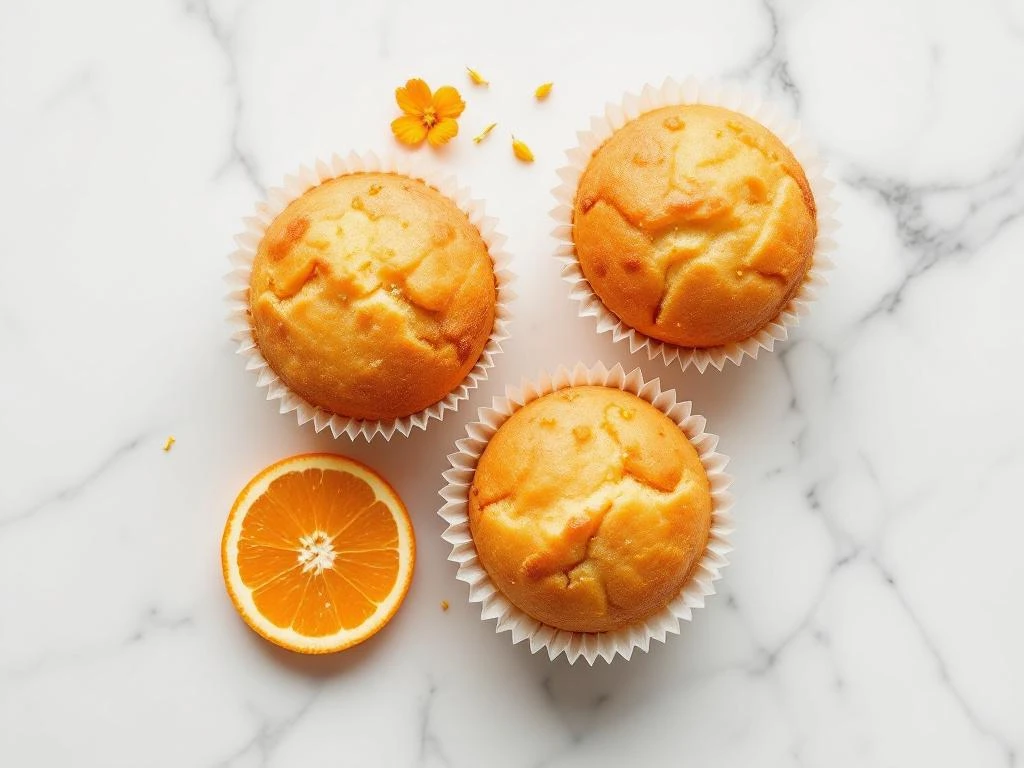
Baking gluten-free orange muffins offers a delicious way to enjoy citrus flavours whilst following a low FODMAP diet. These IBS-friendly muffins are perfect for breakfast or snacks, combining the bright taste of fresh oranges with gentle, digestive-friendly ingredients. You’ll create tender, moist muffins that won’t trigger symptoms.
This recipe works for beginners with basic baking experience. Expect to spend about 15 minutes preparing and 20 minutes baking. You’ll need gluten-free flour, fresh oranges, lactose-free dairy alternatives, basic baking equipment, and a muffin tin. All ingredients are widely available at most supermarkets.
Why gluten-free orange muffins work for IBS
These gluten-free orange muffins fit perfectly into a low FODMAP lifestyle because they avoid common trigger ingredients. Gluten-free flour blends replace wheat flour, eliminating gluten that can irritate sensitive digestive systems. The recipe uses lactose-free dairy alternatives instead of regular milk or butter, removing another frequent IBS trigger.
Oranges are a safe citrus choice for low FODMAP diets when consumed in moderate portions. Unlike grapefruit or dried fruits, fresh orange juice and zest contain lower levels of FODMAPs. A single muffin typically contains a safe serving size that shouldn’t cause digestive distress for most people following the diet.
The benefits extend beyond just avoiding triggers. Gluten-free baking with rice flour or certified gluten-free blends creates a lighter texture that many find easier to digest. These muffins provide energy without the bloating or discomfort that wheat-based baked goods might cause. You get to enjoy homemade treats without compromising your digestive health.
Gather your ingredients and tools
For the dry ingredients, you’ll need 250g gluten-free plain flour blend (ensure it contains xanthan gum), 100g caster sugar, 2 teaspoons baking powder, and a pinch of salt. Check that your baking powder is gluten-free, as some brands contain wheat starch.
The wet ingredients include 2 large eggs at room temperature, 120ml lactose-free milk (or a suitable plant-based alternative like almond milk in low FODMAP portions), 80ml light olive oil or vegetable oil, and the juice from 2 medium oranges (approximately 100ml). You’ll also need the zest from those same 2 oranges for maximum citrus flavour.
Essential equipment includes a 12-cup muffin tin, paper muffin cases, two mixing bowls (one large, one medium), a fine grater or zester for the orange peel, a citrus juicer or reamer, measuring cups and spoons, a whisk, and a spatula for folding. Having everything ready before you start makes the process smoother.
Prepare the orange and dry ingredients
Start by preheating your oven to 180°C (160°C fan). This ensures the correct temperature when your batter is ready. Line your muffin tin with paper cases to prevent sticking and make removal easier.
Wash the oranges thoroughly under running water. Pat them dry with a clean towel. Using your fine grater, carefully zest the oranges by running them across the grater in short strokes. Only remove the bright orange outer layer, avoiding the white pith underneath, which tastes bitter. You need about 2 tablespoons of zest. Set this aside in a small bowl.
Cut the zested oranges in half and juice them. Strain the juice through a small sieve to remove pulp and seeds. Measure out 100ml of fresh juice. If you’re slightly short, top up with a splash of water rather than using shop-bought juice, which may contain additives.
In your large mixing bowl, combine the gluten-free flour, sugar, baking powder, and salt. Whisk these dry ingredients together for about 30 seconds. This distributes the leavening agents evenly throughout the flour, ensuring your muffins rise uniformly. Breaking up any lumps in the flour now prevents dense spots in your finished muffins.
Mix wet ingredients for perfect texture
In your medium bowl, crack the eggs and whisk them lightly until the yolks and whites combine. Add the lactose-free milk, oil, orange juice, and orange zest. Whisk everything together until the mixture looks smooth and slightly frothy. The oil should be fully incorporated rather than sitting in separate droplets.
Pour the wet mixture into the bowl with your dry ingredients. Here’s where technique matters for tender gluten-free muffins. Use your spatula to fold the ingredients together with gentle, sweeping motions. Scrape down from the bottom of the bowl and fold over the top. Rotate the bowl slightly and repeat.
Stop mixing as soon as you no longer see dry flour. The batter should look slightly lumpy and thick. Overmixing gluten-free batter creates dense, gummy muffins because you’re overworking the starches in the flour. Some small lumps are perfectly fine and will disappear during baking. The whole mixing process should take no more than 20 to 30 seconds.
Bake and test for doneness
Divide the batter evenly among your 12 muffin cases. Fill each case about two-thirds full. This gives the muffins room to rise without overflowing. A large spoon or ice cream scoop works well for portioning the batter consistently.
Place the muffin tin in your preheated oven on the middle rack. Bake for 18 to 22 minutes. Avoid opening the oven door during the first 15 minutes, as the temperature drop can cause the muffins to sink in the middle.
Test for doneness at 18 minutes by inserting a wooden skewer or toothpick into the centre of a muffin. It should come out clean or with just a few moist crumbs attached. If you see wet batter, continue baking for another 2 to 3 minutes and test again. The muffin tops should be golden and spring back lightly when touched.
When done, remove the tin from the oven and let it sit for 5 minutes. This brief rest makes the muffins easier to remove without breaking. After 5 minutes, transfer the muffins to a wire cooling rack. Let them cool for at least 10 minutes before eating, as gluten-free baked goods are fragile when hot.
Store and enjoy your muffins
Allow your muffins to cool completely before storing them. Warm muffins create condensation in containers, leading to soggy tops and potential mould. Complete cooling takes about an hour at room temperature.
Store the muffins in an airtight container at room temperature for up to 3 days. Place a piece of kitchen paper at the bottom of the container to absorb excess moisture. Keep them away from direct sunlight and heat sources. If your kitchen is particularly warm, refrigerate them instead, though this can make the texture slightly drier.
For longer storage, these gluten-free orange muffins freeze beautifully. Wrap each cooled muffin individually in cling film, then place them all in a freezer bag. Label with the date and freeze for up to 3 months. Defrost individual muffins at room temperature for about an hour, or warm them in the microwave for 20 to 30 seconds.
Serve these IBS-friendly muffins plain for breakfast, or warm them slightly and spread with a small amount of lactose-free butter. They pair well with a cup of peppermint tea or your preferred hot beverage. The citrus flavour makes them refreshing in the morning or as an afternoon snack. Because they’re portioned individually, they’re perfect for meal prep and grab-and-go breakfasts throughout the week.
These low FODMAP muffins prove that digestive-friendly baking doesn’t mean sacrificing flavour or texture. The combination of gluten-free flour and fresh orange creates a light, satisfying treat that supports your dietary needs whilst delivering genuine enjoyment.
Gluten-free orange muffins
Cooking Time: 20 minutes | Portions: 12 muffins
- 250g gluten-free plain flour blend with xanthan gum
- 100g caster sugar
- 2 teaspoons gluten-free baking powder
- Pinch of salt
- 2 large eggs at room temperature
- 120ml lactose-free milk or low FODMAP plant milk
- 80ml light olive oil or vegetable oil
- Juice from 2 medium oranges (approximately 100ml)
- Zest from 2 medium oranges (about 2 tablespoons)
Method:
- Preheat oven to 180°C (160°C fan) and line a 12-cup muffin tin with paper cases
- Zest and juice 2 oranges, strain the juice to remove pulp
- Whisk together flour, sugar, baking powder, and salt in a large bowl
- In a separate bowl, whisk eggs, then add milk, oil, orange juice, and zest
- Pour wet ingredients into dry ingredients and fold gently until just combined (20 to 30 seconds)
- Divide batter evenly among muffin cases, filling each two-thirds full
- Bake for 18 to 22 minutes until a skewer inserted comes out clean
- Cool in tin for 5 minutes, then transfer to a wire rack
- Store in an airtight container for up to 3 days or freeze for up to 3 months
This recipe is for informational purposes only and is not medical or dietary advice. Please consult a healthcare professional before making any changes to your diet.