
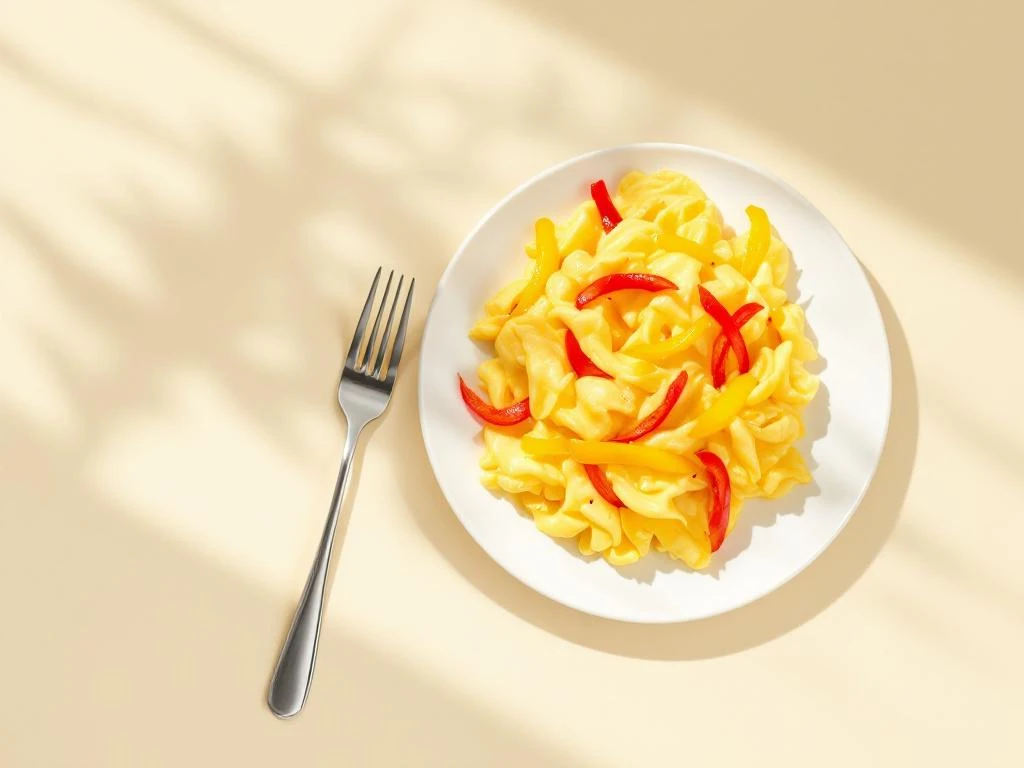
Scrambled eggs with bell peppers make a satisfying low FODMAP breakfast that’s gentle on your digestive system. This dish combines protein-rich eggs with colourful bell peppers for a meal that’s both nutritious and IBS-friendly. You’ll need about 10 minutes to prepare and cook this easy breakfast.
This recipe works for beginners with basic cooking skills. You’ll need a non-stick pan, a whisk, and a few simple ingredients. The key is using FODMAP-safe portions of bell peppers and choosing the right cooking fat.
By the end of this guide, you’ll know how to make creamy scrambled eggs with perfectly cooked bell peppers. You’ll also understand how to avoid common mistakes that can trigger IBS symptoms or ruin the texture of your eggs.
Why scrambled eggs with bell peppers work for IBS
Eggs are naturally low FODMAP and provide high-quality protein that’s easy to digest. They contain essential vitamins like B12 and minerals such as selenium, which support overall health without irritating sensitive stomachs.
Bell peppers fit into a low FODMAP diet when you stick to safe portion sizes. Red and yellow bell peppers are gentler on digestion than green ones. A serving of 52g (about half a small pepper per person) stays within low FODMAP limits.
This combination gives you protein from eggs and vitamins A and C from bell peppers. The dish is gentle on your digestive system because both ingredients are low in fermentable carbohydrates. The healthy fats from cooking oil help your body absorb the fat-soluble vitamins in the peppers.
Scrambled eggs with bell peppers make an excellent FODMAP-friendly breakfast because they’re quick to prepare and keep you satisfied for hours. The protein helps stabilise blood sugar levels, which can reduce digestive discomfort throughout the morning.
What you need for low FODMAP scrambled eggs
For one serving of low FODMAP scrambled eggs with bell peppers, gather these ingredients:
- 2 large eggs
- 52g bell pepper (about half a small red or yellow pepper)
- 1 tablespoon lactose-free butter or garlic-infused olive oil
- Pinch of salt
- Fresh cracked black pepper
- Optional: fresh chives or parsley (1 tablespoon, chopped)
You’ll need these kitchen tools:
- Non-stick frying pan (20-25cm diameter)
- Whisk or fork
- Silicone or wooden spatula
- Small bowl for whisking eggs
- Chopping board and sharp knife
Ingredient substitutions for different dietary needs include swapping lactose-free butter for olive oil if you’re dairy-free. You can use any colour bell pepper, but stick to red or yellow for the mildest flavour. If you need extra protein, add a third egg whilst keeping the pepper portion the same.
FODMAP-safe ingredient notes
Always measure your bell pepper portions carefully. Going over 52g per serving can introduce moderate FODMAP levels. Avoid using garlic or onion powder unless they’re specifically labelled as low FODMAP. Regular garlic and onion are high FODMAP triggers for many people with IBS.
Choose plain eggs without added ingredients. Some liquid egg products contain high FODMAP additives, so check labels carefully. Fresh herbs like chives and parsley are low FODMAP in small amounts and add flavour without digestive upset.
Prepare your bell peppers and eggs
Start by washing your bell pepper under cold running water. Pat it dry with a clean kitchen towel. Cut the pepper in half and remove the seeds and white membrane inside. These parts are tougher and less pleasant to eat.
Weigh out 52g of bell pepper on kitchen scales for accuracy. Dice the pepper into small, even pieces about 0.5cm square. Smaller pieces cook faster and distribute evenly throughout your scrambled eggs. Set the diced pepper aside on your chopping board.
Crack your eggs into a small bowl, checking for shell fragments. Add a pinch of salt and a few grinds of black pepper. Whisk the eggs with a fork or whisk for about 30 seconds until the yolks and whites are fully combined. The mixture should look uniform in colour with some small bubbles on the surface.
Having everything ready before you start cooking makes the process smoother. Place your whisked eggs, diced peppers, and cooking fat near the hob. Get your spatula ready. This preparation ensures you can focus on cooking technique rather than scrambling to find ingredients.
Seasoning recommendations
Keep seasonings simple for this IBS-friendly breakfast. Salt and black pepper are your safest options. Fresh herbs like chives or parsley add colour and flavour without FODMAP concerns. Add them at the end of cooking to preserve their fresh taste.
Avoid spicy seasonings like chilli flakes if you have IBS, as they can irritate your digestive system. Skip garlic powder and onion powder unless you’re using certified low FODMAP versions. A small amount of dried oregano or basil (1/4 teaspoon) works well if you want extra flavour.
Cook perfect scrambled eggs with bell peppers
Place your non-stick pan over medium-low heat. Add the lactose-free butter or oil and let it melt completely. The pan is ready when the butter foams gently but doesn’t brown. This takes about 1 minute.
Add your diced bell peppers to the pan. Cook them for 2-3 minutes, stirring occasionally with your spatula. The peppers should soften slightly and develop a bit of colour at the edges. They’ll still have some crunch, which adds nice texture to your scrambled eggs.
Pour the whisked eggs over the softened bell peppers. Let them sit undisturbed for 10-15 seconds until you see the edges start to set. Using your spatula, gently push the eggs from the edge toward the centre. Tilt the pan to let uncooked egg flow to the empty spaces.
Continue this gentle pushing and tilting motion every 20-30 seconds. The eggs will form soft curds as they cook. Keep the heat at medium-low throughout. If the eggs are cooking too fast and forming large, dry chunks, reduce the heat slightly.
Visual cues for perfect doneness
Your scrambled eggs are nearly done when they’re mostly set but still look slightly wet. They should have a glossy appearance with small, soft curds. The bell peppers will be distributed throughout the eggs and tender to bite.
Remove the pan from heat when the eggs still look a bit underdone. They’ll continue cooking from residual heat for another 30 seconds. This technique prevents overcooking and keeps your eggs creamy rather than dry and rubbery.
The entire cooking process takes 4-5 minutes from adding the peppers to removing the pan from heat. Your scrambled eggs with bell peppers should look moist, fluffy, and inviting. Transfer them to a plate immediately to stop the cooking process.
Common mistakes when making scrambled eggs
Cooking eggs over high heat is the most frequent error. High heat causes eggs to overcook quickly, becoming rubbery and dry. Always use medium-low heat and be patient. The extra few minutes create much better texture.
Watery eggs happen when you don’t whisk them enough before cooking or when you add liquid ingredients. Whisk your eggs thoroughly until no streaks of white remain. Avoid adding milk or water, as the eggs release enough moisture on their own.
Burnt bell peppers ruin the dish and can taste bitter. If your peppers are browning too quickly, reduce the heat and add them to the pan after the eggs instead of before. You can also blanch the peppers in boiling water for 1 minute before adding them to the pan.
FODMAP portion control errors
Using too much bell pepper is a common mistake that can trigger IBS symptoms. Always weigh your peppers rather than guessing. A whole bell pepper is too much for one serving. If you’re cooking for two people, use one small pepper total, not one per person.
Adding high FODMAP ingredients without realising it happens often. Check that your cooking oil doesn’t contain garlic unless it’s properly infused oil where the garlic has been removed. Avoid using regular butter if you’re sensitive to lactose, even in small amounts.
Temperature problems and solutions
If your eggs are cooking too fast and forming large chunks, immediately remove the pan from heat for 30 seconds. Reduce the temperature and return the pan to the hob. Stir gently to break up any large pieces.
Eggs that won’t set properly usually mean your heat is too low. Increase the temperature slightly and be patient. The eggs should start forming soft curds within 2 minutes of adding them to the pan. If nothing happens after 2 minutes, your pan isn’t hot enough.
Serve and store your bell pepper scrambled eggs
Plate your scrambled eggs immediately whilst they’re hot. The eggs look appealing on a warm plate with a sprinkle of fresh herbs on top. Add a small grinding of black pepper for visual contrast and extra flavour.
Low FODMAP accompaniments that work well include gluten-free toast, a small handful of baby spinach, or sliced tomatoes. One slice of sourdough bread (made with proper fermentation) can be low FODMAP for some people. A small portion of lactose-free cheese adds extra protein if desired.
For garnishing, try fresh chives, parsley, or a few cherry tomatoes cut in half. A small amount of smoked paprika (1/8 teaspoon) adds colour without irritating most sensitive stomachs. Keep garnishes simple to maintain the dish’s digestive-friendly nature.
Storage and food safety guidelines
Scrambled eggs are best eaten fresh, but you can store leftovers in an airtight container in the fridge for up to 2 days. Let the eggs cool to room temperature before refrigerating. Don’t leave cooked eggs at room temperature for more than 2 hours.
To reheat, place the eggs in a microwave-safe dish. Heat on medium power for 30-second intervals, stirring between each interval. The eggs will never be quite as creamy as fresh, but gentle reheating prevents them from becoming rubbery.
Alternatively, reheat the eggs in a non-stick pan over low heat with a small knob of lactose-free butter. Stir constantly for 2-3 minutes until heated through. Add a tablespoon of lactose-free milk if the eggs seem dry.
Don’t freeze scrambled eggs, as they become watery and grainy when thawed. The texture changes significantly and isn’t pleasant to eat. It’s better to cook fresh eggs each time or store leftovers for just a day or two.
You’ve now mastered making IBS-friendly scrambled eggs with bell peppers. This simple breakfast provides protein and nutrients whilst respecting your digestive needs. The technique you’ve learnt works for other low FODMAP vegetable additions too, like spinach or courgette in safe portions.
Try experimenting with different herbs and low FODMAP vegetables once you’re comfortable with this basic recipe. You can also use this method to prepare meal-prep breakfasts for busy mornings, though fresh eggs always taste best.
Scrambled eggs with bell peppers
Cooking Time: 10 minutes | Portions: 1 serving
Ingredients:
- 2 large eggs
- 52g red or yellow bell pepper, diced
- 1 tablespoon lactose-free butter or garlic-infused olive oil
- Pinch of salt and black pepper
- Optional: 1 tablespoon fresh chives or parsley
Instructions:
- Wash, deseed, and dice 52g bell pepper into 0.5cm pieces
- Crack eggs into a bowl, season with salt and pepper, whisk for 30 seconds
- Heat butter in a non-stick pan over medium-low heat until foaming
- Cook bell peppers for 2-3 minutes until slightly softened
- Pour eggs over peppers, let sit 10-15 seconds
- Gently push eggs from edges to centre every 20-30 seconds
- Remove from heat when eggs are mostly set but still glossy
- Serve immediately with optional fresh herbs
Tips:
- Always weigh bell peppers to stay within low FODMAP limits
- Use medium-low heat to prevent rubbery eggs
- Remove from heat whilst eggs still look slightly underdone
- Store leftovers in the fridge for up to 2 days
This recipe is for informational purposes only and is not medical or dietary advice. Please consult a healthcare professional before making any changes to your diet.