
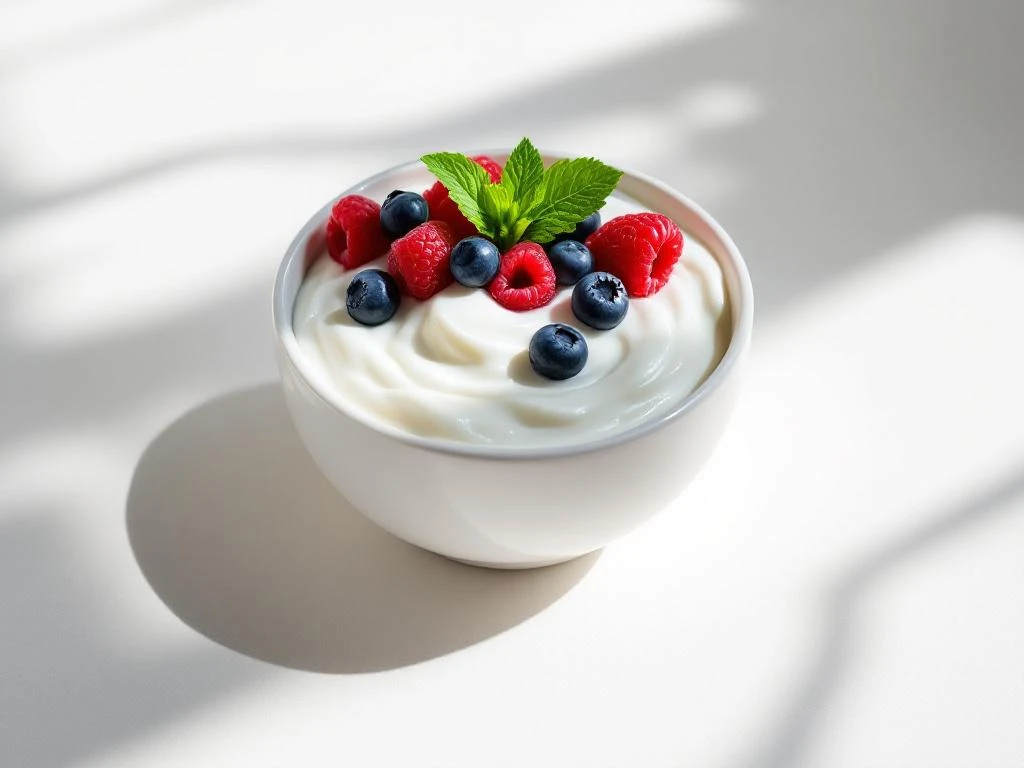
Looking for an easy low FODMAP breakfast that’s gentle on your stomach and ready in minutes? Coconut yogurt with fresh berries delivers creamy, dairy-free satisfaction without triggering IBS symptoms. This simple recipe requires no cooking and takes just 5 minutes to prepare.
You’ll need coconut yogurt (check for low FODMAP certification), FODMAP-friendly berries, and optional toppings like seeds or maple syrup. This guide walks you through selecting the right ingredients, proper portion sizes, and creative ways to customize your bowl while keeping it IBS-friendly.
Why coconut yogurt is perfect for low FODMAP diets
Coconut yogurt stands out as a dairy-free yogurt option that naturally fits within low FODMAP guidelines. Unlike regular yogurt made from cow’s milk, coconut yogurt contains no lactose, making it suitable for those managing IBS symptoms or lactose intolerance.
The fermentation process used to create coconut yogurt can introduce beneficial probiotics that support gut health. These live cultures may help maintain a balanced digestive system, though individual responses vary. The healthy fats from coconut provide sustained energy without the digestive discomfort that high FODMAP foods can trigger.
When choosing coconut yogurt for your low FODMAP breakfast, look for products without high FODMAP additives like inulin, chicory root, or high fructose corn syrup. Plain, unsweetened varieties give you the most control over what you’re eating. The creamy texture and mild flavour make it an excellent base for adding your own FODMAP-friendly toppings.
Coconut yogurt provides a good source of medium-chain triglycerides (MCTs), which are easier to digest than other fats. This makes it particularly suitable for sensitive stomachs. The lactose-free yogurt option means you can enjoy a traditional breakfast bowl without worrying about triggering symptoms.
Choose the right coconut yogurt and berries
Not all coconut yogurt products are created equal for low FODMAP diets. Start by reading the ingredient label carefully. Avoid yogurts containing agave, honey, or fruit juice concentrates, as these can be high in FODMAPs. Plain coconut yogurt with minimal ingredients works best.
Look for brands certified as low FODMAP by Monash University or FODMAP Friendly. If certification isn’t available, choose products listing only coconut milk (or coconut cream), water, and live cultures. Some brands add thickeners like tapioca starch or pectin, which are generally acceptable in small amounts.
For FODMAP-friendly berries, stick to these safe options:
- Strawberries: Up to 10 medium berries (140g) per serving
- Blueberries: Up to 40 berries (60g) per serving
- Raspberries: Up to 60 berries (120g) per serving
Avoid blackberries and cherries, as they contain higher FODMAP levels even in small portions. Fresh berries work better than frozen for this recipe, though frozen berries are acceptable if you let them thaw slightly before serving.
Check the yogurt’s sugar content on the nutrition label. Natural coconut yogurt contains minimal sugar (around 1-2g per 100g). Higher amounts suggest added sweeteners that might not be FODMAP-friendly. When shopping, compare several brands to find the cleanest option available in your area.
Reading labels for hidden FODMAPs
Watch for these common high FODMAP ingredients that sometimes appear in coconut yogurt: apple juice concentrate, pear juice, coconut nectar, and inulin (chicory root fibre). These additives can trigger symptoms even if the base yogurt is FODMAP-friendly. Stick with products listing recognizable, simple ingredients.
Prepare your coconut yogurt with fresh berries
Start with a standard serving size of 200g coconut yogurt per bowl. This amount provides a satisfying breakfast portion without overwhelming your digestive system. Measure your yogurt into a bowl or glass, depending on your presentation preference.
Wash your fresh berries thoroughly under cool running water. Pat them dry with a clean tea towel or paper towel. For strawberries, remove the green tops and slice them in half or quarters. Leave blueberries and raspberries whole for the best texture and visual appeal.
Layer your ingredients for the most attractive presentation. Spoon half the coconut yogurt into your bowl, add a layer of mixed berries, then top with the remaining yogurt. Finish with more berries on top. This creates visual interest and ensures you get berries in every spoonful.
Alternatively, you can simply stir the berries directly into the yogurt for a quicker approach. This method works well when you’re short on time and don’t mind a less structured presentation.
Timing for best results
This gluten-free breakfast tastes best when served immediately after assembly. The berries stay firm and the yogurt maintains its creamy consistency. If you need to prepare ahead, keep the yogurt and berries separate in the fridge. Assemble just before eating to prevent the berries from releasing juice and making the yogurt watery.
You can prepare individual portions in sealed containers for up to 2 days. Store them in the coldest part of your fridge (usually the back of the bottom shelf). The texture changes slightly after 24 hours, but the flavour remains good.
Customize with low FODMAP toppings and add-ins
Transform your basic coconut yogurt bowl into a more substantial meal with these FODMAP-friendly additions. Each topping adds different textures and nutritional benefits while keeping your breakfast IBS-friendly.
Nuts (stick to these safe portions):
- Macadamia nuts: up to 20 nuts (40g)
- Pecans: up to 10 pecan halves (20g)
- Walnuts: up to 10 walnut halves (30g)
- Almonds: up to 10 nuts only (12g)
Seeds provide crunch without FODMAP concerns:
- Chia seeds: 2 tablespoons per serving
- Pumpkin seeds: 2 tablespoons per serving
- Sunflower seeds: 2 tablespoons per serving
Add a drizzle of pure maple syrup for sweetness (1 tablespoon maximum per serving). Avoid honey and agave, which contain high FODMAP levels. Coconut flakes or shredded coconut (1-2 tablespoons) add extra coconut flavour and a pleasant chewy texture.
Low FODMAP granola makes an excellent crunchy topping. Check that your granola doesn’t contain dried fruits, honey, or wheat. Oat-based granola with maple syrup works well. Limit portions to about 30g to keep your breakfast low FODMAP.
Creating flavour variations
Mix in a small amount of vanilla extract (1/4 teaspoon) for a subtle flavour boost. A pinch of cinnamon adds warmth without FODMAPs. For a tropical twist, add small pieces of fresh pineapple (up to 100g) or kiwi fruit (2 kiwis maximum).
Remember that portion control matters even with low FODMAP ingredients. Combining multiple toppings means reducing the amount of each to stay within safe limits. Start with one or two additions until you know how your body responds.
Coconut yogurt with fresh berries
Cooking Time: 5 minutes | Portions: 1 serving
Ingredients:
- 200g plain coconut yogurt (low FODMAP certified)
- 60g fresh blueberries (about 40 berries)
- 70g fresh strawberries, sliced (about 5 medium berries)
- 30g fresh raspberries (about 15 berries)
- 1 tablespoon maple syrup (optional)
- 2 tablespoons pumpkin seeds (optional)
- 1 tablespoon coconut flakes (optional)
Instructions:
- Wash all berries thoroughly and pat dry
- Remove strawberry tops and slice into quarters
- Measure 200g coconut yogurt into a serving bowl
- Layer half the yogurt, add mixed berries, then remaining yogurt
- Top with remaining berries and optional toppings
- Drizzle with maple syrup if desired
- Serve immediately for best texture
Tips:
- Keep yogurt and berries separate until serving to maintain texture
- Adjust berry quantities based on your FODMAP tolerance
- Choose only one or two toppings to control portion sizes
- Store leftover yogurt and berries separately in the fridge
This recipe is for informational purposes only and is not medical or dietary advice. Please consult a healthcare professional before making any changes to your diet.