
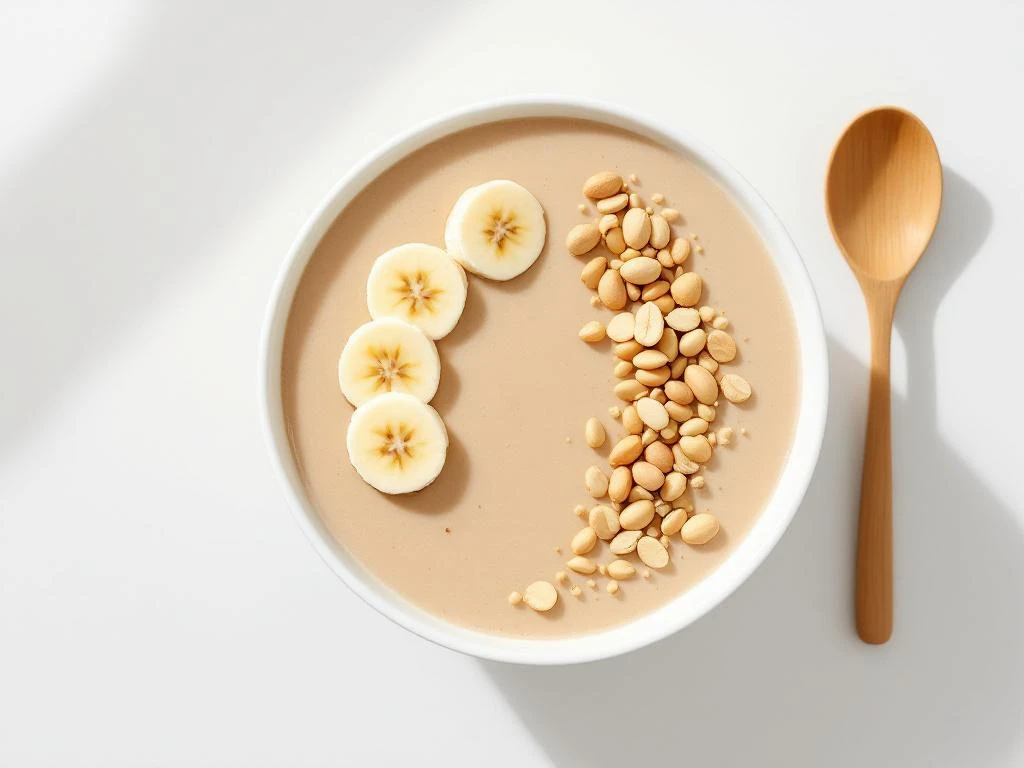
When you’re managing IBS or following a low FODMAP diet, breakfast can feel limiting. This peanut butter banana smoothie bowl gives you a gut friendly breakfast that’s both satisfying and safe during elimination phases. You’ll create a thick, creamy bowl that won’t trigger digestive symptoms while delivering proper nutrition to start your day.
This recipe works for beginners and takes about 5 minutes to prepare. You’ll need a high-powered blender, measuring tools, and access to low FODMAP ingredients. The result is a restaurant-quality smoothie bowl that looks appealing and supports your digestive health.
Why this smoothie bowl works for sensitive stomachs
The combination of firm bananas and pure peanut butter creates a low FODMAP breakfast that provides protein, healthy fats, and natural energy without overwhelming your digestive system. Firm bananas contain lower levels of FODMAPs compared to ripe ones, making them suitable during the elimination phase when you’re identifying trigger foods.
Peanut butter adds creaminess and protein without dairy, which many people with IBS struggle to digest. The thick texture of a smoothie bowl slows down eating, giving your digestive system time to process food properly. This matters when you’re managing symptoms and need meals that work with your gut rather than against it.
Smoothie bowls offer flexibility that traditional breakfast options don’t. You can adjust portions precisely to stay within FODMAP thresholds, add toppings that suit your current phase, and modify ingredients based on what you’ve successfully reintroduced. This IBS friendly smoothie becomes a reliable option when you need something quick but don’t want to risk symptoms.
What you need for a perfect smoothie bowl
Your ingredients need careful selection to maintain the low FODMAP profile. Here’s what you’ll gather before you start blending.
Essential ingredients:
- 1 firm banana (slightly green, not fully ripe)
- 2 tablespoons pure peanut butter (no added sugars or oils)
- 100ml lactose-free milk or suitable alternative
- 3-4 ice cubes for thickness
Kitchen equipment:
- High-powered blender (minimum 500 watts)
- Measuring spoons and cup
- Serving bowl
- Spatula for scraping
Optional FODMAP friendly toppings:
- 1 tablespoon pumpkin seeds
- 5-6 blueberries (stay within 20g limit)
- 1 teaspoon chia seeds
- Small handful of low FODMAP granola
- Drizzle of extra peanut butter
Check your peanut butter label carefully. Many brands add honey, molasses, or high FODMAP sweeteners. You want 100% peanuts or peanuts with a small amount of salt. For your liquid base, lactose-free cow’s milk works well, but almond milk (small serves) or coconut milk from a carton are also suitable.
Blend your low FODMAP smoothie base
The order you add ingredients affects your final texture. Place your liquid in the blender first. This prevents the blades from struggling and creates smoother blending.
Add the peanut butter next, then break your firm banana into chunks. The banana should show some green on the peel or feel quite firm when you peel it. Overripe bananas contain higher FODMAP levels and can trigger symptoms. Drop in your ice cubes last.
Blend on high speed for 30 to 45 seconds. Stop and check the consistency. For a proper banana smoothie bowl recipe, you want thick enough to eat with a spoon, not drink through a straw. The mixture should hold its shape when you tilt the blender.
If it’s too thick to blend properly, add liquid one tablespoon at a time. If it’s too thin, add another ice cube or a few frozen banana chunks you’ve prepared ahead. Blend in short 10-second bursts after each adjustment.
The colour should be a light tan from the peanut butter. Pour immediately into your serving bowl. Smoothies can oxidize and brown quickly once blended, though this doesn’t affect the FODMAP content or safety.
Choose gut friendly toppings and portions
Toppings transform a simple smoothie into a satisfying meal, but portion control keeps it digestive friendly. During elimination, stick to toppings you’ve confirmed are safe for you.
Safe topping portions:
- Berries: Maximum 20g blueberries or 10 strawberries
- Seeds: 1 tablespoon pumpkin or sunflower seeds
- Nuts: 10 macadamias or small handful of walnuts
- Coconut: 2 tablespoons shredded coconut
Arrange toppings in sections rather than mixing them throughout. This creates visual appeal and lets you taste each element separately. Place berries on one side, seeds on another, and create a small well in the centre for extra peanut butter if desired.
Avoid these during elimination:
- Honey or agave syrup
- Dried fruits
- Cashews or pistachios
- Regular yoghurt
- Protein powders with inulin or FOS
Keep your total topping weight reasonable. Adding too many extras can push you over FODMAP thresholds even if each ingredient is technically safe. Three to four different toppings in controlled portions work well for most people.
Fix common smoothie bowl texture problems
Too thin? Your smoothie won’t stay in the bowl properly and feels more like a drink. Freeze banana chunks ahead of time and use those instead of ice cubes. Frozen banana creates thickness without diluting flavour. You can also reduce your liquid by 20ml next time.
Too icy or grainy? This happens when ice doesn’t blend completely. Let your blender run longer, a full minute if needed. Make sure you’re using enough liquid to create a vortex that pulls ice chunks down into the blades. A less powerful blender might need ice crushed before you add it.
Separating or watery? This occurs when you let the bowl sit too long before eating. The ice melts and creates a watery layer at the bottom. Blend right before you plan to eat. If you must wait, give it a quick stir before adding toppings.
Blender struggling? Your banana might be too frozen or you’ve added too little liquid. Let frozen fruit sit at room temperature for 2 minutes before blending. Add an extra tablespoon of lactose-free milk and blend in 15-second intervals, stopping to scrape down the sides between bursts.
Over-blended and warm? Extended blending creates friction that warms your smoothie. This easy smoothie bowl should feel cold when you eat it. Blend just until smooth, then stop immediately. If it’s already warm, add one or two more ice cubes and pulse briefly to chill it again.
Customize your bowl for different phases
During strict elimination, keep your recipe simple with just banana, peanut butter, and lactose-free milk. Test your tolerance with this base recipe for at least three days before adding variables. This establishes a safe foundation you can return to if symptoms appear.
When you start reintroduction, add one new ingredient at a time. Wait three days between additions to identify any triggers. Try a small serve of regular banana if you want to test your fructose tolerance. Add a teaspoon of honey if you’re testing fructans. Keep notes on what you add and any symptoms that follow.
For extra protein after workouts, add a low FODMAP protein powder. Check the label for inulin, FOS, or chicory root, which are high FODMAP. Rice protein or pure whey protein isolate typically work well. Start with half a scoop to test tolerance before using a full serving.
Vegan modifications work easily with this FODMAP friendly recipe. Replace lactose-free milk with almond milk (limit to 60ml) or coconut milk from a carton. Both maintain the low FODMAP profile when you respect portion sizes. Peanut butter already provides plant-based protein.
Pre-workout versions need less thickness and more liquid. Reduce ice cubes to one or two and increase your lactose-free milk to 150ml. This creates a texture you can drink quickly about 30 minutes before exercise without feeling too full. The firm banana provides easily digestible carbohydrates for energy.
As you successfully reintroduce foods, your smoothie bowl options expand. You might add a handful of spinach for extra nutrients, swap in almond butter instead of peanut butter, or include a small amount of rolled oats for more substance. Each successful reintroduction gives you more flexibility while maintaining your digestive comfort.
This peanut butter banana smoothie bowl becomes a reliable template you can adjust based on your current needs and phase. The base recipe stays consistent while toppings and modifications change as your diet expands. You’ll have a digestive friendly breakfast that adapts with you rather than limiting your progress.
Peanut butter banana smoothie bowl
Cooking time: 5 minutes | Portions: 1 serving
Ingredients:
- 1 firm banana (slightly green)
- 2 tablespoons pure peanut butter
- 100ml lactose-free milk
- 3-4 ice cubes
- Optional toppings: pumpkin seeds, blueberries, chia seeds
Instructions:
- Add lactose-free milk to blender
- Add peanut butter and banana chunks
- Add ice cubes on top
- Blend on high for 30-45 seconds until thick
- Check consistency (should be spoonable, not drinkable)
- Pour into serving bowl immediately
- Add toppings in controlled portions
- Serve and eat straight away
This recipe is for informational purposes only and is not medical or dietary advice. Please consult a healthcare professional before making any changes to your diet.