
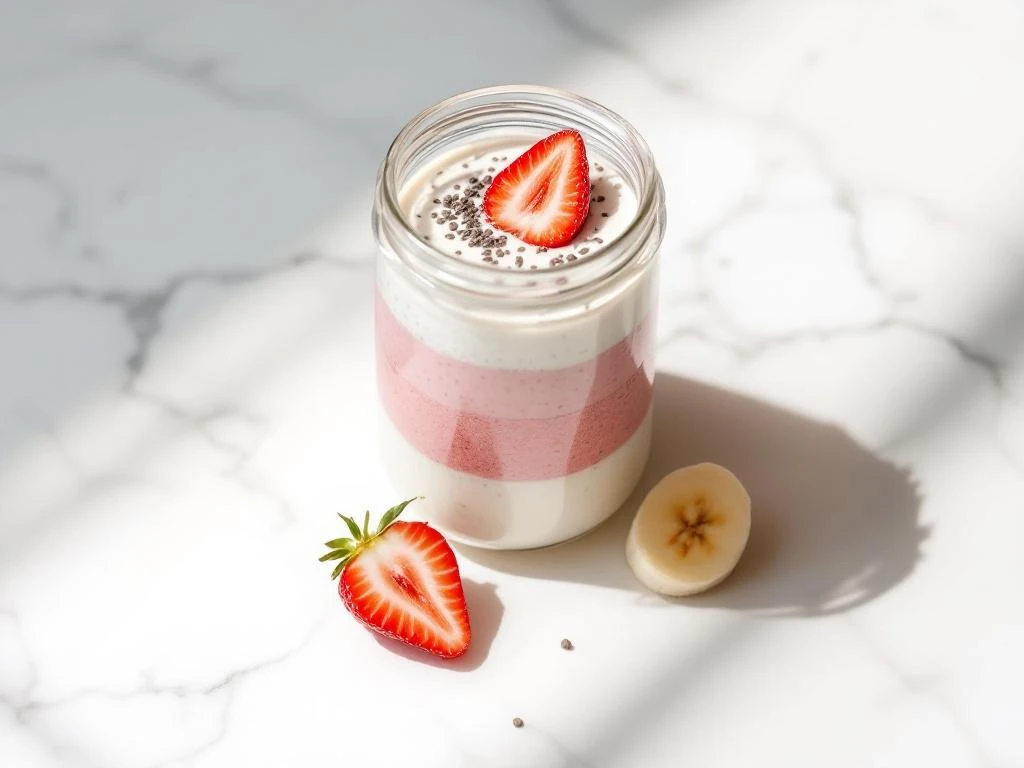
Looking for a healthy chia pudding recipe that won’t trigger your IBS symptoms? This strawberry banana chia pudding combines gut-friendly ingredients in a simple overnight recipe that works perfectly for breakfast or a satisfying snack. You’ll need about 5 minutes of active prep time, then let it set overnight in the fridge. This recipe is beginner-friendly and requires no special equipment beyond a bowl and whisk. You’ll use lactose-free milk, chia seeds, carefully portioned fruit, and a touch of sweetness to create a creamy, nutritious pudding that respects your digestive needs.
Why strawberry banana chia pudding works for IBS
Chia seeds form the foundation of this IBS friendly breakfast because they’re naturally low FODMAP and packed with soluble fibre. This type of fibre absorbs liquid and creates a gel-like consistency that can help regulate digestion without causing the bloating or discomfort that insoluble fibres sometimes trigger. The omega-3 fatty acids in chia seeds also support gut health by reducing inflammation in the digestive tract.
Strawberries fit beautifully into a low FODMAP diet when you keep portions reasonable. They provide natural sweetness, vitamin C, and antioxidants without the high fructose content found in many other fruits. Bananas require more careful attention to portion size, but a small amount of ripe banana adds creaminess and natural sweetness while staying within safe FODMAP limits. The key is using no more than one-third of a medium banana per serving.
This combination creates an easy chia pudding that supports digestive health through multiple mechanisms. The protein and healthy fats keep you satisfied for hours, preventing the blood sugar spikes that can sometimes worsen IBS symptoms. The gentle fibre content promotes regular bowel movements without irritation. Together, these ingredients deliver nutrition your body needs while respecting the sensitivities that come with IBS and food intolerances.
Gather your low FODMAP ingredients
You’ll need 3 tablespoons of chia seeds as your base ingredient. This amount provides the right texture without overwhelming your digestive system with too much fibre at once. Choose any brand, as plain chia seeds are naturally gluten free and low FODMAP.
Select 240ml of lactose-free milk for the liquid component. Lactose-free dairy milk works well, as do almond milk or coconut milk in appropriate quantities. If using almond milk, check that it contains no more than 60ml per serving to stay within FODMAP limits. Rice milk also works as an alternative.
Prepare one-third of a medium ripe banana. This portion size matters significantly. More than this amount can trigger symptoms in sensitive individuals. Choose a banana with some brown spots for easier digestion and natural sweetness.
Gather 5 medium strawberries, which equals roughly 80g. This portion stays safely within low FODMAP guidelines while providing plenty of flavour and colour. Fresh strawberries work best, but frozen strawberries are acceptable if you let them thaw completely.
Add 1 tablespoon of maple syrup for sweetness. Pure maple syrup is low FODMAP in this quantity. You can substitute with rice malt syrup if you prefer, or reduce the amount if your banana is particularly sweet. Avoid honey, as it contains high FODMAP sugars.
Include half a teaspoon of vanilla extract to enhance the overall flavour. Pure vanilla extract is safe for low FODMAP diets and adds depth without additional sweetness.
Prepare your strawberry banana chia pudding
Start by measuring your chia seeds into a medium bowl. Pour the lactose-free milk over the seeds and whisk thoroughly for about 30 seconds. This initial mixing prevents clumping and ensures even distribution. The mixture will look quite liquid at this stage, which is normal.
Take your one-third portion of banana and mash it completely with a fork until smooth. Small lumps are fine, but breaking it down helps distribute the flavour evenly throughout your healthy chia pudding recipe. Add the mashed banana to your chia mixture along with the maple syrup and vanilla extract. Whisk everything together until well combined.
Slice your strawberries into quarters or smaller pieces. Reserve a few pretty slices for topping if you like. Gently fold most of the strawberry pieces into your chia mixture, saving some for garnish. The strawberries will release a bit of juice as they sit, creating lovely pink swirls in your gluten free chia pudding.
Cover your bowl with a lid or plastic wrap and place it in the refrigerator. The pudding needs at least 4 hours to set properly, but overnight works best. After the initial hour, you can stir the mixture once to redistribute any chia seeds that settled to the bottom. This step is optional but creates a more uniform texture.
Check your pudding after 4 hours. It should be thick and creamy, similar to yoghurt consistency. If it seems too thick, stir in a splash more lactose-free milk. If it’s too thin, it needs more time to set. The chia seeds will continue absorbing liquid, so your overnight chia pudding will be slightly thicker in the morning than it was after 4 hours.
Getting the texture right
The ideal ratio for chia pudding is roughly 1 part chia seeds to 8 parts liquid. This creates a creamy, spoonable consistency without being gluey or watery. If you prefer thicker pudding, add an extra tablespoon of chia seeds. For a thinner consistency that you can drink, reduce the chia seeds to 2 tablespoons.
Customize your chia pudding with toppings
Add texture and nutrition with low FODMAP nuts and seeds in appropriate portions. A tablespoon of chopped walnuts or pecans adds crunch and extra omega-3s. Pumpkin seeds work well too, providing minerals like zinc and magnesium. Keep nut portions to about 10 nuts or 1 tablespoon to stay within safe limits.
Layer in additional low FODMAP fruits for variety. Blueberries work beautifully, with up to 20 berries per serving staying within guidelines. A couple of kiwi slices add tropical flavour and digestive enzymes. A few mandarin segments provide citrus brightness. Avoid high FODMAP fruits like apples, pears, and mangoes.
Adjust sweetness with safe sweetener options. Drizzle extra maple syrup on top for presentation and added sweetness. A light dusting of cinnamon adds warmth without any FODMAPs. Avoid agave nectar and honey, which contain problematic sugars.
Create visual appeal through layering techniques. Spoon half your pudding into a glass, add a layer of sliced strawberries, then top with the remaining pudding. Finish with reserved strawberry slices and a sprinkle of chia seeds. This presentation turns your simple breakfast into something special.
Modify the texture by blending before chilling. If you prefer smooth pudding without visible chia seeds, blend all ingredients together before refrigerating. The pudding will still set properly but with a uniform, creamy texture throughout. This method works particularly well if you’re introducing chia seeds to children or picky eaters.
Try a chocolate variation by adding 1 tablespoon of cocoa powder to the base mixture. Cocoa powder is low FODMAP and pairs wonderfully with banana. This transforms your strawberry banana chia pudding into a chocolate version while maintaining all the digestive benefits.
Make-ahead and storage tips
This low FODMAP chia pudding keeps well in the refrigerator for up to 5 days in an airtight container. Prepare several servings at once for easy grab-and-go breakfasts throughout the week. Store toppings separately and add them just before eating to maintain the best texture.
You’ve created a nutritious, gut-friendly meal that proves eating with IBS doesn’t mean sacrificing flavour or satisfaction. This recipe gives you control over portions and ingredients while delivering the protein, healthy fats, and gentle fibre your body needs. The combination of creamy texture, natural sweetness, and fresh fruit makes it easy to stick with your low FODMAP diet without feeling restricted.
Experiment with the topping suggestions to keep your breakfasts interesting. Small changes like switching from strawberries to blueberries or adding different nuts prevent flavour fatigue while respecting your digestive limits. The basic chia pudding formula stays the same, giving you a reliable foundation you can trust.
Use this recipe as part of your regular meal rotation. The minimal prep time and overnight setting mean you can prepare it before bed and wake up to a ready-made breakfast. This convenience helps maintain consistent eating patterns, which often supports better digestive health for people managing IBS.
Strawberry banana chia pudding
Prep time: 5 minutes | Setting time: 4 hours (or overnight) | Servings: 2
Ingredients
- 3 tablespoons chia seeds
- 240ml lactose-free milk (or suitable low FODMAP alternative)
- One-third medium ripe banana, mashed
- 5 medium strawberries (80g), sliced
- 1 tablespoon maple syrup
- ½ teaspoon vanilla extract
Instructions
- Whisk chia seeds and lactose-free milk together in a medium bowl for 30 seconds
- Mash banana completely and add to mixture along with maple syrup and vanilla extract
- Fold in sliced strawberries, reserving some for topping
- Cover and refrigerate for at least 4 hours or overnight
- Stir once after the first hour if possible for even texture
- Check consistency and add more milk if too thick
- Serve topped with reserved strawberries and optional low FODMAP toppings
Low FODMAP notes
- Keep banana portion to maximum one-third of a medium banana per serving
- Strawberry portion of 5 berries (80g) stays within safe limits
- If using almond milk, limit to 60ml per serving or choose lactose-free dairy
- Maple syrup is low FODMAP at 1 tablespoon; avoid honey
- Store in refrigerator for up to 5 days in an airtight container
This recipe is for informational purposes only and is not medical or dietary advice. Please consult a healthcare professional before making any changes to your diet.