
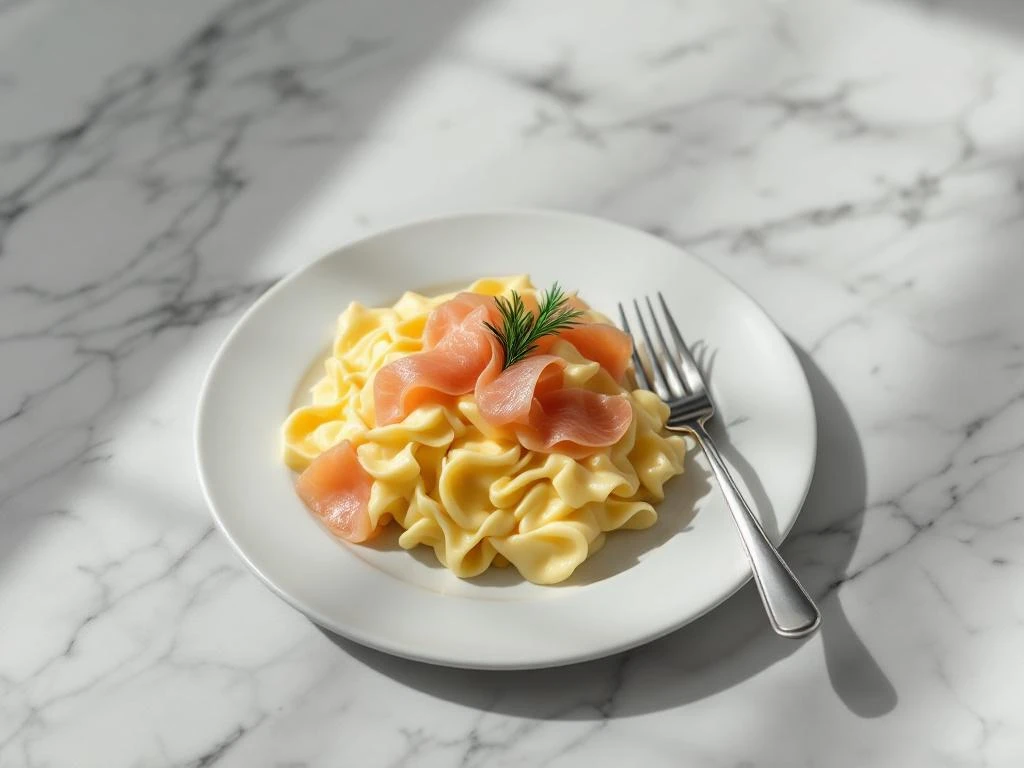
Managing IBS symptoms doesn’t mean sacrificing a delicious breakfast. This scrambled eggs with smoked salmon recipe combines high-quality protein with gentle, gut-friendly ingredients that won’t trigger digestive discomfort. You’ll create a satisfying, FODMAP-friendly breakfast in about 10 minutes using simple kitchen tools and readily available low FODMAP ingredients. This recipe works for beginners and requires no special cooking skills, just a non-stick pan and a few minutes at the stove. You’ll end up with creamy, flavourful scrambled eggs that provide lasting energy without the worry of IBS flare-ups.
Why scrambled eggs with smoked salmon work for IBS
This breakfast combination fits perfectly into a low FODMAP diet because both eggs and smoked salmon are naturally low in FODMAPs. Eggs contain no fermentable carbohydrates that trigger IBS symptoms, making them an ideal protein source for sensitive digestive systems. Smoked salmon adds omega-3 fatty acids and additional protein without introducing problematic ingredients.
The nutritional benefits go beyond FODMAP compliance. Eggs provide all nine essential amino acids your body needs, along with vitamins D and B12. Smoked salmon contributes heart-healthy fats and selenium, an important mineral for immune function. Together, they create a balanced meal that keeps you full for hours without causing bloating or discomfort.
This recipe is particularly gentle on your digestive system because it avoids common IBS triggers like onion, garlic, and high-lactose dairy. When you use lactose-free butter or a safe oil, you eliminate another potential source of digestive upset. The simple preparation method preserves the natural nutrients while creating a texture that’s easy to digest.
Gather your low FODMAP ingredients and tools
You’ll need these FODMAP-friendly ingredients for two servings:
- 4 large eggs
- 60g smoked salmon
- 1 tablespoon lactose-free butter or garlic-infused olive oil
- Fresh chives or dill (optional, about 1 tablespoon chopped)
- Salt and black pepper to taste
- 1 tablespoon lactose-free milk or cream (optional for extra creaminess)
The essential kitchen tools include a non-stick frying pan, a mixing bowl, a whisk or fork, and a heat-resistant spatula. A medium-sized pan works best because it gives you enough surface area to cook the eggs evenly without overcrowding.
Ingredient substitutions work well if you need alternatives. Replace smoked salmon with cooked prawns or leftover chicken for variety. Use coconut oil instead of butter if you prefer a dairy-free option. Fresh herbs can be swapped based on what you have available, just make sure they’re low FODMAP options like chives, dill, or parsley. Avoid spring onions or shallots as these contain high FODMAP compounds.
Checking your ingredients for FODMAP compliance
Read smoked salmon labels carefully. Some brands add onion powder or garlic powder during processing, which makes them unsuitable for a low FODMAP diet. Plain smoked salmon with just salt and smoke flavouring is your safest choice. Store brands often list all ingredients clearly, making them easy to verify.
Your lactose-free butter should specify “lactose-free” on the package. Regular butter contains small amounts of lactose that can cause symptoms in sensitive individuals. Most supermarkets stock lactose-free options in the dairy section near regular butter.
Prepare the eggs and smoked salmon properly
Crack the eggs into your mixing bowl. Check each egg as you crack it to make sure no shell pieces fall in. Add a pinch of salt and a few grinds of black pepper. If you’re using lactose-free milk or cream, add it now. This extra liquid makes the scrambled eggs softer and more luxurious.
Whisk the eggs until the yolks and whites combine completely. You’ll know they’re ready when the mixture looks uniform in colour with no streaks of clear egg white. Whisking for about 30 seconds creates the right consistency. Don’t over-whisk or you’ll incorporate too much air, which can make the eggs fluffy rather than creamy.
Cut the smoked salmon into bite-sized pieces, roughly 2cm strips. Smaller pieces distribute more evenly throughout the eggs and make eating easier. Pat the salmon dry with kitchen paper if it seems wet. Excess moisture can make your scrambled eggs watery instead of creamy.
Timing your preparation
Prepare everything before you start cooking. Scrambled eggs cook quickly, and you won’t have time to chop ingredients once the pan heats up. Have your spatula ready and your salmon cut before the butter goes in the pan. This preparation step ensures smooth cooking without rushing or burning.
Cook perfect creamy scrambled eggs
Place your non-stick pan on the stove over medium-low heat. Add the lactose-free butter and let it melt completely. The butter should foam slightly but not brown. If it starts turning brown, your heat is too high. Lower the temperature and wait a moment before adding the eggs.
Pour the whisked eggs into the pan. Let them sit undisturbed for about 20 seconds until the edges just start to set. Use your spatula to gently push the eggs from the edge toward the centre, tilting the pan so uncooked egg fills the space you’ve created. This technique creates soft curds rather than a flat omelette.
Continue this gentle pushing motion every 20 to 30 seconds. The eggs will gradually transform from liquid to soft, creamy curds. When the eggs are about 75% cooked but still look slightly wet, add the smoked salmon pieces. Fold them in gently with your spatula.
Remove the pan from heat when the eggs still look slightly underdone. They’ll continue cooking from residual heat for another 30 seconds. This timing prevents overcooking, which makes eggs rubbery and dry. The whole cooking process takes about 3 to 4 minutes from when you pour the eggs into the pan.
Temperature control for best results
Medium-low heat is crucial for creamy scrambled eggs. High heat cooks the eggs too quickly, creating a tough texture and potentially burning the butter. If your eggs are cooking in less than 2 minutes, reduce the heat. Patient cooking at a lower temperature produces the best texture every time.
Watch for steam rising from the pan. Light steam is fine, but heavy steam means your heat is too high. Adjust immediately to prevent overcooking. Your eggs should cook gently with minimal bubbling around the edges.
Serve and customize your FODMAP-friendly breakfast
Transfer the scrambled eggs to warmed plates immediately. Garnish with fresh chopped chives or dill if you’re using them. The herbs add colour and a fresh flavour that complements the smoked salmon beautifully. A final grind of black pepper on top adds visual appeal and a touch of spice.
Pair your scrambled eggs with gluten-free toast for a complete breakfast. Look for certified gluten-free bread made from rice or corn flour. A handful of fresh spinach leaves on the side adds nutrients and fibre without FODMAP concerns. Cherry tomatoes (maximum 5 per serving) are another safe option that adds colour to your plate.
Portion sizes matter for FODMAP compliance. This recipe serves two people generously. Each serving contains 2 eggs and 30g of smoked salmon, which fits comfortably within low FODMAP guidelines. Don’t be tempted to add extra salmon beyond the recommended amount, as very large servings of fish can sometimes cause digestive discomfort.
Meal prep and storage options
Scrambled eggs taste best fresh, but you can prepare components ahead for busy mornings. Whisk your eggs the night before and store them covered in the fridge. Cut your smoked salmon and keep it refrigerated in an airtight container. In the morning, you’ll only need 5 minutes to cook.
Cooked scrambled eggs can be refrigerated for up to 2 days in a sealed container. Reheat them gently in a pan over low heat with a small knob of lactose-free butter. Microwaving works but can make the texture rubbery. Add a splash of lactose-free milk when reheating to restore creaminess.
Avoid freezing scrambled eggs as they become watery and grainy when thawed. The texture changes significantly and won’t match the quality of fresh eggs. If you need make-ahead breakfasts, consider preparing other low FODMAP options for your freezer instead.
Customisation ideas for variety
Change the herbs based on your preferences. Fresh parsley adds a different flavour profile than dill. Basil works well if you enjoy Italian-inspired breakfasts. Always verify that any herbs you use are low FODMAP in the quantities you’re adding.
Try different proteins when you want variety. Cooked bacon (check for FODMAP-friendly curing ingredients), leftover roasted chicken, or tinned tuna all work as alternatives to smoked salmon. Each protein brings its own flavour while maintaining the gut-friendly benefits of this easy breakfast recipe.
This healthy scrambled eggs recipe proves that managing IBS doesn’t mean boring meals. The combination of creamy eggs and savoury smoked salmon creates a restaurant-quality breakfast you can make at home in minutes. You’ve learned how to prepare ingredients properly, control cooking temperature for perfect texture, and customise the recipe to suit your preferences. This FODMAP-friendly breakfast provides sustained energy and essential nutrients without triggering digestive symptoms, making it an ideal choice for starting your day right.
Scrambled eggs with smoked salmon
Cooking time: 10 minutes | Portions: 2 servings
- 4 large eggs
- 60g smoked salmon (plain, no onion or garlic)
- 1 tablespoon lactose-free butter or garlic-infused olive oil
- 1 tablespoon lactose-free milk (optional)
- Fresh chives or dill (optional)
- Salt and black pepper to taste
Steps:
- Whisk eggs with salt, pepper, and optional lactose-free milk until uniform
- Cut smoked salmon into 2cm pieces and pat dry
- Melt lactose-free butter in non-stick pan over medium-low heat
- Pour eggs into pan and let sit for 20 seconds
- Gently push eggs from edges to centre every 20-30 seconds
- When eggs are 75% cooked, fold in smoked salmon
- Remove from heat while still slightly wet
- Serve immediately with optional fresh herbs
- Pair with gluten-free toast or fresh spinach
This recipe is for informational purposes only and is not medical or dietary advice. Please consult a healthcare professional before making any changes to your diet.