
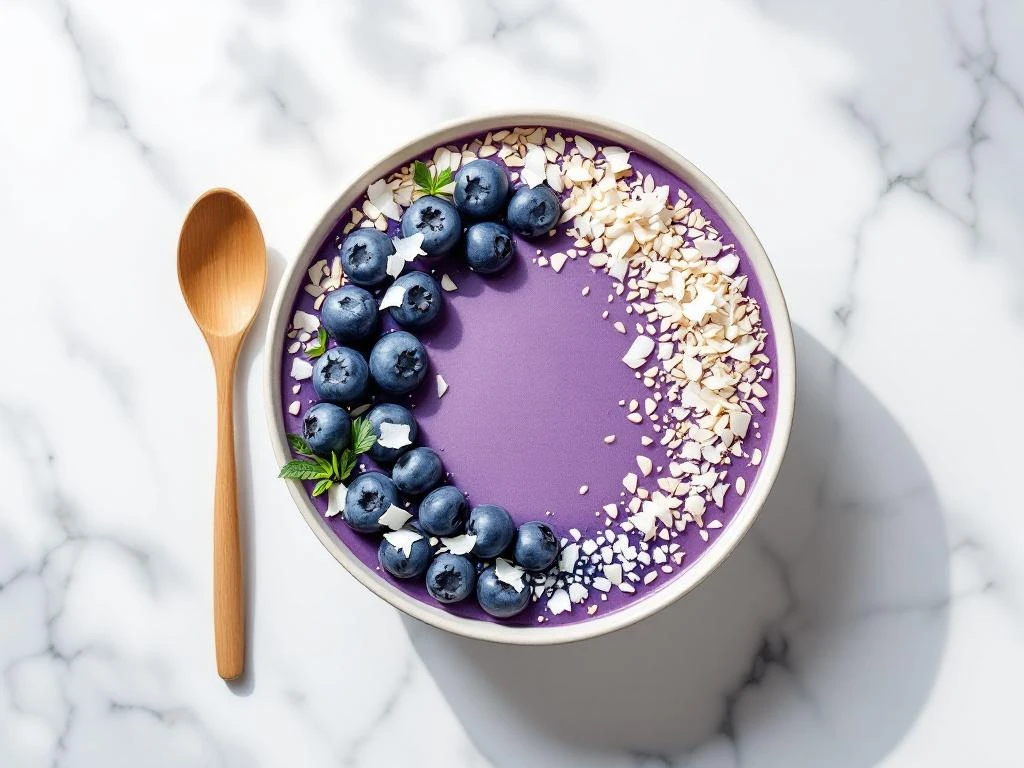
Starting your morning with a lactose-free blueberry smoothie bowl gives you a filling, nutritious breakfast that won’t trigger IBS symptoms. This dairy-free smoothie bowl combines frozen blueberries with lactose-free milk alternatives to create a thick, creamy base that supports digestive health. The recipe takes about 10 minutes to prepare and requires just a blender and a few low FODMAP ingredients.
You’ll need a high-powered blender, measuring cups, frozen blueberries, lactose-free milk, and your choice of low FODMAP toppings. This healthy smoothie bowl recipe works for anyone following a gluten-free smoothie bowl plan or managing lactose intolerance alongside IBS. The result is an IBS-friendly smoothie that tastes indulgent while keeping your digestive system comfortable.
Why lactose-free smoothie bowls work for IBS
Traditional smoothie bowls often contain yoghurt or regular milk, both high in lactose that can trigger bloating, cramping, and other IBS symptoms. Switching to lactose-free alternatives removes this common trigger while maintaining the creamy texture you expect from a smoothie bowl.
Blueberries are a low FODMAP fruit option when kept to appropriate serving sizes. A 40-gram portion of blueberries stays within low FODMAP limits, providing antioxidants and natural sweetness without overloading your system with excess fructose. This makes them perfect for a digestive-friendly smoothie base.
The thick, spoonable consistency of smoothie bowls encourages slower eating compared to drinking a regular smoothie. This gives your digestive system more time to process the food, which can reduce discomfort. Adding protein and healthy fats through low FODMAP toppings creates a balanced low FODMAP breakfast that keeps you satisfied for hours.
Gather your lactose-free smoothie bowl ingredients
For the smoothie base, you’ll need 40 grams of frozen blueberries, 180 millilitres of lactose-free milk or almond milk, half a frozen banana (about 50 grams), and one tablespoon of maple syrup if you prefer extra sweetness. Freezing your fruit beforehand is essential for achieving that thick, ice cream-like texture.
Choose your lactose-free milk carefully. Almond milk works well and is naturally low FODMAP in servings up to 250 millilitres. Lactose-free cow’s milk is another option if you prefer a creamier result. Avoid coconut milk in large amounts, as it can be high FODMAP above 125 millilitres.
For toppings, select from these low FODMAP options:
- 10 grams of pumpkin seeds or sunflower seeds
- A small handful of gluten-free granola (check ingredients for high FODMAP additions)
- 5 fresh strawberries, sliced
- One tablespoon of peanut butter or almond butter
- A sprinkle of chia seeds (up to two teaspoons)
Keep portions controlled. While each ingredient is low FODMAP in small amounts, combining too many toppings can push you over safe serving sizes. Stick to two or three toppings per bowl to maintain your digestive-friendly smoothie status.
Blend your lactose-free blueberry smoothie base
Add your lactose-free milk to the blender before the frozen fruit. This prevents the blades from getting stuck and ensures smoother blending. Pour in 180 millilitres of your chosen milk alternative as your liquid base.
Add the frozen blueberries, frozen banana pieces, and maple syrup if using. The frozen fruit should be solid, not thawed. Thawed fruit creates a runny smoothie instead of the thick consistency you want for a proper smoothie bowl.
Start blending on low speed for 10 seconds to break up the frozen pieces. Increase to high speed and blend for 30 to 45 seconds, stopping to scrape down the sides if needed. The mixture should be thick enough that it doesn’t pour easily. If it’s too thick to blend, add one tablespoon of milk at a time until the blades move freely.
Check the consistency by turning off the blender and tilting it. The smoothie should slowly slide to one side rather than flowing like liquid. If it’s too thin, add a few ice cubes or more frozen fruit and blend again for 15 seconds.
Pour the mixture into a bowl immediately. The smoothie will start to thin as it warms, so prepare your toppings beforehand to work quickly.
Add low FODMAP toppings for texture and flavor
Arrange your toppings in sections rather than mixing them in. This creates visual appeal and lets you taste different combinations with each spoonful. Place seeds on one side, fresh fruit on another, and nut butter in a small dollop on top.
Seeds add satisfying crunch and healthy fats that help you feel full longer. Pumpkin seeds and sunflower seeds are both low FODMAP and provide protein. Sprinkle about 10 grams across the surface of your smoothie bowl.
Fresh strawberries complement blueberries without adding too much extra fructose. Slice them thinly so you get fruit in every bite. Five medium strawberries stay within low FODMAP serving sizes.
A drizzle of nut butter adds richness and protein. Use pure peanut butter or almond butter without added honey or high FODMAP sweeteners. One tablespoon is enough to add flavour without overwhelming the blueberry base.
Avoid these common toppings that can trigger IBS symptoms:
- Regular yoghurt or coconut yoghurt in large amounts
- Dried fruits like raisins or dates
- Honey or agave syrup
- Cashews or pistachios
- Granola with high FODMAP ingredients like dried apple or inulin
Customize your smoothie bowl for dietary needs
For extra protein, add 20 grams of low FODMAP protein powder to the blender with your other ingredients. Vanilla or unflavoured varieties work best with blueberries. This turns your breakfast into a more substantial meal that supports muscle recovery if you exercise in the morning.
Make it completely vegan by confirming your milk alternative is plant-based. Almond milk and rice milk are naturally vegan options. Check that any protein powder you add is also plant-based rather than whey-based.
Try these flavour variations while keeping low FODMAP compliance:
- Replace blueberries with 100 grams of frozen strawberries for a different berry option
- Add one teaspoon of vanilla extract for extra depth
- Mix in one tablespoon of cocoa powder for a chocolate-blueberry combination
- Use half a cup of brewed green tea (cooled) instead of some milk for an antioxidant boost
Adjust the thickness by changing your liquid ratio. Use less milk for a thicker bowl you can eat with a spoon. Add more liquid if you prefer a thinner consistency that’s easier to blend but still thick enough to hold toppings.
Prep multiple servings by portioning frozen fruit into individual bags. Label each bag with the amount of milk needed. In the morning, dump one bag into your blender with the liquid and blend. This saves time on busy mornings while ensuring you stick to low FODMAP portions.
This lactose-free smoothie bowl approach gives you a reliable breakfast option that supports your digestive health without sacrificing taste or nutrition. The combination of low FODMAP ingredients creates a satisfying meal that you can adapt to your preferences while maintaining IBS-friendly status. Experiment with different topping combinations to find your favourite version, always keeping portion sizes within recommended limits.
Lactose-free blueberry smoothie bowl
Cooking Time: 10 minutes | Portions: 1 serving
Base ingredients:
- 40 grams frozen blueberries
- 180 millilitres lactose-free milk or almond milk
- 50 grams frozen banana (about half a banana)
- 1 tablespoon maple syrup (optional)
Topping options (choose 2-3):
- 10 grams pumpkin seeds or sunflower seeds
- 5 fresh strawberries, sliced
- 1 tablespoon peanut or almond butter
- 2 teaspoons chia seeds
- Small handful gluten-free granola
Instructions:
- Add lactose-free milk to blender
- Add frozen blueberries, frozen banana, and maple syrup
- Blend on low for 10 seconds, then high for 30-45 seconds
- Check consistency (should be thick and spoonable)
- Pour into bowl immediately
- Arrange toppings in sections across the surface
- Serve straight away before it thins
This recipe is for informational purposes only and is not medical or dietary advice. Please consult a healthcare professional before making any changes to your diet.