
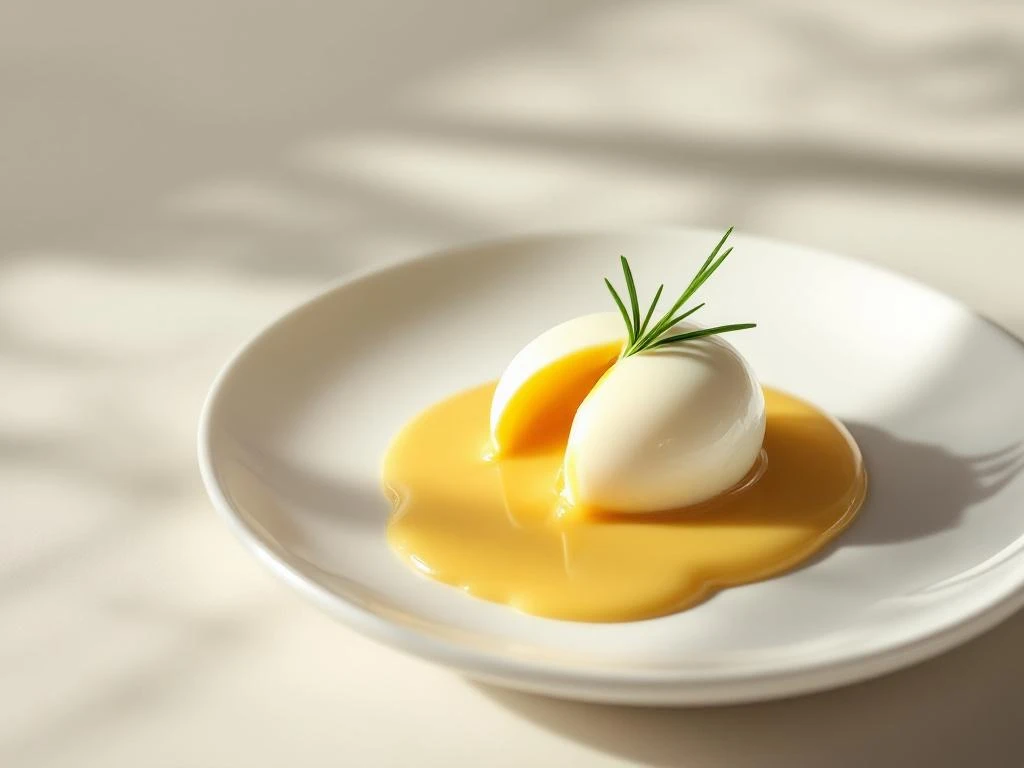
Poached eggs with hollandaise sauce brings restaurant elegance to your kitchen. This classic combination works perfectly for low FODMAP diets when you use lactose-free butter and avoid garlic or onion in your sauce. The technique looks complicated but becomes simple once you understand the basics.
This guide is suitable for intermediate home cooks. You’ll need about 45 minutes to prepare both components, though you’ll gain speed with practice. The main challenge lies in controlling temperature for both the eggs and sauce.
You’ll need fresh eggs, lactose-free butter, lemon juice, white vinegar, a medium saucepan, a heatproof bowl, a whisk, and a slotted spoon. A kitchen thermometer helps but isn’t essential. These tools are common in most kitchens.
By the end, you’ll create silky hollandaise sauce and perfectly poached eggs with tender whites and runny yolks. This skill transforms simple ingredients into an impressive dish suitable for breakfast, brunch, or light dinner.
Why master poached eggs with hollandaise
This dish elevates any meal from ordinary to special. The combination of rich, buttery sauce with delicate poached eggs creates a satisfying texture contrast that feels indulgent without being heavy.
For those following a low FODMAP diet, this recipe offers a safe way to enjoy a classic dish. Traditional hollandaise contains no problematic ingredients, and using lactose-free butter makes it completely suitable. You can serve it over gluten-free bread, rice cakes, or steamed vegetables without compromising your dietary needs.
The versatility makes this technique valuable. Serve it as eggs benedict at home, over asparagus, or with smoked salmon. Once you master the perfect poached egg technique and easy hollandaise recipe, you’ll find countless ways to use these skills.
Gather your ingredients and tools
For the poached eggs, you need fresh eggs (as fresh as possible for the best results), water, and one tablespoon of white vinegar. Fresher eggs hold their shape better in the water.
For the low FODMAP hollandaise sauce, gather these ingredients:
- Three egg yolks at room temperature
- 125g lactose-free butter
- One tablespoon fresh lemon juice
- Pinch of salt
- Pinch of cayenne pepper (optional)
Essential equipment includes a medium saucepan for poaching, a heatproof bowl for the hollandaise, a whisk, a slotted spoon, and a small saucepan for melting butter. A kitchen thermometer helps monitor temperature but you can learn to judge by eye with practice.
Have everything ready before you start. Both components require your full attention, so preparation prevents mistakes.
Master the perfect poached egg technique
Fill your saucepan with water about 10cm deep. Heat until small bubbles form on the bottom but before it reaches a rolling boil. The water should be around 80-85°C. Too hot and your eggs will break apart.
Add the tablespoon of vinegar to the water. This helps the egg whites set faster and hold their shape. The vinegar doesn’t affect the taste noticeably.
Crack each egg into a small cup. This makes it easier to slide the egg gently into the water and lets you check for shell fragments.
Create a gentle whirlpool by stirring the water in one direction with your slotted spoon. Drop the egg into the centre of the whirlpool. The movement helps wrap the white around the yolk for a neater shape.
Cook for three minutes for a runny yolk, four minutes for a slightly firmer centre. The white should be completely set but the yolk still soft when you press it gently.
Lift the egg out with your slotted spoon. Let excess water drain off. Place on kitchen paper briefly to remove remaining water before serving.
Success check: The white should be opaque and firm throughout, with no raw translucent bits. The yolk should feel soft but not liquid when touched gently.
Create foolproof low FODMAP hollandaise sauce
Melt the lactose-free butter in a small saucepan over low heat. Let it cool slightly while you prepare the egg yolks. The butter should be warm but not scorching hot.
Fill a medium saucepan with about 5cm of water and bring to a simmer. Place your heatproof bowl on top, making sure the bottom doesn’t touch the water. This double boiler setup provides gentle, even heat.
Add the egg yolks and lemon juice to the bowl. Whisk constantly for about one minute until the mixture thickens slightly and becomes pale. The bowl should feel warm but not hot to touch.
Remove the bowl from heat. Pour the melted butter in very slowly while whisking continuously. Start with just a few drops, then increase to a thin stream once the emulsion begins to form. This gradual addition prevents the sauce from splitting.
Keep whisking until all the butter is incorporated and the sauce reaches a smooth, creamy consistency. It should coat the back of a spoon and slowly drip off.
Season with salt and cayenne pepper if using. Taste and adjust the lemon juice if needed. The sauce should taste rich and buttery with a slight tang.
Use immediately or keep warm by placing the bowl over the warm water with the heat turned off. Stir occasionally. Don’t let it get too hot or it will split.
Fix common poaching and hollandaise problems
If your eggs spread out in the water instead of holding together, the eggs might not be fresh enough or the water is too hot. Use the freshest eggs possible and check that the water is barely simmering, not boiling.
Overcooked yolks happen when the water is too hot or cooking time is too long. Reduce the heat and set a timer. Remember you can always cook an egg more but you can’t undo overcooking.
Broken or split hollandaise sauce usually means the butter was added too quickly or the mixture got too hot. To rescue it, place a fresh egg yolk in a clean bowl and very slowly whisk in the split sauce. The new yolk helps re-emulsify everything.
If your hollandaise is too thick, whisk in warm water one teaspoon at a time until it reaches the right consistency. Too thin means it needs more butter or wasn’t whisked enough. Return it to gentle heat and whisk vigorously while adding a bit more melted butter.
Sauce that tastes too lemony can be balanced with a tiny pinch of salt. Not enough lemon flavour means add more juice drop by drop, whisking between additions.
Serve and customize your dish
Place your poached eggs on warmed plates to keep them hot. Spoon the hollandaise generously over the top, letting it cascade down the sides.
For a complete low FODMAP meal, serve on toasted gluten-free bread, rice cakes, or sourdough spelt bread (if tolerated). Add sides like grilled tomatoes, wilted spinach, or steamed asparagus.
Flavour variations for your lactose-free hollandaise include adding fresh chopped herbs like tarragon, chives, or parsley. A pinch of smoked paprika creates a Spanish-inspired version. For a subtle heat, increase the cayenne pepper.
Make-ahead tip: You can poach eggs in advance and store them in cold water in the fridge for up to two days. Reheat by placing them in hot (not boiling) water for one minute before serving.
Hollandaise doesn’t store well but can be kept warm for about 30 minutes over barely warm water. Stir occasionally and don’t let it get hot. If it cools and thickens, gently rewarm while whisking, adding a splash of warm water if needed.
This technique gives you confidence to prepare poached eggs with hollandaise for guests or special occasions. The skills transfer to other dishes, making you a more versatile cook.
Poached eggs with hollandaise
Cooking Time: 45 minutes | Portions: 2 servings
Ingredients:
- 4 fresh eggs
- 1 tablespoon white vinegar
- 3 egg yolks
- 125g lactose-free butter
- 1 tablespoon fresh lemon juice
- Salt and cayenne pepper to taste
Instructions:
- Heat water in a saucepan to 80-85°C with vinegar added
- Melt lactose-free butter and let it cool slightly
- Create double boiler with simmering water
- Whisk egg yolks and lemon juice in bowl over double boiler until thickened
- Remove from heat and slowly whisk in melted butter until emulsified
- Season hollandaise with salt and cayenne pepper
- Create gentle whirlpool in poaching water
- Slide eggs into water centre and cook for 3-4 minutes
- Remove eggs with slotted spoon and drain
- Plate eggs and spoon hollandaise over top
- Serve immediately with chosen sides
This recipe is for informational purposes only and is not medical or dietary advice. Please consult a healthcare professional before making any changes to your diet.