
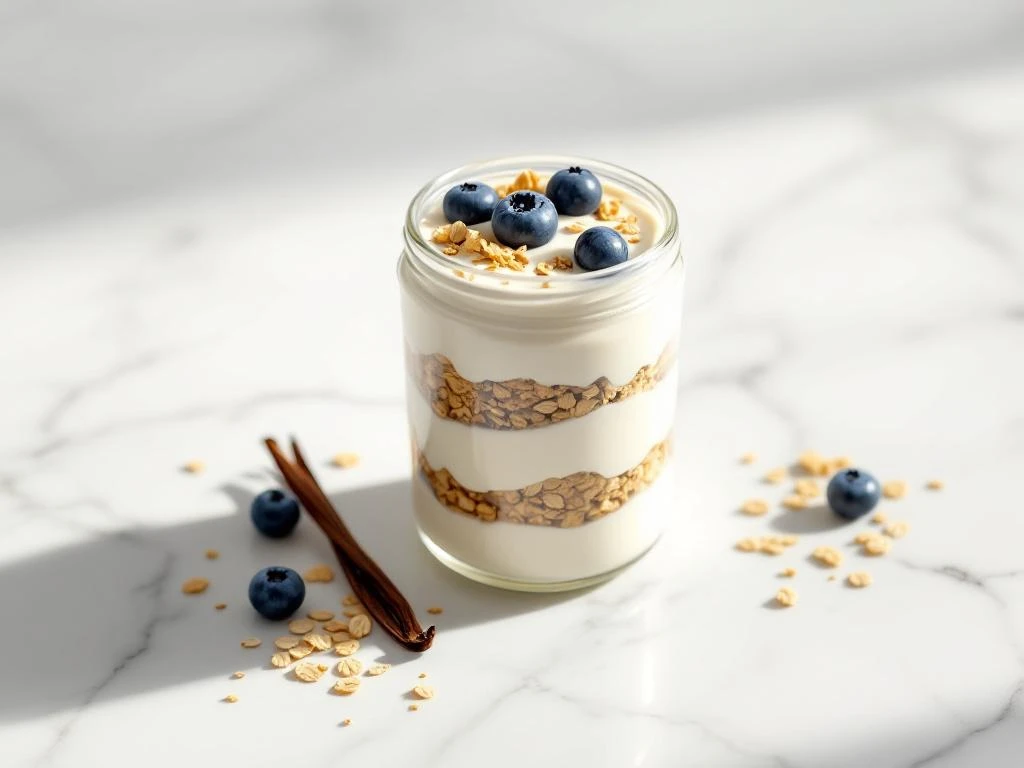
Creating a lactose-free vanilla yogurt parfait offers a simple solution for anyone managing IBS or following a low FODMAP diet. This easy parfait recipe combines digestive-friendly yogurt with safe toppings to create a satisfying breakfast or dessert that won’t trigger symptoms.
This guide is suitable for beginners with no special cooking skills required. You’ll need about 10 minutes to assemble your parfait, plus a few minutes for preparation if you’re washing and slicing fresh fruit. The recipe is completely customisable based on your individual tolerances and preferences.
Before you start, gather these essentials: lactose-free vanilla yogurt, low FODMAP fruits of your choice, gluten-free granola or other crunchy toppings, serving glasses or jars, measuring cups, and a spoon for layering. All ingredients should be readily available at most supermarkets, and you can adjust quantities based on how many servings you want to make.
Why lactose-free parfaits work for IBS
Lactose-free yogurt provides the creamy base without the digestive discomfort that regular dairy causes for many people with IBS. The lactose has been broken down during production, making it easier to digest while still delivering beneficial probiotics that support gut health.
Layered parfaits naturally encourage portion control, which matters when managing IBS symptoms. You can see exactly how much of each ingredient you’re eating, making it easier to stay within safe FODMAP serving sizes. This visual approach helps you balance nutrients without accidentally overdoing it on any single component.
This IBS-friendly parfait recipe works particularly well for those following a low FODMAP diet because you control every ingredient. There are no hidden additives or unexpected triggers. You choose yogurt that’s certified lactose-free, select fruits that fall within safe serving sizes, and pick toppings that match your tolerance level. The simplicity means you know exactly what you’re eating.
Gather your parfait ingredients and tools
For your lactose-free yogurt parfait, you’ll need these core ingredients:
- 200-250g lactose-free vanilla yogurt per serving
- 80g strawberries or 75g blueberries (low FODMAP portion)
- 2 tablespoons gluten-free granola
- 1 tablespoon pumpkin seeds or sunflower seeds
- Optional: 1 teaspoon maple syrup if you prefer extra sweetness
Check that your lactose-free vanilla yogurt is specifically labelled as lactose-free rather than just dairy-free. Some dairy-free alternatives contain high FODMAP ingredients like inulin or chicory root. Plain lactose-free yogurt with added vanilla extract works perfectly if you can’t find vanilla flavoured versions.
The basic tools you need include measuring cups for accurate portions, a tablespoon for layering, a sharp knife if you’re slicing fresh fruit, and clear glasses or jars for serving. Transparent containers show off the attractive layers and make the parfait more appealing. Small mason jars work brilliantly if you’re preparing parfaits ahead of time.
Layer your lactose-free vanilla yogurt parfait
Start by spooning about one third of your lactose-free vanilla yogurt into the bottom of your glass. Spread it evenly across the base to create a stable foundation for your other layers. This bottom layer should be slightly thicker than the ones that follow.
Add half of your prepared fruit on top of the yogurt layer. If you’re using strawberries, slice them into quarters so they distribute evenly and look attractive through the glass. Blueberries can go in whole. Press the fruit gently into the yogurt so the layers stick together rather than sliding around.
Sprinkle half of your gluten-free granola over the fruit layer. Distribute it evenly rather than dumping it all in one spot. This ensures every spoonful includes some crunch. Add half of your seeds at this point as well, scattering them across the granola.
Repeat the layering process with another third of yogurt, the remaining fruit, and the rest of your crunchy toppings. Finish with a final layer of yogurt on top. This top layer acts as a blank canvas for your final garnish.
For the finishing touch, arrange a few pieces of fruit attractively on top and add a light sprinkle of seeds. If you’re using maple syrup, drizzle it over the top layer just before serving. The parfait should have visible, distinct layers that look appealing and make you want to dig in.
Presentation techniques that work
Tilt your glass slightly when adding yogurt layers. This creates diagonal lines that look more dynamic than straight horizontal layers. Wipe any yogurt smudges off the inside of the glass with a clean cloth before adding the next layer.
Keep your fruit pieces roughly the same size so they layer evenly. Uneven chunks create gaps and make the parfait look messy rather than intentional. Take an extra 30 seconds to cut fruit uniformly and your final result will look much better.
Customise your parfait for dietary needs
Individual tolerance varies significantly on a low FODMAP diet. Some people handle certain fruits better than others, so adjust your fruit choices based on what works for your digestive system. Kiwi fruit (two small kiwis), firm banana (one medium), and cantaloupe (120g) all fall within low FODMAP serving sizes and work beautifully in parfaits.
For your crunchy elements, consider these digestive-friendly options beyond granola. Pumpkin seeds and sunflower seeds provide crunch without FODMAP concerns. Walnuts and pecans work in small amounts (10 walnut halves or 10 pecan halves maximum). Avoid cashews and pistachios as these are high FODMAP even in small portions.
If you find commercial gluten-free granola too sweet or suspect it contains high FODMAP ingredients, make a simple version at home. Combine gluten-free oats with seeds, a touch of maple syrup, and bake until crispy. You control exactly what goes in and can adjust sweetness to your preference.
Sweetener choices matter when keeping your parfait truly low FODMAP. Maple syrup works well in small amounts (one tablespoon or less). Table sugar is FODMAP-friendly if you prefer that instead. Avoid honey, agave nectar, and artificial sweeteners ending in “ol” like sorbitol or xylitol, as these can trigger symptoms.
Dairy-free parfait variations
Some people need to avoid all dairy, not just lactose. Coconut yogurt alternatives work for this dairy-free parfait recipe, but check labels carefully. Many contain high FODMAP thickeners or sweeteners. Look for versions with minimal ingredients and no added inulin or chicory root extract.
What makes a parfait truly low FODMAP?
Selecting certified lactose-free yogurt requires careful label reading. The product should explicitly state “lactose-free” on the packaging. Terms like “low lactose” aren’t sufficient, as they may still contain enough lactose to trigger symptoms. Check the ingredients list for lactase enzyme, which indicates the lactose has been properly broken down.
Understanding FODMAP serving sizes prevents accidental overload. A safe serving of strawberries is 80g (about 5 medium berries). Blueberries are safe up to 75g (roughly one third of a cup). Exceeding these amounts in a single sitting can push you into high FODMAP territory even though the food itself is considered low FODMAP in smaller portions.
Watch out for these high FODMAP ingredients that sometimes sneak into parfait components. Honey appears in many granolas and yogurts but contains excess fructose. Cashews and pistachios show up in trail mixes and granolas but are high FODMAP. Dried fruit like raisins or dates often gets added to granola and should be avoided.
Reading labels effectively means scanning for hidden FODMAPs beyond the obvious ingredients. Inulin and chicory root extract are common thickeners in yogurt alternatives. Fructose or high fructose corn syrup sometimes appear in flavoured yogurts. Whey protein concentrate can be problematic for some people, even in lactose-free products.
Certified low FODMAP products
Some brands offer products certified by Monash University or other FODMAP research organisations. These carry a special logo indicating they’ve been laboratory tested and verified as low FODMAP. While not essential, certified products take the guesswork out of ingredient checking and provide extra confidence when you’re new to the diet.
Building your own low FODMAP breakfast or digestive-friendly yogurt dessert becomes straightforward once you understand the principles. This easy parfait recipe demonstrates how simple modifications make traditional foods work for sensitive digestive systems. You’re not missing out, you’re just being strategic about ingredient choices.
The beauty of this lactose-free yogurt parfait lies in its flexibility. Make it as a quick breakfast before work, prepare several servings on Sunday for grab-and-go options throughout the week, or dress it up as a dinner party dessert that happens to be IBS-friendly. The same basic formula adapts to whatever situation you need.
As you become more comfortable with low FODMAP cooking, you’ll find yourself naturally adapting other favourite recipes using these same principles. Check serving sizes, swap high FODMAP ingredients for safe alternatives, and read labels carefully. These habits become second nature with practice.
Lactose-free vanilla yogurt parfait
Preparation time: 10 minutes | Serves: 1
Ingredients:
- 200-250g lactose-free vanilla yogurt
- 80g strawberries (sliced) or 75g blueberries
- 2 tablespoons gluten-free granola
- 1 tablespoon pumpkin seeds or sunflower seeds
- 1 teaspoon maple syrup (optional)
Instructions:
- Spoon one third of yogurt into a clear glass
- Add half the fruit on top of yogurt layer
- Sprinkle half the granola and seeds over fruit
- Repeat with another yogurt layer, remaining fruit, and remaining toppings
- Finish with final yogurt layer on top
- Garnish with fruit pieces and seeds
- Drizzle with maple syrup if desired
- Serve immediately or refrigerate up to 2 hours
Low FODMAP tips:
- Verify yogurt is certified lactose-free, not just low lactose
- Stick to safe fruit portions (80g strawberries or 75g blueberries)
- Check granola ingredients for honey, dried fruit, or high FODMAP nuts
- Use maple syrup instead of honey for sweetening
- Prepare single servings to maintain portion control
This recipe is for informational purposes only and is not medical or dietary advice. Please consult a healthcare professional before making any changes to your diet.