
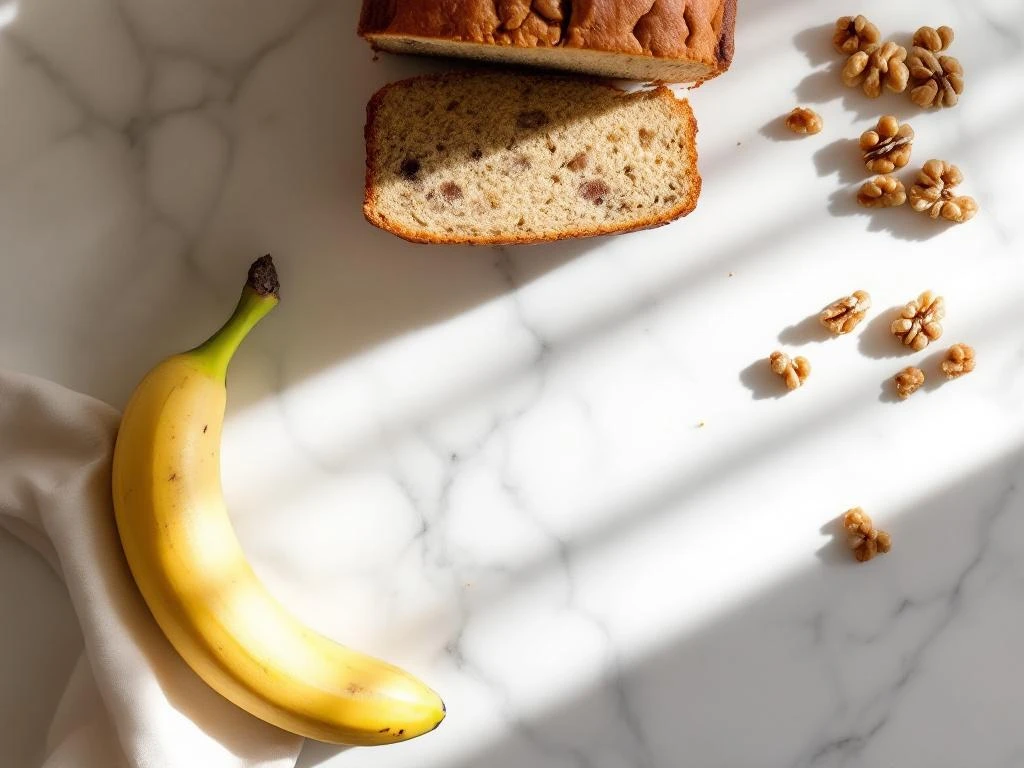
Making gluten-free banana walnut bread that stays moist and tender can feel tricky. Many gluten-free recipes turn out dry or crumbly. This easy banana bread recipe uses ripe bananas for natural sweetness and moisture, creating a soft texture without gluten. The recipe is low FODMAP friendly and perfect if you have IBS or food sensitivities. You’ll need about 15 minutes to prepare and 50 minutes to bake. This guide walks you through each step to help you avoid common gluten-free baking mistakes.
Why this gluten-free banana walnut bread works
Gluten-free baking challenges many home bakers because gluten provides structure and elasticity. Without it, bread can turn dense or fall apart. This banana walnut bread recipe solves these problems through careful ingredient balance.
Ripe bananas add natural moisture and act as a binder. The starches in bananas help hold the bread together, replacing some of gluten’s structural role. Using very ripe bananas with brown spots gives you the best flavour and moisture content. They also provide natural sweetness, reducing the need for added sugar.
This recipe is suitable for low FODMAP diets when you follow the ingredient guidelines carefully. Walnuts are low FODMAP in small portions (about 30g per serving). The gluten-free flour blend and other ingredients avoid high FODMAP triggers like wheat, honey, or certain dried fruits. If you have IBS or food sensitivities, this moist banana bread lets you enjoy homemade baked goods without digestive discomfort.
Gather your ingredients and tools
Having everything ready before you start makes gluten-free baking much easier. Measure carefully, as gluten-free recipes are less forgiving than traditional ones.
Ingredients you’ll need
- 3 large ripe bananas (about 400g with peels)
- 2 large eggs at room temperature
- 80ml vegetable oil or melted coconut oil
- 100g light brown sugar or coconut sugar
- 1 teaspoon vanilla extract
- 250g gluten-free flour blend (one that includes xanthan gum)
- 2 teaspoons baking powder
- 1 teaspoon ground cinnamon
- ½ teaspoon salt
- 100g walnuts, roughly chopped
For substitutions, you can replace eggs with flax eggs (1 tablespoon ground flaxseed mixed with 3 tablespoons water per egg, let sit for 5 minutes). Use dairy-free oil options to keep the recipe dairy-free. Make sure your gluten-free flour blend contains xanthan gum, as this helps bind the ingredients.
Kitchen equipment needed
- 900g loaf tin (approximately 23cm x 13cm)
- Large mixing bowl for dry ingredients
- Medium mixing bowl for wet ingredients
- Fork or potato masher for bananas
- Whisk and wooden spoon or spatula
- Measuring cups and spoons
- Baking parchment or tin liner
Prepare your workspace by preheating your oven to 175°C (160°C fan). Line your loaf tin with baking parchment, leaving some overhang on the sides. This makes removing the bread much easier after baking.
Prepare the wet and dry ingredients
Proper preparation of wet and dry ingredients separately ensures even mixing later. This technique prevents lumps and creates better texture in your gluten-free walnut bread.
Mash the bananas
Peel your ripe bananas and place them in the medium bowl. Use a fork to mash them until mostly smooth with just a few small lumps remaining. You want about 300g of mashed banana. Overly smooth banana purée can make the bread too dense, so leave some texture.
Mix the wet ingredients
Add the eggs, oil, sugar, and vanilla extract to the mashed bananas. Whisk everything together until well combined and slightly frothy. The mixture should look creamy and uniform. Room temperature eggs mix more easily and create better texture.
Combine the dry ingredients
In your large bowl, whisk together the gluten-free flour, baking powder, cinnamon, and salt. Whisk for at least 30 seconds to distribute the baking powder evenly throughout the flour. This step is crucial for even rising. Gluten-free flour can clump, so breaking up any lumps now prevents them in your finished bread.
Success check: Your dry ingredients should look uniform with no visible pockets of baking powder or spices. The wet ingredients should be smooth and well blended.
Combine and fold in the walnuts
Mixing wet and dry ingredients properly makes the difference between tender bread and a tough, dense loaf. Gluten-free batters need gentle handling.
Toast the walnuts
Place your walnuts in a dry frying pan over medium heat. Toast them for 3 to 4 minutes, stirring frequently, until fragrant and slightly darker. Let them cool for a few minutes, then roughly chop them into pieces about the size of a pea. Toasting brings out the nutty flavour and adds crunch to your IBS-friendly banana bread.
Mix wet into dry
Pour the wet banana mixture into the bowl with dry ingredients. Use a wooden spoon or spatula to fold them together gently. Stir just until you see no more dry flour. The batter will look thick and slightly lumpy. This is normal for gluten-free baking.
Warning: Do not overmix. Gluten-free batters can become gummy if you stir too much. About 15 to 20 gentle folds should be enough. Some small lumps are fine and will bake out.
Add the walnuts
Reserve about 2 tablespoons of chopped walnuts for topping. Fold the remaining walnuts into the batter with just a few strokes. You want them distributed throughout without overmixing the batter. Pour the batter into your prepared loaf tin and smooth the top gently. Sprinkle the reserved walnuts over the surface.
Bake to golden perfection
Proper baking technique ensures your gluten-free banana bread cooks through without drying out or burning. Temperature and timing matter more with gluten-free recipes.
Place the loaf tin on the middle rack of your preheated oven. Bake for 50 to 60 minutes. The exact time depends on your oven and tin size. Avoid opening the oven door for the first 40 minutes, as this can cause the bread to sink in the middle.
Check for doneness
After 50 minutes, check your bread. The top should be golden brown and firm to gentle touch. Insert a wooden skewer or toothpick into the centre. It should come out clean or with just a few moist crumbs. If it comes out with wet batter, bake for another 5 to 10 minutes and test again.
If the top is browning too quickly but the centre isn’t done, cover the loaf loosely with foil for the remaining baking time. This prevents over-browning while the inside finishes cooking.
Cool the bread
Remove the tin from the oven and let the bread cool in the tin for 10 minutes. Use the parchment overhang to lift the loaf out onto a wire rack. Let it cool completely before slicing, at least 30 minutes. Gluten-free bread firms up as it cools and is easier to slice when fully cooled.
Success check: Your finished loaf should spring back slightly when pressed gently. The edges should pull away from the tin slightly. The bread should smell sweet and nutty with no raw flour smell.
What if my banana bread is too dense or dry?
Even experienced bakers sometimes face challenges with gluten-free baking. Here are solutions to common problems with this easy banana bread recipe.
Dense or heavy texture
If your bread is too dense, you likely overmixed the batter or used bananas that weren’t ripe enough. Overmixing develops the starches too much in gluten-free flour, creating a gummy texture. Next time, fold the ingredients together more gently with fewer strokes. Make sure your bananas have plenty of brown spots for maximum moisture and natural sweetness.
Dense bread can also mean your baking powder was old or inactive. Check the expiry date and test it by mixing a teaspoon with hot water. It should bubble vigorously. Replace it if it doesn’t react strongly.
Dry or crumbly bread
Dryness usually comes from overbaking or measuring flour incorrectly. Gluten-free flour absorbs liquid differently than wheat flour. If you scooped flour directly from the bag, you may have packed too much into the cup. Try the spoon-and-level method instead. Spoon flour into your measuring cup and level it off with a knife.
Check your oven temperature with an oven thermometer. Many ovens run hot, which dries out baked goods. If your bread seems done before the minimum baking time, your oven likely runs too hot. Reduce the temperature by 10°C next time.
Uneven baking
If the edges are done but the centre is raw, your oven temperature is too high. Lower the temperature to 165°C and bake longer. Use an oven thermometer to verify accuracy. If one side browns more than the other, rotate the tin halfway through baking.
A sunken middle often means the bread wasn’t fully baked or the oven door opened too early. Always bake for at least 40 minutes before opening the door. The structure needs time to set before any temperature changes.
Bread sticks to the tin
Even with parchment, gluten-free banana bread can stick if the tin isn’t prepared well. Make sure your parchment covers the bottom and sides completely. You can also brush the tin lightly with oil before adding parchment for extra insurance. Let the bread cool in the tin for the full 10 minutes before trying to remove it.
Store your homemade banana bread wrapped in cling film at room temperature for up to 3 days. It also freezes beautifully for up to 3 months. Slice it before freezing so you can take out individual portions as needed.
Gluten-free banana walnut bread
Prep Time: 15 minutes | Bake Time: 50-60 minutes | Portions: 10 slices
Ingredients
- 3 large ripe bananas (about 400g with peels)
- 2 large eggs at room temperature
- 80ml vegetable oil or melted coconut oil
- 100g light brown sugar or coconut sugar
- 1 teaspoon vanilla extract
- 250g gluten-free flour blend (with xanthan gum)
- 2 teaspoons baking powder
- 1 teaspoon ground cinnamon
- ½ teaspoon salt
- 100g walnuts, roughly chopped
Method
- Preheat oven to 175°C (160°C fan). Line a 900g loaf tin with baking parchment.
- Mash bananas in a medium bowl until mostly smooth with some lumps remaining.
- Add eggs, oil, sugar, and vanilla to bananas. Whisk until creamy and uniform.
- In a large bowl, whisk together flour, baking powder, cinnamon, and salt for 30 seconds.
- Toast walnuts in a dry pan over medium heat for 3-4 minutes until fragrant. Cool and chop roughly.
- Pour wet ingredients into dry ingredients. Fold gently 15-20 times until just combined.
- Reserve 2 tablespoons walnuts. Fold remaining walnuts into batter with a few strokes.
- Pour batter into prepared tin. Smooth top and sprinkle with reserved walnuts.
- Bake 50-60 minutes until golden and a toothpick inserted in centre comes out clean.
- Cool in tin for 10 minutes, then transfer to a wire rack. Cool completely before slicing.
Storage
Store wrapped in cling film at room temperature for up to 3 days, or freeze slices for up to 3 months.
This recipe is for informational purposes only and is not medical or dietary advice. Please consult a healthcare professional before making any changes to your diet.
Related Articles
- Egg and Tomato Breakfast Wrap
- Gluten-Free Pumpkin Chocolate Chip Muffins
- Scrambled Eggs with Sun-Dried Tomato Pesto
- Raspberry Chia Breakfast Bowl
- Orange Raspberry Overnight Oats