
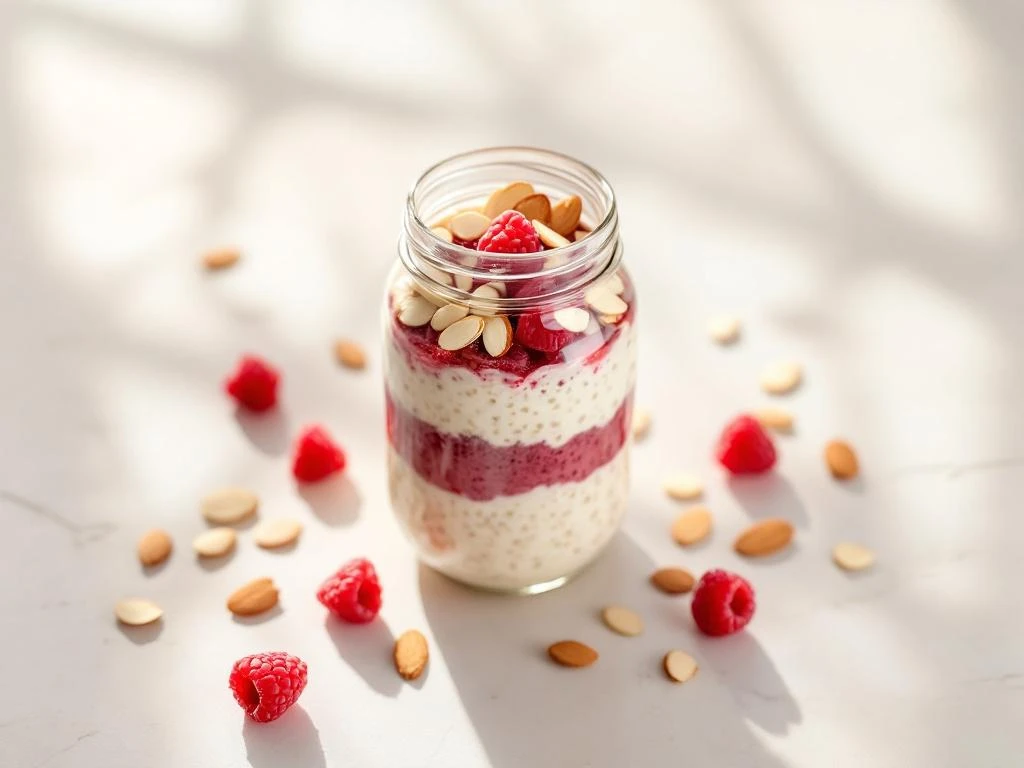
Making a healthy breakfast that’s gentle on your stomach doesn’t have to mean spending time in the kitchen each morning. Raspberry almond overnight oats combine the convenience of make ahead breakfast with the digestive benefits of low FODMAP ingredients. This easy overnight oats recipe takes just 5 minutes to prepare before bed, giving you a ready to eat meal when you wake up.
This guide is perfect for beginners. You don’t need any cooking skills or special equipment. The whole process involves mixing ingredients in a jar and letting them sit overnight. You’ll need about 5 minutes of active preparation time, plus 8 hours of refrigeration.
Here’s what you’ll need to get started. A jar or container with a lid, measuring cups and spoons, gluten free oats, lactose free milk or a low FODMAP milk alternative, almond butter, fresh or frozen raspberries, and optional toppings. All ingredients are easy to find at regular supermarkets.
By following these steps, you’ll create a FODMAP friendly breakfast that supports your digestive health while tasting delicious. The overnight soaking process makes the oats easier to digest, and the portion controlled ingredients keep you within safe FODMAP limits.
Why overnight oats work for sensitive stomachs
Overnight oats offer specific advantages for people managing IBS and digestive sensitivities. The extended soaking period breaks down some of the starches in oats, making them gentler on your system. This process creates a softer texture that requires less digestive work compared to cooked oatmeal.
The cold preparation method preserves more nutrients than cooking. Heat can destroy some vitamins and beneficial compounds, but overnight oats retain their full nutritional value. You get more fibre, vitamins, and minerals in an easily digestible form.
For those following a low FODMAP diet, portion control matters tremendously. This raspberry almond overnight oats recipe uses carefully measured amounts of each ingredient to stay within safe limits. A standard serving of rolled oats (½ cup or 52g) falls within the low FODMAP threshold, unlike larger portions that might trigger symptoms.
The meal prep convenience helps you maintain consistency with your eating schedule. Irregular meal times can worsen IBS symptoms for many people. Having breakfast ready when you wake up removes the temptation to skip meals or grab something that might upset your stomach.
Gluten free oats provide soluble fibre that supports gut health without irritation. This type of fibre feeds beneficial bacteria in your digestive system while staying gentle on sensitive intestines. Combined with lactose free milk options, you create a truly gut friendly meal.
Gather your low FODMAP ingredients and tools
The ingredient list for this healthy breakfast meal prep is straightforward. Each component needs specific attention to FODMAP safety.
Essential ingredients:
- ½ cup (52g) gluten free rolled oats (not instant oats)
- ¾ cup (180ml) lactose free milk or almond milk (unsweetened)
- 1 tablespoon (16g) smooth almond butter
- ¼ cup (30g) fresh or frozen raspberries
- 1 teaspoon maple syrup (optional, for sweetness)
- Pinch of salt
Check your oat packaging to confirm they’re certified gluten free. Regular oats often contain traces of wheat from processing facilities. The gluten free certification ensures no cross contamination occurred.
For milk alternatives, stick to almond milk, lactose free cow’s milk, or other low FODMAP options. Avoid soy milk made from whole soybeans, as it contains high FODMAP levels. Rice milk and coconut milk (from a carton, not canned) work well too.
Almond butter portion size matters. One tablespoon stays within low FODMAP limits. Larger amounts can trigger symptoms due to higher oligosaccharide content. Choose smooth almond butter without added high FODMAP ingredients like honey or inulin.
Raspberries remain low FODMAP at portions up to ¼ cup. They add natural sweetness and beneficial antioxidants without causing digestive distress. Frozen raspberries work just as well as fresh ones.
Required kitchen tools:
- Glass jar or plastic container with tight fitting lid (500ml capacity minimum)
- Measuring cups and spoons
- Spoon for mixing
- Refrigerator space
Mason jars work perfectly for this recipe. The wide mouth makes mixing easier, and you can eat directly from the jar in the morning. Any container with a secure lid prevents spills and keeps your oats fresh.
Prepare your raspberry almond overnight oats
Start by adding your gluten free oats to your chosen container. Pour them directly into the jar without any preparation needed. The dry oats form your base layer.
Add the almond butter on top of the oats. You can drop it in one spot rather than spreading it around. The overnight soaking will distribute the almond butter throughout the mixture naturally.
Pour in your lactose free milk or milk alternative. Make sure the liquid covers all the oats completely. The oats will absorb most of this liquid overnight, creating a creamy texture.
Add your maple syrup if using. This step is optional, as the raspberries provide natural sweetness. Some people prefer extra sweetness, while others find the fruit sufficient.
Sprinkle in a small pinch of salt. This enhances all the other flavours without making the oats taste salty. Salt also helps with the overall texture development.
Stir everything together thoroughly. Use your spoon to make sure the almond butter gets mixed through the oats and liquid. Scrape down the sides of the jar to incorporate any dry oats stuck to the edges.
Add your raspberries last. You can either mix them in completely or place them on top. Mixing them in creates a pink tinted oat mixture, while keeping them on top preserves their shape better. Both methods taste identical.
Seal your container with its lid. Make sure it’s tight to prevent any leaks or odours from your refrigerator affecting the taste.
Place the sealed container in your refrigerator. Let it sit for at least 8 hours, though overnight works best. The oats need this time to fully absorb the liquid and soften.
Success check: Your oats should look completely covered by liquid before refrigeration. If you see dry oats at the top, add a splash more milk and stir again.
The next morning, open your jar and check the consistency. The oats should be soft and creamy, with no hard or crunchy bits remaining. The mixture will be thick but still spoonable.
You can eat the oats cold straight from the refrigerator. Many people prefer this during warmer months. If you want warm overnight oats, transfer them to a microwave safe bowl and heat for 30 to 60 seconds.
Customize your oats while staying FODMAP friendly
This basic raspberry breakfast recipe adapts easily to different flavour preferences. The key is maintaining FODMAP safe portions for any additions.
For different fruit options, try blueberries (¼ cup), strawberries (5 medium berries chopped), or kiwi fruit (½ fruit diced). These portions keep you within low FODMAP limits. Avoid apples, pears, mangoes, and dried fruits, as they contain high FODMAP levels even in small amounts.
Protein additions help make your breakfast more filling. Add one scoop of low FODMAP protein powder after the overnight soak. Mix it in just before eating to prevent clumping. Plain whey protein isolate (not concentrate) works well, as does rice protein powder.
Safe sweetener alternatives include maple syrup (1 tablespoon maximum), brown sugar (1 tablespoon), or white sugar (any amount). Avoid honey, agave nectar, and high fructose sweeteners. Stevia works if you prefer zero calorie options.
For texture variations, add 1 tablespoon of chia seeds to the initial mixture. They create a thicker, pudding like consistency. Chia seeds are low FODMAP up to 2 tablespoons, so this addition stays safe.
Spice options include cinnamon (any amount), vanilla extract (1 teaspoon), or a pinch of nutmeg. These add flavour complexity without affecting FODMAP content. Avoid chai spice mixes, as they often contain high FODMAP ingredients.
Top your prepared oats with additional almond butter (remember your total daily limit), a sprinkle of pumpkin seeds (2 tablespoons maximum), or coconut flakes (¼ cup maximum). These toppings add crunch and healthy fats.
Warning: Don’t add multiple high FODMAP foods in small portions. Even though each ingredient might be safe individually, combining several can push you over your tolerance threshold. Stick to one or two additions beyond the base recipe.
Store and meal prep for the week ahead
Batch preparing this lactose free overnight oats recipe saves significant time during busy mornings. You can safely make up to 5 servings at once, giving you breakfast sorted for the working week.
Use individual jars or containers for each serving. This approach makes grabbing breakfast quick and prevents you from having to portion out oats each morning. Label each container with the preparation date using masking tape and a marker.
Prepare all your base mixtures (oats, milk, almond butter, sweetener, salt) in one session. This takes about 15 minutes for 5 servings. Add fresh raspberries to each container, or wait and add them fresh each morning if you prefer firmer berries.
Store your prepared containers in the refrigerator immediately. Keep them towards the back of the fridge where temperature stays most consistent. The front area experiences temperature fluctuations each time you open the door.
These overnight oats stay fresh for up to 5 days in the refrigerator. The oats continue softening slightly over time, so day five will have a softer texture than day one. Both textures taste good, just different.
Don’t freeze overnight oats. Freezing changes the texture dramatically, making them watery and separated when thawed. The milk and oats don’t maintain their creamy consistency after freezing.
For toppings like nuts or seeds, store them separately in small containers. Add them just before eating to maintain their crunch. Pre added toppings will soften in the refrigerator.
If you’re taking your oats to work, keep them in an insulated lunch bag with an ice pack. They’ll stay cold and safe for up to 4 hours outside the refrigerator. Don’t leave them at room temperature longer than this.
Food safety check: Discard any oats that develop an off smell, show mould, or have been stored longer than 5 days. When in doubt, throw it out.
Troubleshoot texture and flavor issues
Sometimes your overnight oats don’t turn out exactly as expected. These solutions fix the most common problems.
Oats too thick or dry: Add 2 tablespoons of milk at a time and stir well. Let sit for 5 minutes after each addition. The oats need time to absorb the extra liquid. You can do this in the morning if you forgot to add enough liquid the night before.
Oats too thin or soupy: This happens when you’ve added too much liquid. Stir in 1 tablespoon of dry oats and wait 10 minutes. The extra oats will absorb the excess liquid. Alternatively, add a tablespoon of chia seeds, which soak up liquid quickly.
Oats still crunchy after overnight soak: Your oats need more time. Put them back in the refrigerator for another 2 to 4 hours. Some oat brands take longer to soften than others. Very fresh oats sometimes need up to 12 hours.
Bland flavour: Add a pinch more salt first. Salt enhances other flavours significantly. If still bland, add ½ teaspoon vanilla extract or an extra drizzle of maple syrup. Check that your almond butter mixed through properly, as unmixed nut butter creates flavour pockets.
Too sweet: Balance excess sweetness by stirring in a tablespoon of plain lactose free yoghurt or adding more fresh raspberries. The tartness of raspberries cuts through sweetness well. You can also add a tiny pinch of salt to balance the flavours.
Raspberries too tart: Some raspberry batches taste more sour than others. Add an extra ½ teaspoon of maple syrup or a sprinkle of sugar. Mixing the raspberries completely into the oats rather than keeping them whole also distributes their tartness better.
Separation or watery layer on top: This is normal. Simply stir your oats well before eating. The liquid naturally separates slightly during storage. Stirring reincorporates everything into a creamy consistency.
Almond butter clumping: This happens when the almond butter was too cold or thick. Next time, let your almond butter sit at room temperature for 10 minutes before adding. For current clumpy oats, stir vigorously or use a fork to break up the clumps.
Temperature affects texture too. Oats straight from a very cold refrigerator feel thicker and less creamy. Let them sit at room temperature for 5 minutes before eating, or warm them briefly in the microwave.
Different oat brands absorb liquid at different rates. If you switch brands and notice texture changes, adjust your liquid ratio by 2 tablespoons in either direction. Keep notes about what works with your preferred brand.
This easy overnight oats recipe gives you complete control over your morning routine. You’ve learned how to prepare, customise, store, and fix any issues that arise. The FODMAP friendly ingredients support your digestive health while providing sustained energy throughout your morning. Making several servings at once means you’ll have a reliable, gut friendly breakfast ready whenever you need it.
Raspberry almond overnight oats
Preparation time: 5 minutes | Refrigeration time: 8 hours | Portions: 1 serving
- Add ½ cup gluten free rolled oats to a jar or container
- Mix in 1 tablespoon smooth almond butter
- Pour in ¾ cup lactose free milk or almond milk
- Add 1 teaspoon maple syrup (optional) and a pinch of salt
- Stir all ingredients together thoroughly
- Add ¼ cup fresh or frozen raspberries (mix in or place on top)
- Seal container with lid and refrigerate for at least 8 hours
- Stir before eating, enjoy cold or warm in microwave for 30 to 60 seconds
- Store in refrigerator for up to 5 days
This recipe is for informational purposes only and is not medical or dietary advice. Please consult a healthcare professional before making any changes to your diet.