
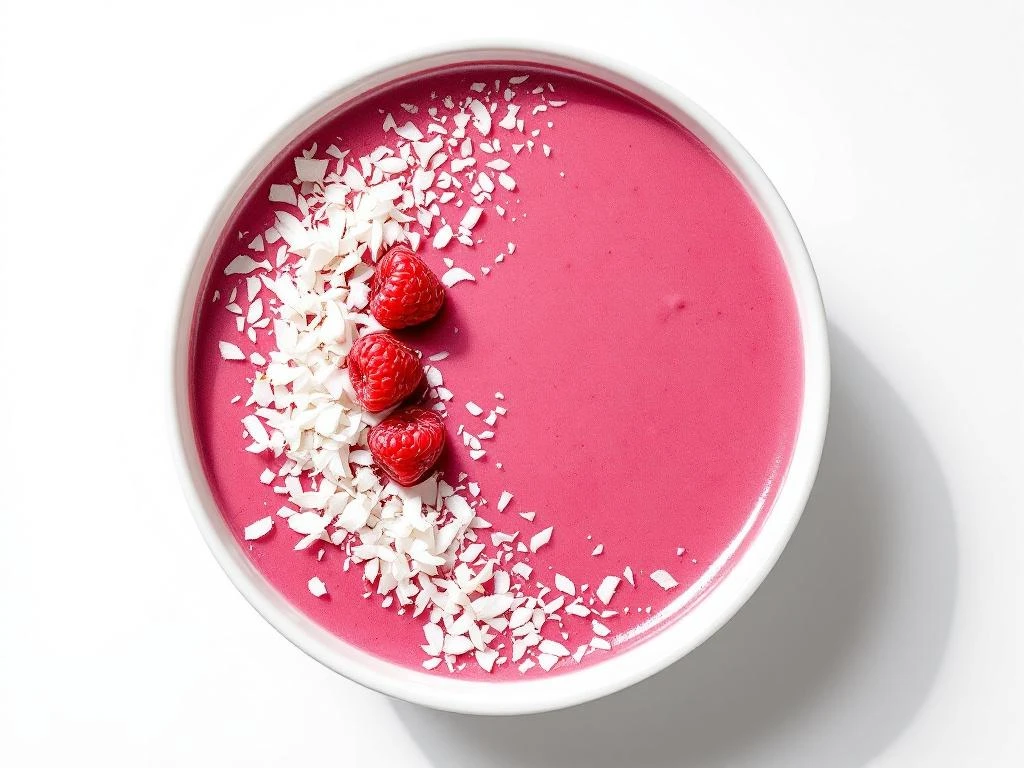
Making a healthy breakfast that’s gentle on your digestive system doesn’t have to be complicated. This raspberry coconut smoothie bowl combines low FODMAP ingredients into a satisfying meal that tastes great and supports your gut health. Perfect for anyone managing IBS or following digestive-friendly eating plans, this bowl delivers nutrition without triggering uncomfortable symptoms.
This recipe is beginner-friendly and takes about 10 minutes from start to finish. You’ll need a blender, measuring cups, and a few simple ingredients. The result is a thick, creamy bowl that’s naturally gluten free and lactose free, topped with textures and flavours that make breakfast feel special again.
Why this raspberry coconut smoothie bowl works for IBS
Raspberries and coconut milk form an ideal combination for anyone following a low FODMAP diet. Raspberries contain natural antioxidants and fibre that support digestive health, whilst staying within safe FODMAP limits when you stick to appropriate portions. A serving of 60 grams of raspberries remains low FODMAP, making them a smart choice for this IBS friendly breakfast.
Coconut milk brings creamy richness without the lactose found in dairy products. The fat content in coconut milk helps create that thick, spoonable texture that makes smoothie bowls so satisfying. Unlike high FODMAP fruits such as mangoes or apples, this raspberry smoothie bowl recipe won’t trigger digestive discomfort when you follow the serving guidelines.
The frozen fruit base creates a naturally thick consistency without added thickeners or gums that might irritate sensitive stomachs. This healthy breakfast bowl provides sustained energy through the morning whilst keeping your digestive system comfortable. The combination of healthy fats from coconut and natural sugars from raspberries gives you energy without the crash that comes from processed breakfast foods.
Gather your ingredients and tools
You’ll need just a few simple ingredients to create this lactose free smoothie bowl. Start with 150 grams of frozen raspberries, which equals about one cup. Freezing the berries ahead of time is essential for achieving the right texture. Add 120ml of canned coconut milk, choosing a brand without added gums or thickeners when possible. Check the label to confirm it’s just coconut and water.
For a touch of natural sweetness, include one small frozen banana (about 100 grams). Monash University confirms this portion size stays within low FODMAP guidelines. You can also add a handful of baby spinach for extra nutrients without affecting the flavour. The raspberries mask any green taste completely.
Your kitchen tools are straightforward. A high-powered blender makes the process easier, though any blender will work if you’re patient. Have measuring cups ready, along with serving bowls and spoons. Keep a spatula handy for scraping down the sides of your blender between pulses.
For toppings, gather low FODMAP options like unsweetened coconut flakes, a small handful of walnuts (about 10 walnut halves), and additional fresh raspberries. Pumpkin seeds add crunch whilst staying digestive-friendly. Having everything measured and ready before you start blending makes the process smooth and quick.
Blend your smoothie bowl base to perfect consistency
Place your frozen raspberries into the blender first. This creates a base layer that helps the blades catch the ingredients properly. Add the frozen banana pieces next, followed by any spinach if you’re using it. Pour the coconut milk over the top. This order matters because it helps the liquid reach the blades without creating air pockets.
Start blending on low speed for about 10 seconds. Stop and use your spatula to push ingredients down toward the blades. The mixture will look chunky at this stage, which is normal. Increase to medium speed and blend for another 15 to 20 seconds. You’re looking for a thick, creamy texture that holds its shape when you stop blending.
The key difference between a smoothie bowl and a regular smoothie is the consistency. Your gluten free smoothie bowl should be thick enough to eat with a spoon, not drink through a straw. If your blender struggles, add one tablespoon of coconut milk at a time. Blend between additions until you reach that perfect spoonable texture.
Check the consistency by stopping the blender and tilting it slightly. The mixture should move slowly, almost like soft-serve ice cream. If you see liquid pooling at the edges, blend for another 10 seconds. The frozen fruit is what creates this thick base, so resist the urge to add too much liquid even if blending feels difficult.
Choose low FODMAP toppings that add texture and flavour
Toppings transform your raspberry coconut smoothie bowl from simple to special. Start with texture by sprinkling one tablespoon of unsweetened coconut flakes across the surface. This adds crunch whilst reinforcing the coconut flavour from your base. Toast the flakes lightly in a dry pan if you want extra flavour depth.
Add five to ten walnut halves for healthy fats and a satisfying crunch. Walnuts remain low FODMAP at this portion size and provide omega-3 fatty acids that support overall health. Alternatively, try pepitas (pumpkin seeds) for a different texture. A tablespoon of seeds stays within safe limits whilst adding minerals like zinc and magnesium.
Fresh fruit toppings work beautifully when you mind the portions. Slice three to five additional raspberries and arrange them on top for visual appeal. You could also add a few blueberries (around 20 berries) or sliced strawberries (about five medium berries). These portions keep your total fruit intake within low FODMAP guidelines for a single meal.
For a finishing touch, add a small drizzle of maple syrup if you need extra sweetness. A teaspoon is plenty and won’t overwhelm the natural fruit flavours. Some people enjoy a sprinkle of chia seeds for added fibre, though you should start with just half a teaspoon if you’re new to them. The goal is creating layers of texture that make each spoonful interesting whilst keeping everything digestive-friendly.
What if your smoothie bowl is too thick or too thin?
A too-thick smoothie bowl happens when you use extra frozen fruit or not enough liquid. Your blender might struggle to move the ingredients, or the mixture might feel dense and icy rather than creamy. Fix this by adding coconut milk one tablespoon at a time. Blend for 10 seconds after each addition until you reach the right consistency. Don’t pour in a large amount at once, as this quickly turns your bowl into a drinkable smoothie.
If your bowl turns out too thin and runny, you’ve added too much liquid. The easiest fix is adding more frozen fruit. Drop in another quarter cup of frozen raspberries or half a frozen banana. Blend until smooth and check the texture again. Another option is adding a tablespoon of unsweetened coconut yoghurt, which thickens the mixture whilst staying lactose free.
Sometimes the problem isn’t the ingredients but the blending technique. If you blend for too long, the friction warms up the frozen fruit and creates a thinner consistency. Keep your blending time under one minute total. Use short pulses rather than continuous blending to maintain that cold, thick texture.
Temperature matters more than you might think. If your frozen fruit has started to thaw before blending, your bowl will be thin no matter what you do. Always work with fully frozen ingredients. If you notice your mixture warming up during blending, stop immediately and transfer it to your serving bowl. Pop it in the freezer for five minutes to firm up before adding toppings. This quick chill restores the proper consistency without compromising the FODMAP-friendly nature of your ingredients.
Creating this IBS friendly breakfast becomes second nature once you understand the balance between frozen fruit and liquid. The thick, creamy texture makes you feel satisfied, whilst the carefully chosen ingredients keep your digestive system comfortable. This raspberry smoothie bowl recipe proves that eating for gut health doesn’t mean sacrificing flavour or enjoyment.
Start your morning with confidence knowing this healthy breakfast bowl supports your dietary needs. The natural sweetness from raspberries, the richness from coconut, and the variety of textures from thoughtful toppings create a meal worth looking forward to. Each bowl takes just minutes to prepare but delivers lasting satisfaction through your morning.
Raspberry coconut smoothie bowl
Preparation time: 10 minutes | Servings: 1
- Base ingredients: 150g frozen raspberries, 120ml canned coconut milk, 1 small frozen banana (100g), handful of baby spinach (optional)
- Equipment needed: High-powered blender, measuring cups, serving bowl, spatula
- Blending method: Layer frozen raspberries first, add banana and spinach, pour coconut milk on top
- Technique: Blend on low for 10 seconds, scrape sides, increase to medium speed for 15-20 seconds until thick and spoonable
- Texture goal: Thick enough to eat with a spoon, similar to soft-serve ice cream consistency
- Topping suggestions: 1 tablespoon unsweetened coconut flakes, 5-10 walnut halves, 3-5 fresh raspberries, 1 tablespoon pumpkin seeds
- FODMAP portions: 60g raspberries (low FODMAP), 100g banana (low FODMAP), all toppings within safe serving sizes
- Troubleshooting: Too thick – add coconut milk 1 tablespoon at a time; too thin – add more frozen fruit or freeze bowl for 5 minutes
- Storage tip: Best consumed immediately; frozen fruit must stay fully frozen until blending for proper consistency
This recipe is for informational purposes only and is not medical or dietary advice. Please consult a healthcare professional before making any changes to your diet.