
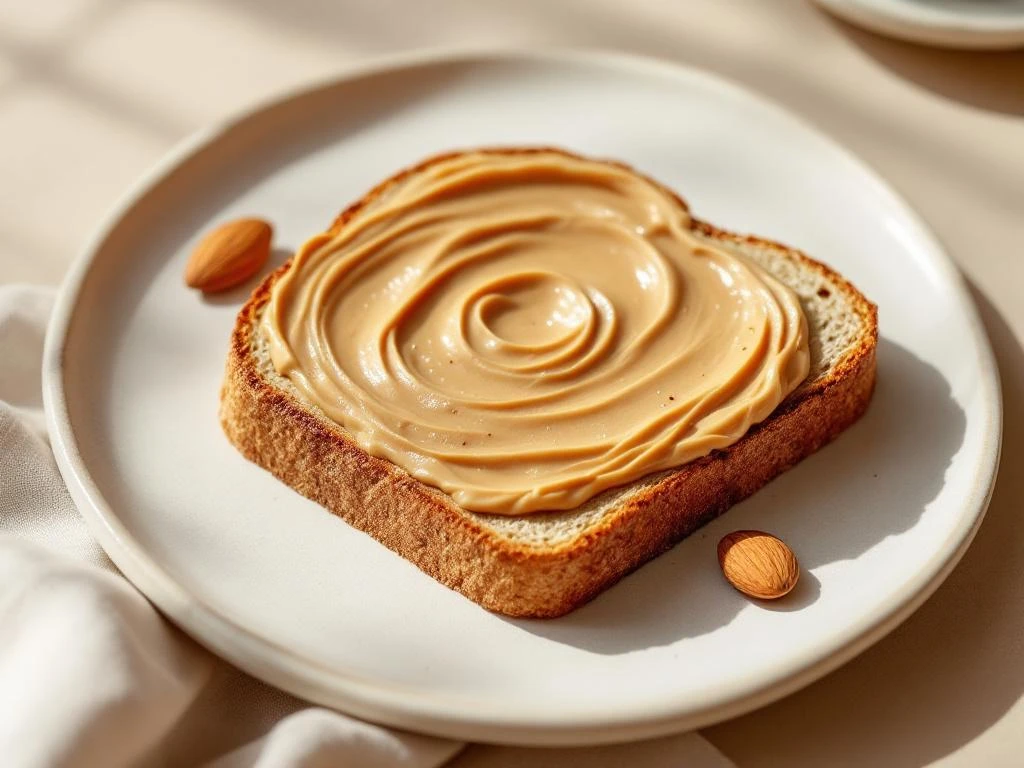
Almond butter toast on sourdough spelt bread makes a satisfying low FODMAP breakfast that’s ready in minutes. This simple meal combines protein-rich almond butter with gut-friendly fermented bread for a balanced start to your day. Whether you’re managing IBS symptoms or simply want a nutritious breakfast option, this guide will show you how to prepare the perfect almond butter sourdough toast with confidence. You’ll learn which ingredients work best, how to achieve ideal toast texture, and ways to customise your creation whilst staying within low FODMAP guidelines. The entire process takes about 5 minutes from start to finish.
Why almond butter and sourdough spelt make the perfect pairing
Sourdough spelt bread offers unique advantages for those following a low FODMAP diet. The fermentation process breaks down difficult-to-digest compounds, making spelt more tolerable than regular wheat for many people with IBS. The long fermentation reduces fructan content, which is the main FODMAP concern in wheat products.
Almond butter brings healthy fats and plant-based protein to your breakfast. A tablespoon of almond butter provides approximately 3 grams of protein and beneficial monounsaturated fats that help you feel satisfied throughout the morning. Almonds are considered low FODMAP in servings of up to 10 nuts, and a standard serving of almond butter falls within safe limits for most people.
The combination creates a balanced meal with complex carbohydrates from the bread, protein and healthy fats from the almond butter, and fibre that supports digestive health. The nutty flavour of spelt complements the rich, slightly sweet taste of almond butter beautifully. This pairing provides sustained energy without the blood sugar spikes that come from refined white bread with jam or honey.
Gather your ingredients and tools
You’ll need just a few simple ingredients to create your almond butter sourdough spelt toast. Quality matters here, so choose carefully.
Essential ingredients:
- 2 slices of sourdough spelt bread (look for authentic sourdough with a long fermentation time)
- 2 tablespoons natural almond butter (check that almonds are the only ingredient)
- Optional toppings: strawberry slices, small banana portions (up to 1/3 of a ripe banana), chia seeds, cinnamon, or pure maple syrup
When selecting almond butter, choose natural varieties without added oils or sugar. Smooth almond butter spreads more easily, whilst crunchy versions add texture. Both work perfectly well, so pick according to your preference. Check the label to ensure no high FODMAP ingredients like honey or agave have been added.
For sourdough spelt bread, authentic sourdough requires at least 12 hours of fermentation. Shop-bought varieties labelled “sourdough style” often skip proper fermentation and won’t provide the same digestive benefits. Your local bakery or health food shop typically offers genuine sourdough spelt bread.
Basic tools required:
- Toaster, oven, or frying pan
- Butter knife or spreading tool
- Plate
- Measuring spoons (for portion control)
Toast your sourdough spelt to perfection
The toasting method you choose affects both texture and flavour. Each approach has advantages depending on your equipment and preferences.
Using a toaster
Place your spelt bread slices in the toaster on a medium setting. Sourdough spelt often toasts faster than regular bread due to its denser texture and lower moisture content. Start with a medium setting and adjust based on your results. The bread should turn golden brown with a crispy exterior whilst remaining slightly soft inside.
Check the toast after the first cycle. If it needs more colour, run it through for another 30 seconds rather than starting with a high setting. This prevents burning whilst achieving even browning.
Using an oven
Preheat your oven to 180°C. Place bread slices directly on the oven rack or on a baking tray. Toast for 5 to 7 minutes, checking at the 5-minute mark. Flip the slices halfway through for even browning on both sides. This method works well when preparing multiple slices at once.
Using a stovetop pan
Heat a dry frying pan over medium heat. Place bread slices in the pan and toast for 2 to 3 minutes per side. Press down gently with a spatula to ensure even contact with the pan surface. This method creates a slightly different texture with more pronounced crispy spots where the bread touches the pan.
Your toast is ready when it’s golden brown, crispy on the outside, and still has some give when pressed gently. Avoid dark brown or black spots, which indicate burning and create bitter flavours.
Spread and top your almond butter toast
Timing matters when spreading almond butter. Apply it whilst the toast is still warm so it melts slightly and spreads more easily. This creates better coverage and enhances the nutty flavour.
Use one tablespoon of almond butter per slice of toast. This portion keeps you within low FODMAP guidelines whilst providing satisfying richness. Scoop the almond butter onto the centre of your toast, then spread outward using smooth, even strokes. Natural almond butter can be thick, so work patiently to avoid tearing the bread.
If your almond butter is particularly stiff, warm it for 10 seconds in the microwave or let the jar sit in warm water briefly. This makes spreading much easier.
Low FODMAP topping combinations
Sweet options:
- 5 to 6 strawberry slices with a sprinkle of chia seeds
- 1/3 of a ripe banana, sliced, with a dash of cinnamon
- A light drizzle of pure maple syrup with a pinch of sea salt
- Fresh blueberries (up to 20 berries) with a sprinkle of cinnamon
Savoury options:
- Sliced cherry tomatoes with fresh basil
- Cucumber ribbons with a squeeze of lemon
- A sprinkle of pumpkin seeds with cracked black pepper
Add toppings immediately after spreading the almond butter so they stick properly. The warm toast helps fruit release its natural juices, creating even more flavour.
Customise with low FODMAP variations
Almond butter toast adapts easily to different tastes whilst maintaining its low FODMAP status. These variations keep breakfast interesting throughout the week.
Alternative nut and seed butters
If almond butter doesn’t suit you, try peanut butter (natural, no additives) or sunflower seed butter as alternatives. Peanut butter is low FODMAP in servings of up to 2 tablespoons. Sunflower seed butter works brilliantly for those with nut allergies and provides similar healthy fats and protein.
Macadamia nut butter offers a luxuriously creamy texture with a mild, buttery flavour. It’s low FODMAP and pairs beautifully with both sweet and savoury toppings.
Seasonal fruit additions
Adjust your toppings based on what’s fresh and available. In summer, try fresh raspberries (up to 10 berries per serving). Autumn brings kiwi fruit (low FODMAP in half-fruit portions), which adds tangy sweetness. Winter citrus like mandarin segments (low FODMAP in one-fruit portions) provides brightness.
Protein and fibre boosters
Sprinkle hemp seeds over your toast for extra protein and omega-3 fatty acids. Two tablespoons of hemp seeds add 6 grams of protein. Chia seeds contribute soluble fibre that supports digestive health, use up to 2 tablespoons per serving.
For a more substantial breakfast, serve your almond butter toast alongside scrambled eggs or a small portion of lactose-free yoghurt. This combination creates a complete meal with balanced macronutrients.
Store and meal prep for busy mornings
Preparation makes weekday mornings smoother. These strategies help you enjoy fresh almond butter toast even when time is tight.
Storing sourdough spelt bread
Keep sourdough spelt bread in a paper bag at room temperature for up to 3 days. The paper allows the crust to breathe whilst preventing the interior from drying out. Avoid plastic bags, which make the crust soft and encourage mould growth.
For longer storage, slice the entire loaf and freeze individual slices in a freezer bag. Separate slices with parchment paper so they don’t stick together. Frozen slices toast directly from the freezer, no thawing needed. They’ll keep for up to 3 months.
Almond butter storage
Natural almond butter separates over time, with oil rising to the top. Store opened jars in the refrigerator to prevent this separation and extend shelf life to 3 to 4 months. Stir thoroughly before each use to reincorporate any oil.
Room temperature storage works for up to one month if you use the almond butter quickly. Keep the jar tightly sealed and away from heat sources.
Pre-portioning toppings
Wash and slice strawberries on Sunday evening, storing them in an airtight container for the week ahead. They’ll stay fresh for 3 to 4 days. Portion chia seeds or hemp seeds into small containers so you can grab and sprinkle without measuring each morning.
Create a breakfast station in your kitchen with bread, almond butter, and pre-portioned toppings together. This setup makes assembly quick and keeps you consistent with your low FODMAP breakfast routine.
Quick assembly strategies
On rushed mornings, toast your bread whilst you’re doing other tasks. Apply almond butter and toppings, then wrap your toast in a paper towel to eat on the go if needed. The paper towel catches any drips whilst allowing steam to escape so the toast stays crispy.
Prepare a double batch and pack the second serving for a mid-morning snack. Almond butter toast travels well and provides sustained energy between breakfast and lunch.
This simple breakfast becomes completely effortless once you establish a routine. The combination of sourdough spelt bread with almond butter offers reliable nutrition that supports your digestive health whilst tasting delicious. You’ve now got all the knowledge needed to create perfect almond butter toast every time, customised exactly how you like it.
Almond butter toast on sourdough spelt
Preparation time: 5 minutes | Servings: 1
Ingredients:
- 2 slices sourdough spelt bread
- 2 tablespoons natural almond butter
- Optional toppings: strawberries, banana (up to 1/3 fruit), chia seeds, cinnamon, or maple syrup
Instructions:
- Toast sourdough spelt bread slices using your preferred method (toaster on medium, oven at 180°C for 5 to 7 minutes, or stovetop pan for 2 to 3 minutes per side) until golden brown and crispy
- Spread 1 tablespoon of almond butter on each warm toast slice, working from the centre outward
- Add your chosen low FODMAP toppings immediately
- Serve straight away whilst the toast is warm and crispy
Storage tips:
- Store sourdough spelt bread in a paper bag at room temperature for up to 3 days, or freeze individual slices for up to 3 months
- Keep opened almond butter refrigerated for 3 to 4 months
- Pre-wash and slice fruit toppings for 3 to 4 days of quick assembly
This recipe is for informational purposes only and is not medical or dietary advice. Please consult a healthcare professional before making any changes to your diet.
Related Articles
- What is the biggest IBS trigger?
- Pumpkin Spice Oatmeal
- Lactose-Free Chocolate Protein Oats
- Lactose-Free Berry Smoothie
- Orange Ginger Overnight Oats