
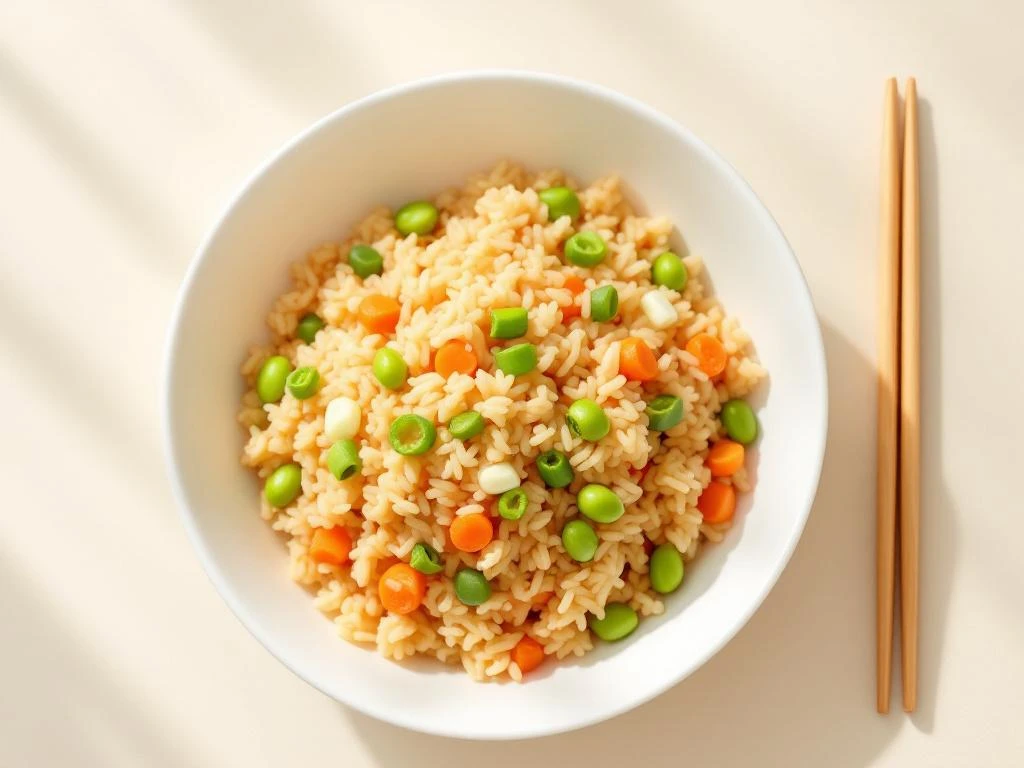
Low FODMAP Fried Rice
Cooking Time: 30 minutes | Portions: 4 servings
Making low FODMAP fried rice gives you a satisfying, flavourful meal without triggering IBS symptoms. Traditional fried rice relies heavily on garlic and onion for flavour, but this adapted version delivers the same delicious taste using gut-friendly ingredients. You’ll need about 30 minutes of active cooking time, plus time to prepare your rice in advance. This beginner-friendly recipe requires basic cooking equipment: a large wok or frying pan, a sharp knife, a cutting board, and measuring spoons. By the end, you’ll have mastered an easy low FODMAP dinner that tastes just as good as takeaway.
Why low FODMAP fried rice works for IBS management
Traditional fried rice triggers IBS symptoms because it’s loaded with high FODMAP ingredients. Garlic and onion are the main culprits, causing bloating, gas, and discomfort for people with sensitive digestive systems. Soy sauce often contains wheat, adding another problematic ingredient to the mix.
This FODMAP friendly fried rice version swaps out those triggers without sacrificing taste. You’ll use garlic-infused oil instead of fresh garlic, which gives you the flavour without the FODMAPs. Spring onion greens replace the white parts, and gluten free tamari substitutes for regular soy sauce. The result is a digestive friendly fried rice that lets you enjoy this popular dish again.
The texture stays just as satisfying too. Properly prepared rice creates that characteristic slightly crispy, separated grain texture you expect from good fried rice. The safe vegetables add crunch and colour, while your choice of protein makes it a complete meal. You’re not compromising on anything except the ingredients that cause problems.
Gather your low FODMAP fried rice ingredients
For the base of your IBS friendly fried rice, you’ll need 3 cups of cooked and cooled white rice (jasmine or basmati work best). Both varieties are naturally low FODMAP and create the right texture when fried. Avoid brown rice for this recipe, as it contains higher FODMAP levels and doesn’t crisp up as well.
Your vegetable options include 1 cup of diced carrots, 1 cup of chopped bok choy, and half a cup of spring onion greens only (the white parts are high FODMAP). Red capsicum adds colour and stays within safe limits at half a cup diced. These portions keep you comfortably within low FODMAP thresholds.
For protein, choose 200 grams of diced chicken, prawns, firm tofu, or eggs. All options are naturally low FODMAP. If you’re avoiding eggs, skip the scrambled egg component and increase your main protein slightly. You’ll also need 2 tablespoons of garlic-infused oil (the oil is safe, fresh garlic is not), 2 tablespoons of gluten free tamari, and half a teaspoon of sesame oil for flavour.
Essential flavour enhancers
Keep these FODMAP safe seasonings on hand: ground ginger (half a teaspoon), white pepper (quarter teaspoon), and a pinch of salt. Fresh coriander makes an excellent garnish if you enjoy it. Avoid pre-mixed Asian seasonings, as they typically contain garlic or onion powder.
Prepare ingredients for optimal fried rice texture
The secret to restaurant-quality low FODMAP rice recipe results is using day-old rice. Cook your rice at least 4 hours ahead, but ideally the night before. Spread the freshly cooked rice on a large plate or baking tray and refrigerate it uncovered. This dries out the surface slightly, preventing mushy fried rice.
If you need to use freshly cooked rice in a pinch, spread it on a tray and place it in front of a fan for 20 minutes. This quick-drying method works reasonably well, though day-old rice still gives better results. Break up any clumps with your fingers before you start cooking.
Dice your vegetables into small, uniform pieces about half a centimetre across. This size cooks quickly and distributes evenly throughout the rice. Cut your protein into similar-sized pieces so everything finishes cooking at the same time. If using chicken, ensure it’s completely thawed and patted dry with paper towels.
Mise en place makes cooking easier
Arrange all your prepared ingredients in small bowls near your cooktop. Fried rice cooks fast, so you won’t have time to chop vegetables once you start. Crack eggs into a bowl and beat them lightly if you’re including them. Measure out your sauces and have them ready to pour.
Cook your low FODMAP fried rice step by step
Heat your wok or large frying pan over high heat until a drop of water sizzles immediately. Add 1 tablespoon of garlic-infused oil and swirl it around the pan. High heat is essential for proper fried rice, so don’t reduce the temperature.
Add your protein (except eggs) and cook until just done. Chicken takes about 5 minutes, prawns need 3 minutes, and tofu requires 4 minutes to get slightly crispy edges. Remove the cooked protein to a plate and set it aside.
Pour the remaining tablespoon of garlic-infused oil into the hot pan. Add your harder vegetables (carrots) and stir-fry for 2 minutes. They should start to soften but stay slightly crunchy. Push the vegetables to the side of the pan.
Adding rice and building flavour
Add your cold rice to the centre of the pan, breaking up any remaining clumps. Let it sit undisturbed for 30 seconds to develop a slight crisp on the bottom, then toss and repeat. This technique creates texture variation throughout your gluten free fried rice.
Pour the tamari and sesame oil over the rice and toss everything together. Add your softer vegetables (bok choy, capsicum, spring onion greens) and the cooked protein back to the pan. Sprinkle in the ginger and white pepper, then toss everything for another 2 minutes until heated through.
If using eggs, push the rice mixture to the sides of the pan, creating a well in the centre. Pour in the beaten eggs and scramble them quickly, then mix everything together. The eggs should form small, soft curds throughout the rice.
Customize flavours while staying FODMAP friendly
Fresh herbs transform your digestive friendly fried rice without adding FODMAPs. Coriander, chives (in small amounts), and basil all work beautifully. Add them right at the end of cooking to preserve their bright flavour and colour.
Spice variations let you change the flavour profile completely. Try adding a quarter teaspoon of Chinese five-spice powder for warmth, or a pinch of chilli flakes if you enjoy heat. Both are low FODMAP in these small quantities.
Protein swaps keep the recipe interesting. Leftover roast chicken works perfectly and saves cooking time. Tinned tuna (drained well) creates a budget-friendly version. For vegetarian options, increase the eggs to 3 or use 300 grams of firm tofu.
Portion control for borderline ingredients
Some ingredients are low FODMAP only in specific amounts. Spring onion greens are safe up to 3 tablespoons per serving. Capsicum stays low FODMAP at 75 grams per serve. If you’re particularly sensitive, start with smaller amounts and increase gradually as you test your tolerance.
Store and reheat leftover fried rice safely
Cool your leftover low FODMAP fried rice quickly to maintain food safety. Spread it on a large plate rather than leaving it in a deep container, as this speeds up cooling. Refrigerate within 2 hours of cooking, and store it in an airtight container.
Properly stored fried rice stays safe for 3 days in the refrigerator. Don’t keep it longer than this, as rice can develop harmful bacteria even when refrigerated. If you won’t eat it within 3 days, freeze portions in airtight containers for up to 1 month.
Reheating requires high heat to restore texture. Use a hot wok or frying pan with a splash of oil, and stir-fry the cold rice for 3 to 4 minutes until steaming hot throughout. Microwaving works in a pinch but creates softer rice. If microwaving, spread the rice in a shallow bowl, sprinkle with a teaspoon of water, cover loosely, and heat on high for 2 minutes, stirring halfway through.
Food safety validation
Your reheated fried rice should be steaming hot all the way through. Test the centre of your portion to confirm it’s thoroughly heated. Never reheat rice more than once, as this increases food safety risks significantly.
Making low FODMAP fried rice gives you control over a dish that usually causes digestive discomfort. You’ve learned how to substitute high FODMAP ingredients with safe alternatives that maintain authentic flavour. The techniques for achieving proper texture work just as well as traditional methods, proving that dietary restrictions don’t mean sacrificing quality. Keep experimenting with different vegetable and protein combinations to find your favourite variations. This easy low FODMAP dinner becomes even simpler once you’ve made it a few times, and having FODMAP friendly takeaway-style food at home makes managing IBS much more enjoyable.
Low FODMAP Fried Rice
Cooking Time: 30 minutes | Portions: 4 servings
Ingredients:
- 3 cups cooked, cooled white rice (day-old preferred)
- 200g protein (chicken, prawns, tofu, or eggs)
- 1 cup diced carrots
- 1 cup chopped bok choy
- ½ cup red capsicum, diced
- ½ cup spring onion greens only
- 2 tablespoons garlic-infused oil
- 2 tablespoons gluten free tamari
- ½ teaspoon sesame oil
- ½ teaspoon ground ginger
- ¼ teaspoon white pepper
- Salt to taste
Method:
- Prepare day-old rice by refrigerating cooked rice overnight, spread on a tray
- Dice all vegetables and protein into uniform half-centimetre pieces
- Heat wok over high heat with 1 tablespoon garlic-infused oil
- Cook protein until done, remove and set aside
- Add remaining oil and stir-fry carrots for 2 minutes
- Add cold rice, let crisp for 30 seconds, then toss and repeat
- Pour tamari and sesame oil over rice, add remaining vegetables and protein
- Season with ginger and white pepper, toss for 2 minutes
- If using eggs, scramble in centre of pan then mix through
- Serve immediately, garnished with fresh herbs if desired
Storage: Refrigerate in airtight container for up to 3 days, or freeze for 1 month. Reheat in hot wok or microwave until steaming throughout.