
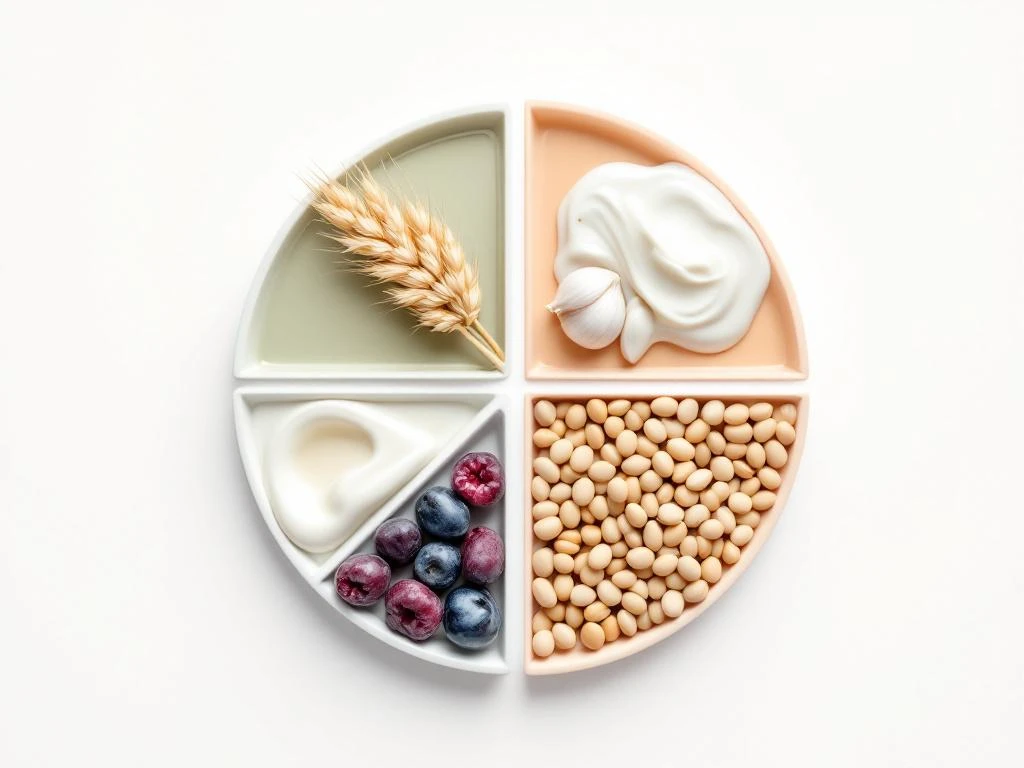
The six FODMAPs are categories of fermentable carbohydrates that can trigger digestive symptoms in sensitive individuals. They include oligosaccharides (fructans and GOS), disaccharides (lactose), monosaccharides (fructose), and polyols (sorbitol and mannitol). Understanding these groups helps you identify which foods might be causing your IBS symptoms and create a personalised eating plan that works for your body.
What are the six FODMAPs?
FODMAP stands for Fermentable Oligosaccharides, Disaccharides, Monosaccharides And Polyols. These are short-chain carbohydrates that your small intestine struggles to absorb properly. When they reach your large intestine, gut bacteria ferment them, which can cause uncomfortable symptoms in people with sensitive digestive systems.
The six specific FODMAP groups are organised as follows. Oligosaccharides include fructans and galacto-oligosaccharides (GOS), which are chains of sugars found in many plant foods. Disaccharides refer specifically to lactose, the sugar naturally present in dairy products. Monosaccharides include excess fructose, a single sugar molecule found in certain fruits and sweeteners. Finally, polyols encompass sugar alcohols like sorbitol and mannitol, which occur naturally in some foods and are added to sugar-free products.
These fermentable carbohydrates matter for digestive health because they behave differently in your gut compared to other nutrients. While most people tolerate them without issue, those with IBS or similar conditions experience significant discomfort when consuming high-FODMAP foods. If you’re new to this approach, our complete FODMAP guide for beginners provides comprehensive background information about how this dietary approach works.
Why do these six FODMAPs cause digestive symptoms?
FODMAPs trigger digestive symptoms through two main mechanisms in your gut. They draw extra water into your intestines through osmosis, and they ferment rapidly when gut bacteria break them down. This combination creates the uncomfortable symptoms many people experience, including bloating, cramping, gas, diarrhoea, and constipation.
When you eat high-FODMAP foods, your small intestine doesn’t fully absorb these carbohydrates. They continue travelling through your digestive system until they reach your large intestine, where trillions of bacteria live. These bacteria ferment the FODMAPs as their food source, producing gases like hydrogen, methane, and carbon dioxide as byproducts.
The water retention effect happens because FODMAPs are osmotically active. They pull fluid into your bowel, which can lead to loose stools or diarrhoea. Meanwhile, the fermentation process creates pressure and distension in your intestines, causing that familiar bloated feeling and abdominal pain.
People with IBS have a more sensitive gut-brain connection, meaning they feel these normal digestive processes more intensely. The stretching of intestinal walls from gas and fluid triggers pain signals that others might not notice. This heightened sensitivity, combined with the physical effects of FODMAPs, explains why seemingly small amounts of certain foods can cause significant discomfort.
Which foods contain each of the six FODMAP groups?
Each FODMAP category appears in different food groups, making it essential to recognise where they hide in your daily diet. Fructans are abundant in wheat-based products like bread and pasta, as well as onions, garlic, and certain vegetables like artichokes. GOS (galacto-oligosaccharides) are primarily found in legumes such as chickpeas, lentils, and beans.
Lactose, the disaccharide in this system, occurs naturally in dairy products including milk, soft cheeses, yoghurt, and ice cream. The amount varies depending on how the product is processed, with aged hard cheeses typically containing very little lactose.
Excess fructose is present in honey, apples, pears, mangoes, and high-fructose corn syrup. The term “excess” is important here because it refers to fruits where fructose content exceeds glucose content, making absorption more difficult. Fruits with balanced fructose and glucose ratios are generally better tolerated.
Polyols split into two main types. Sorbitol appears naturally in stone fruits like peaches, plums, and cherries, as well as in sugar-free products labelled with sweeteners ending in “-ol”. Mannitol is found in mushrooms, cauliflower, and snow peas, and is also used as an artificial sweetener in diet products.
We create recipes that avoid these high-FODMAP ingredients whilst maintaining delicious flavours and satisfying meals. Knowing which foods contain which FODMAPs helps you make informed choices when shopping and cooking.
How do you identify which of the six FODMAPs affect you?
Identifying your personal FODMAP triggers requires a systematic elimination and reintroduction process. You start by removing all high-FODMAP foods for 2-6 weeks, giving your digestive system a chance to settle. Once your symptoms improve, you methodically reintroduce one FODMAP group at a time whilst carefully tracking your body’s response.
The reintroduction phase tests each of the six FODMAP categories separately over several days. You might start with fructans by eating a small portion of wheat bread, then gradually increasing the amount whilst monitoring symptoms. After completing the fructans test, you return to the low-FODMAP baseline before testing the next group, such as lactose or polyols.
This process reveals your individual tolerance levels because FODMAP sensitivity is highly personal. You might discover that lactose causes severe symptoms whilst fructans don’t bother you at all. Some people react to multiple groups, whilst others find they can tolerate most FODMAPs in moderate amounts.
Keeping a detailed food and symptom diary throughout this process provides valuable insights. Note what you eat, portion sizes, and any symptoms that appear within 24 hours. This information helps you and your healthcare provider understand your unique patterns and create a sustainable long-term eating plan.
The goal isn’t to avoid FODMAPs permanently but to identify which specific types and amounts cause problems for you. Many people can reintroduce several FODMAP groups successfully, creating a much more varied and flexible diet than the initial elimination phase allows.
Understanding the six FODMAPs empowers you to take control of your digestive health through informed food choices. By learning which categories affect you personally, you can enjoy satisfying meals without the fear of triggering uncomfortable symptoms. We’re here to support your journey with practical recipes and guidance based on real experience with IBS and the low-FODMAP approach.